If you run a VoIP, hosted PBX or SIP trunking platform, your servers are the product. A dropped registration, one-way audio or a stale certificate shows up as a customer complaint within minutes. This server management checklist for VoIP providers sets out exactly what to hand to a managed provider, what to keep in-house, and what to demand in writing before you sign.
Use it as a scoping document. Copy the checklist, mark each line as yours or theirs, and send it to any vendor you are evaluating. Our server management service follows this kind of explicit split, so nothing falls into a gap between teams.
Why telecom workloads need a different server checklist
A generic Linux management package covers patching, backups and uptime pings. Real-time voice adds constraints that generic packages rarely address.
- Media is time sensitive: RTP does not retry. Jitter, packet loss and CPU scheduling delays are heard by the caller instantly.
- Signalling is a target: any public SIP port is scanned constantly, and a compromised extension can generate toll fraud costs very quickly.
- State matters: registrations, dialogs and call-detail records (CDRs) drive billing and disputes, so losing them has direct commercial impact.
- Maintenance is awkward: restarting a switch drops live calls, so patching needs planning rather than a blanket weekend reboot.
A provider who has not run Asterisk, FreeSWITCH or Kamailio in production will treat these as ordinary web servers. Ask them to walk through the items below in your own words.
The responsibility split: you versus the provider
Most disputes with managed providers come from unclear ownership. Agree this table before onboarding and adjust it to your own team.
| Area | Typically your team | Typically the managed provider |
|---|---|---|
| Dialplan, routing logic, call flows | Owns and changes | Advises on performance impact |
| OS and kernel patching | Approves windows | Plans, tests and applies |
| SIP/RTP firewall and fail2ban | Supplies carrier and customer IP lists | Builds, tunes and monitors rules |
| Jitter and packet-loss monitoring | Defines acceptable thresholds | Instruments, alerts and investigates |
| TLS and SRTP certificates | Owns the domain and trust decisions | Issues, renews and verifies |
| CDR database backups | Defines retention and compliance needs | Runs, encrypts and test-restores |
| Failover and HA | Signs off on design and cost | Implements and rehearses failover |
| Toll fraud policy | Sets destination and spend limits | Applies server-side controls and alerts |
| Incident response | Customer communication | Triage, fix and written post-incident report |
Hosts: Asterisk, FreeSWITCH and Kamailio
Each platform fails in its own way, so your provider should be able to describe how they manage each one you run.
Asterisk and FreeSWITCH media servers
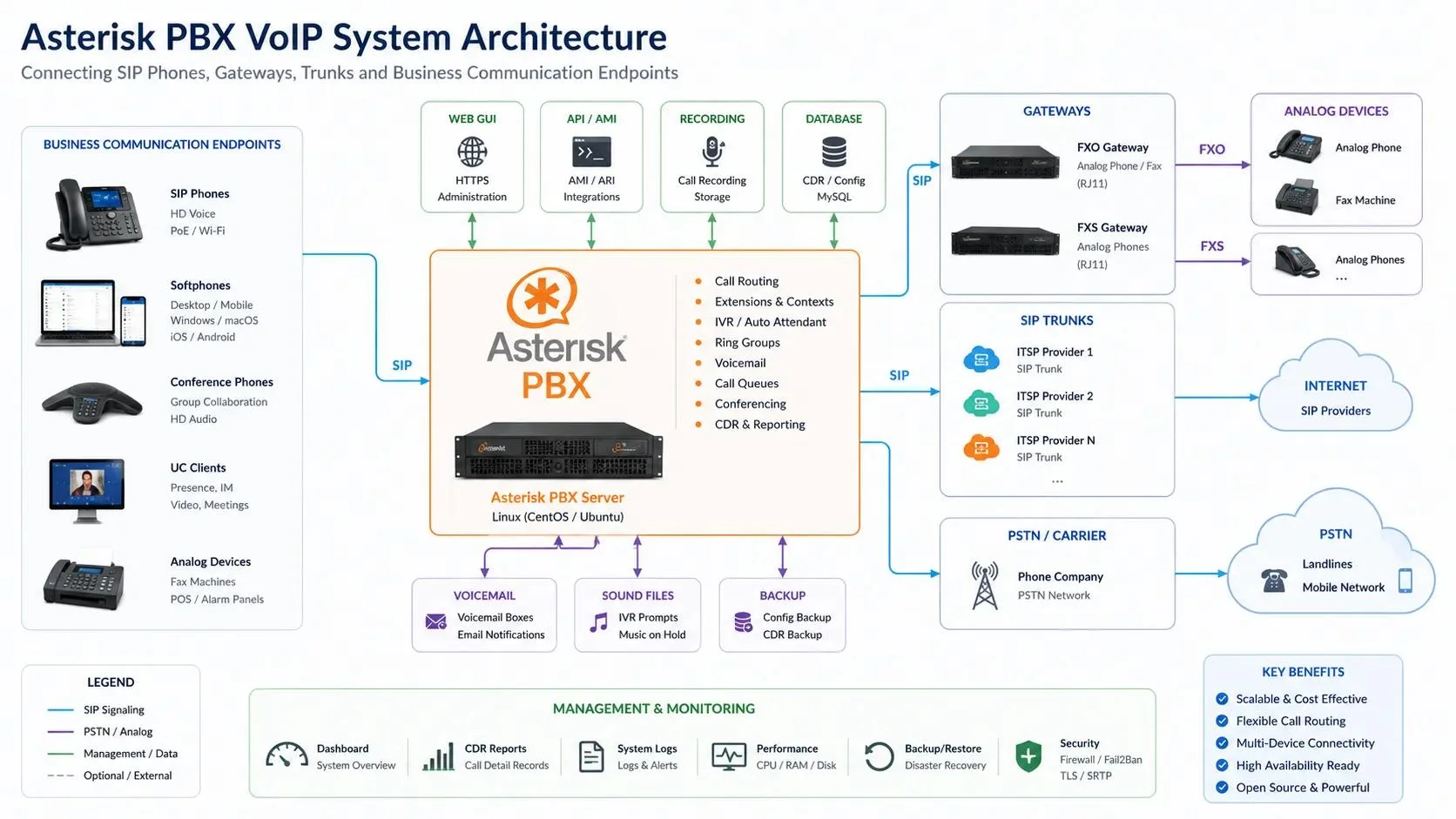
These are the CPU and memory heavy nodes. Expect the provider to size file descriptor limits, manage log rotation so verbose logging never fills a disk, and watch channel counts against capacity. Codec transcoding is a common hidden load, so ask how they track it.
Kamailio and SIP proxies
Proxies and session border roles need careful handling of memory pools, database connections and rate limiting. A provider should monitor transaction failures and registration storms, not just whether the process is alive.
Network, firewall and fail2ban for SIP and RTP
This is where fraud and denial of service are stopped first. A competent provider will do more than open port 5060.
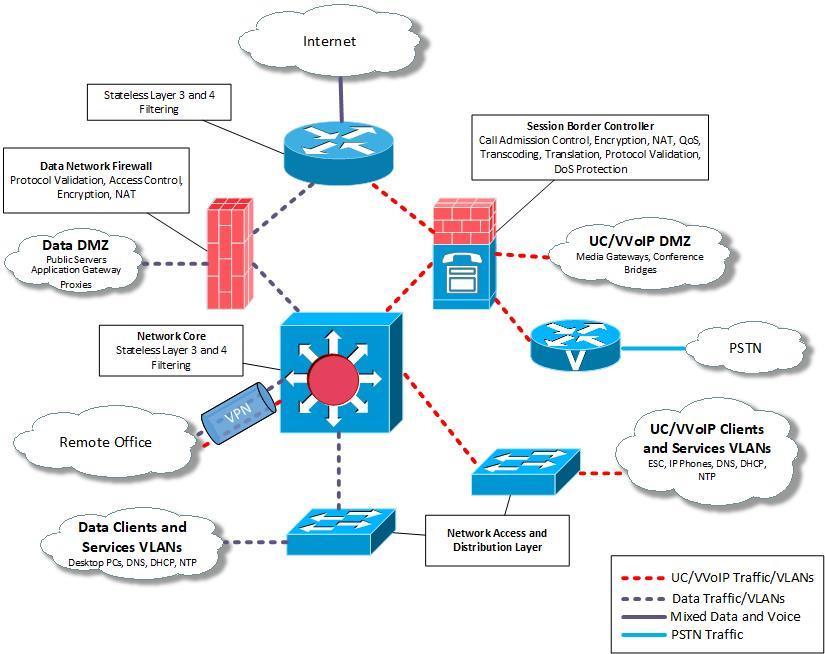
- Restrict SIP signalling to known carrier and customer ranges wherever your business model allows.
- Limit the RTP port range to what you actually need and match it to the firewall.
- Run fail2ban or an equivalent with jails written for your actual SIP logs, tested so that a legitimate customer behind a misconfigured phone is not locked out for long.
- Rate limit registration and INVITE attempts at the proxy and at the firewall.
- Keep management interfaces such as SSH and AMI off the public internet.
Monitoring: jitter, packet loss and call quality
Uptime checks are not enough for voice. A server can be up while callers hear robotic audio. Ask the provider to monitor network quality between your nodes and carriers, and to alert on trends rather than only on outages.
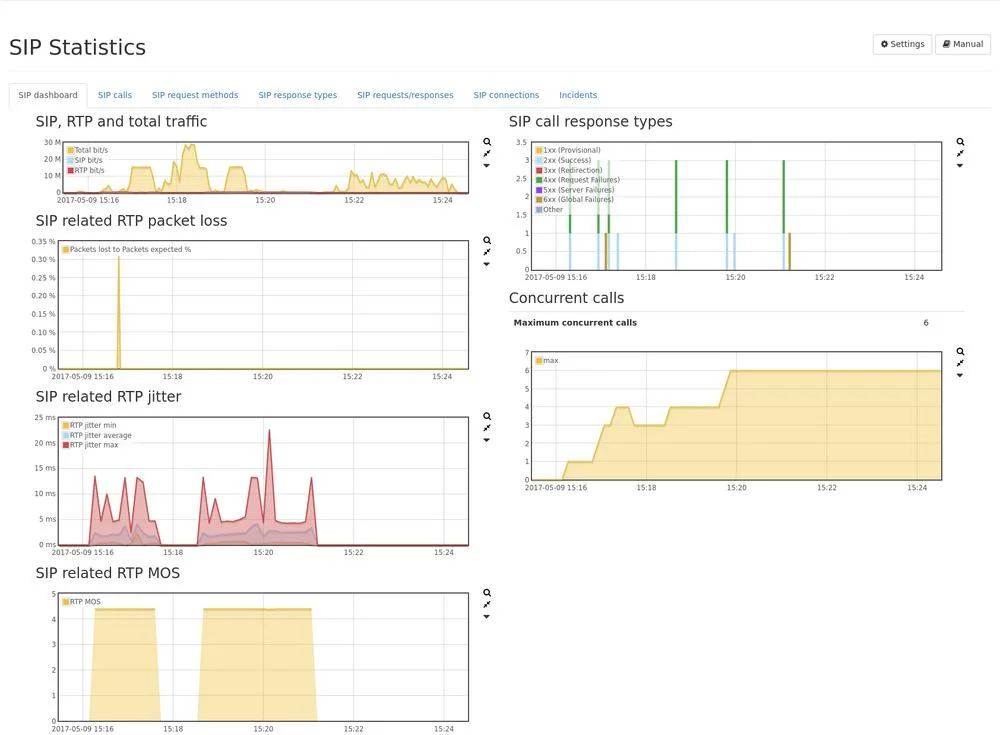
- Jitter and packet loss on the paths that carry RTP
- CPU steal, run queue length and interrupt load on media hosts
- Active channels and registrations compared with normal baselines
- Disk, memory and database connection saturation
- Failed registration and authentication spikes
NTP and time synchronisation
Accurate time underpins CDR billing, log correlation and TLS validation. Drift of even a few seconds makes disputes hard to settle. Require redundant time sources, drift alerting and documented behaviour after a VM pause or migration.
Kernel and network tuning
Default Linux settings are built for general workloads. A provider should document any tuning they apply, why, and how to roll it back. Typical areas include network buffer sizes, interrupt and CPU affinity for media hosts, timer behaviour, connection tracking table limits on firewalls, and file descriptor limits. Tuning should be tested against realistic call loads, not copied from a blog post.
TLS and SRTP certificates
Expired certificates quietly break SIP over TLS and WebRTC clients. Your checklist should cover who issues certificates, how renewal is automated, how expiry is monitored well ahead of the date, and how the new certificate reaches every node without dropping calls. Confirm that supported TLS versions and ciphers are reviewed on a schedule, and that SRTP keying is verified after changes.
CDR database backups and recovery
CDRs are billing evidence. Whether you use MySQL, MariaDB or PostgreSQL, you need more than a nightly dump.
- Defined backup frequency and retention that matches your compliance obligations
- Encrypted copies stored off the primary host and ideally in another location
- Point-in-time recovery where write volume justifies it
- Restore tests on a schedule, with the results shared with you
- A documented recovery time and recovery point target
Failover and high availability
High availability for voice is design work, not a checkbox. Decide what you are protecting: registrations, in-flight calls, or just fast recovery for new calls. Then ask the provider how they would implement it with floating IPs, DNS SRV or NAPTR records, proxy pairs or database replication. The most important question is simple: when did they last rehearse a failover, and what happened? Insist on scheduled failover tests with a written report.
Toll fraud hardening
Fraud usually exploits weak extension passwords, exposed trunks or permissive dialplans. The server layer can reduce the damage even when a customer makes a mistake.
- Enforce strong credentials and block default or weak ones
- Restrict international and premium destinations by default, opening them per account
- Set concurrent call and spend limits with alerts to a monitored channel
- Alert on unusual destinations, off-hours spikes and short-duration call patterns
- Log and review authentication failures and new registrations from unfamiliar networks
Patching windows and change control
Agree maintenance windows with your customers in mind. Security patches should be tested on a staging node first, applied to one side of a pair at a time, and followed by test calls. Emergency patches for critical vulnerabilities need a faster path with your explicit approval. Every change should have a rollback plan and a record.
24/7 on-call and incident response SLAs
Voice runs around the clock, and so must support. Do not accept a vague promise of round the clock coverage. Ask for specifics.
- Named response time targets by severity, in writing
- Who answers at 3 a.m., and whether they can act on the servers without waiting for approval
- An escalation path to a senior engineer
- Status updates at agreed intervals during an incident
- A written post-incident report with cause and prevention steps
The copy-and-paste VoIP server management checklist
Paste this into your vendor evaluation sheet and ask for a yes, no or partial against each line.
- Provider has managed Asterisk, FreeSWITCH or Kamailio in production and can describe how.
- SIP signalling restricted to known ranges where possible; RTP port range minimised.
- fail2ban (or equivalent) with SIP-specific jails, tested for false positives.
- SSH, AMI and admin interfaces not exposed publicly.
- Jitter and packet-loss monitoring on RTP paths with trend alerts.
- Alerts for registrations, channels, CPU steal, disk and database saturation.
- Redundant NTP sources with drift alerting.
- Documented kernel and network tuning with rollback steps.
- Automated TLS renewal with expiry monitoring and SRTP verification.
- CDR backups encrypted, stored off-host and test-restored on a schedule.
- Stated recovery time and recovery point targets.
- Failover design documented and rehearsed on a schedule.
- Toll fraud controls: destination restrictions, spend and concurrency limits, anomaly alerts.
- Patch windows agreed, staged testing, rollback plan for every change.
- 24/7 on-call with written severity-based response times.
- Escalation path and post-incident reports included.
- Clear exit terms: documentation, credentials and configuration handed back on request.
Why Telecom and VoIP Teams Choose CloudHouse for Server Management
Voice platforms cannot wait for business hours, so our team provides 24/7 support with clear escalation. We scope work transparently, listing what is included before you commit, and we do not lock you into long contracts or proprietary tooling. If you ever leave, you keep your documentation and configuration.
How to start
Take the checklist above, mark the lines you cannot cover today, and that is your scope. Send it to us and we will respond with a clear plan for the gaps, covering monitoring, hardening, backups and on-call. Review our server management service page, or contact the team to book a scoping call before your next maintenance cycle or fraud incident forces the conversation.