If you run a healthtech product, pricing DevOps support cost for healthcare SaaS is harder than pricing it for a generic web app. The infrastructure usually has to be built and operated with more care: tighter access control, better audit trails, stricter change handling and monitoring that someone actually responds to. This guide explains what drives the price of outsourced DevOps support, how the main cost drivers compare, and how to ask for a quote you can compare fairly. It is written for founders, CTOs and engineering leads who are deciding between a contractor, a managed provider or a first in-house hire.
We deliberately do not quote figures here. Real prices depend on your cloud footprint, release pace and coverage hours, and any number published without looking at your environment would be a guess. What we can do is show you what moves the price up or down, so the quote you receive makes sense. Nothing below is legal or compliance advice; confirm your regulatory obligations with your own compliance adviser.
What outsourced DevOps support actually covers
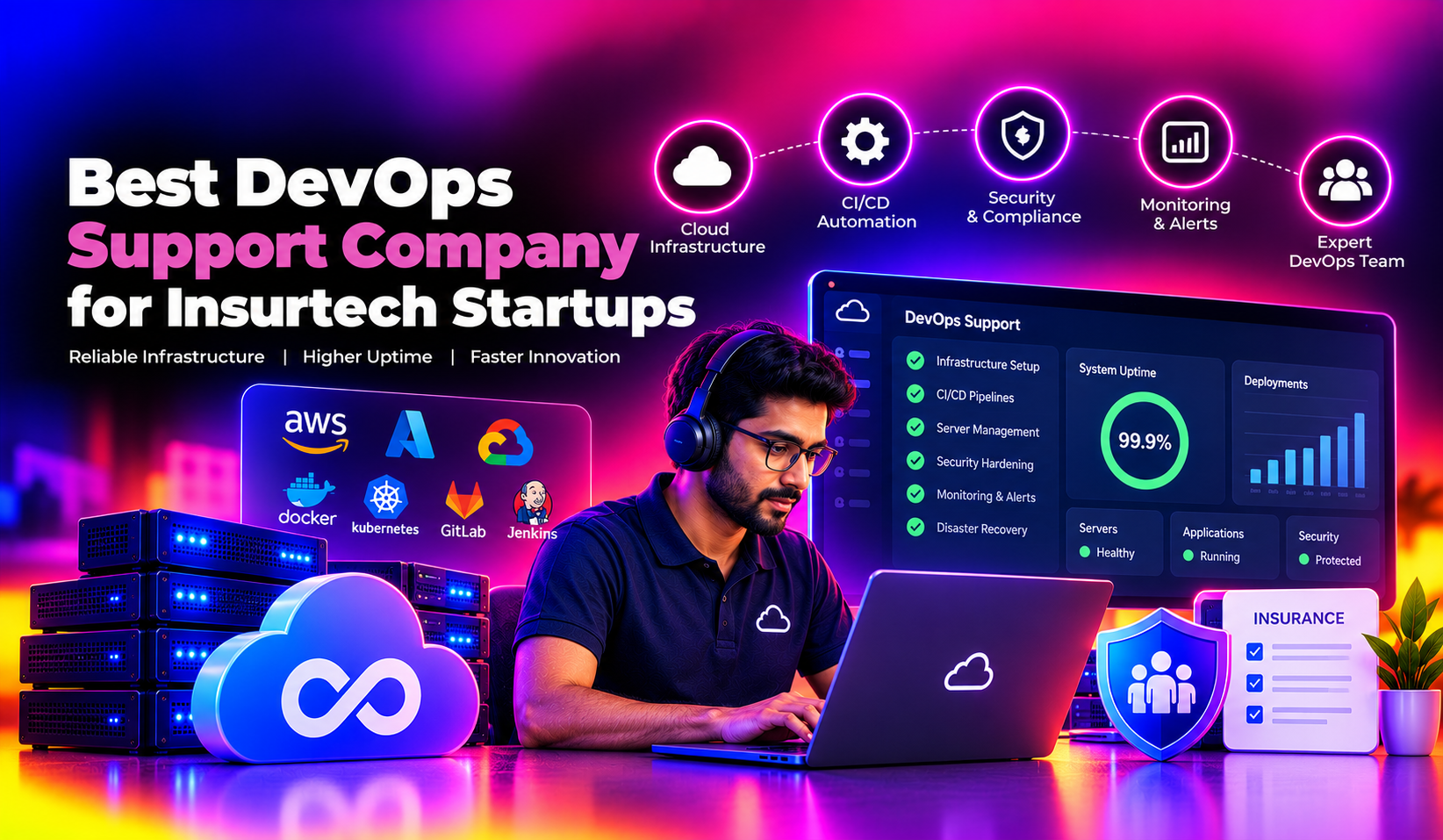
Providers package the work differently, so the first step is to separate the components. A typical DevOps support service for a SaaS product includes some or all of the following.
- CI/CD pipelines: building, testing and deploying code with repeatable, reviewed steps instead of manual releases.
- Infrastructure as code: defining servers, networks and databases in version-controlled templates so environments can be rebuilt and audited.
- Monitoring and alerting: dashboards, log collection and alerts that reach a person who can act on them.
- Incident response and on-call: defined coverage hours, escalation paths and post-incident reviews.
- Cloud operations: patching, backups, restore testing, cost review and capacity planning.
- Security hygiene: access reviews, secrets handling, least-privilege roles and vulnerability follow-up.
Two providers can quote very different amounts for what looks like the same service because one includes round-the-clock on-call and restore testing while the other covers business hours and pipeline fixes only. Always compare scope before price.
Why healthtech changes the price
Healthcare SaaS usually handles information that customers consider sensitive, and your buyers, who are often hospitals, clinics or larger health vendors, tend to send security questionnaires before they sign. That pushes work into the DevOps scope that a simple marketing site would never need.
- Environment separation: distinct development, staging and production environments, with controlled movement of code between them and no casual use of real patient-related data in test systems.
- Access control and logging: named accounts, multi-factor authentication, short-lived credentials and logs that show who changed what and when.
- Encryption and key handling: data encrypted at rest and in transit, with a clear approach to keys and secrets.
- Backups and recovery: backups that are tested by actually restoring them, with documented recovery steps.
- Change management: reviewed, recorded deployments so you can answer a customer who asks how production changes are controlled.
To be clear about our position: a DevOps provider supports and operates the technical environment. CloudHouse does not claim HIPAA certification, and no vendor can hand you compliance by itself. Compliance depends on your policies, your contracts with customers and your own governance. What a good provider does is build and run infrastructure in a way that makes your compliance work easier to evidence. Ask any vendor exactly what they will and will not take responsibility for, and get it in writing.
The main cost drivers for healthcare SaaS DevOps
The table below ranks the typical drivers by how much they tend to influence the quote, without attaching invented numbers. Use it as a conversation guide when a provider asks you scoping questions.
| Cost driver | What it means in practice | Typical effect on price | Question to ask the provider |
|---|---|---|---|
| On-call and coverage hours | Business hours only, extended hours or 24/7 response with defined escalation | Often the largest single driver | What response times apply at night and on weekends, and who answers? |
| Compliance-minded environment | Access logging, environment separation, encryption, evidence for questionnaires | Meaningful uplift, mostly up front | Which controls do you build and which do we own? |
| Cloud scope and complexity | Number of accounts, regions, services, Kubernetes versus simple virtual machines | Rises with every moving part | Will you review our architecture before quoting? |
| CI/CD maturity | Existing pipelines to maintain versus building from scratch | Higher at the start, lower once stable | Is pipeline build separate from ongoing support? |
| Monitoring depth | Basic uptime checks versus tracing, log retention and tuned alerts | Moderate; tooling licences may be extra | Are monitoring tools included or billed to us? |
| Release frequency | Weekly or daily deploys need more pipeline and rollback care | Moderate | How do you handle failed releases and rollbacks? |
| Legacy and technical debt | Manually configured servers, undocumented systems, old operating systems | Can add significant clean-up effort | Is a stabilisation phase included in the quote? |
| Customer audits and questionnaires | Support in answering security reviews from hospital buyers | Varies with how often it happens | Is audit support included or billed per request? |
On-call coverage: the driver founders underestimate
Patient-facing or clinician-facing software has a different tolerance for downtime than an internal tool. If a scheduling or records-adjacent system is unavailable during a clinic's working day, your customer notices immediately. That is why coverage hours deserve more attention than any other line.
When you discuss coverage, make the provider be specific. What counts as an incident? How quickly will someone acknowledge an alert, and how quickly will they start working on it? Is escalation to a senior engineer included? Are holidays covered? A cheap quote that quietly excludes out-of-hours response may turn out expensive the first time something breaks on a Sunday. Equally, you do not need round-the-clock cover for a product whose users only work weekday daytimes. Match the coverage to your real usage and the commitments in your customer contracts.
CI/CD, monitoring and cloud scope
These three areas decide how much routine work the provider must do each month.
CI/CD pipelines
If you already have working pipelines, support mostly means maintaining and improving them. If releases are manual, expect a one-off build phase to introduce automated tests, approval steps and rollback. For healthtech this is worth paying for, because reviewed, repeatable deployments are exactly what customer security teams ask about.
Monitoring and logging
Basic uptime checks are cheap to run. Detailed application tracing, long log retention and carefully tuned alerts take more effort and sometimes extra tooling cost. Ask the provider whether tools are included in the fee or billed separately, and who owns the accounts. You want those accounts in your name so you can leave without losing your history.
Cloud scope
A single application on a few virtual machines is a different job from several cloud accounts, multiple regions and container orchestration. Be honest with the provider about what you have, including the awkward parts. Surprises discovered after signing are the most common reason a quote changes later.
Build in-house, hire a contractor or outsource?
Early-stage healthtech teams often wonder whether to hire a DevOps engineer. A single hire gives you dedicated attention but also a single point of failure: holidays, illness and resignation all leave you uncovered, and one person rarely covers pipelines, security and on-call alone. A contractor is flexible but may leave little documentation behind. An outsourced team gives you broader coverage and continuity, at the price of less day-to-day familiarity with your product. Many companies start outsourced and later hire an internal lead who works alongside the provider. Whichever route you choose, insist that infrastructure is defined in code and documented so you are never locked in.
How to get a quote you can compare
Give each provider the same information so the quotes are comparable.
- A short architecture summary: cloud provider, number of environments, main services and databases.
- Your release frequency and how deployments happen today.
- Required coverage hours and the uptime commitments you have made to customers.
- Recent security questionnaires or customer requirements, with sensitive details removed.
- Known problem areas, such as manual servers, flaky pipelines or missing backups.
Then ask for an itemised proposal that separates one-off setup from monthly support, lists what is excluded and explains how out-of-scope work is billed. A good provider will also state the notice period for ending the contract and confirm that you keep ownership of your code, accounts and documentation. If you want a view on how a managed arrangement could look, you can review our DevOps support options before requesting figures.
Ways to keep the cost sensible
- Start with an assessment of what you have, then decide on the support level rather than guessing.
- Fix the biggest risks first, usually backups, access control and deployments, and defer nice-to-have tooling.
- Choose coverage hours that match real customer usage.
- Automate repeated manual tasks so monthly effort shrinks over time.
- Review cloud spend regularly, because unused resources quietly inflate the bill.
- Keep documentation current so a handover or provider change does not become a new project.
Why Companies Choose CloudHouse for DevOps Support
CloudHouse Technologies plans DevOps work in stages, starting with a review of your current environment so the scope is agreed before work begins. Support continues after the initial build, so pipelines, monitoring and servers have someone looking after them as the product grows. Quotes are itemised, with setup and ongoing support shown separately, so you can see what you are paying for and compare it with other proposals.
Conclusion
The cost of DevOps support for a healthcare SaaS company comes down to coverage hours, how much compliance-minded infrastructure you need, the size of your cloud footprint and how mature your pipelines are today. Understand those drivers, send every provider the same brief and insist on an itemised quote. When you are ready to see what that looks like for your product, request a DevOps support quote from CloudHouse and get your environment reviewed before your next customer security review arrives.