If you are a startup founder or business owner in Kerala shortlisting vendors for your next mobile app, the hardest part isn't finding companies — Kochi and Thiruvananthapuram are full of agencies claiming to be the best mobile app development company in Kerala. The hard part is telling a genuinely skilled development team apart from an outsourcing shop that will over-promise on timeline and scope, then under-deliver on quality and support after launch. This guide skips the directory-style listicle and gives you an actual evaluation framework — the same criteria a technical buyer would use — so you can vet any mobile app development company in Kochi or elsewhere in Kerala with confidence before you sign a contract.
What to Look for in a Mobile App Development Company
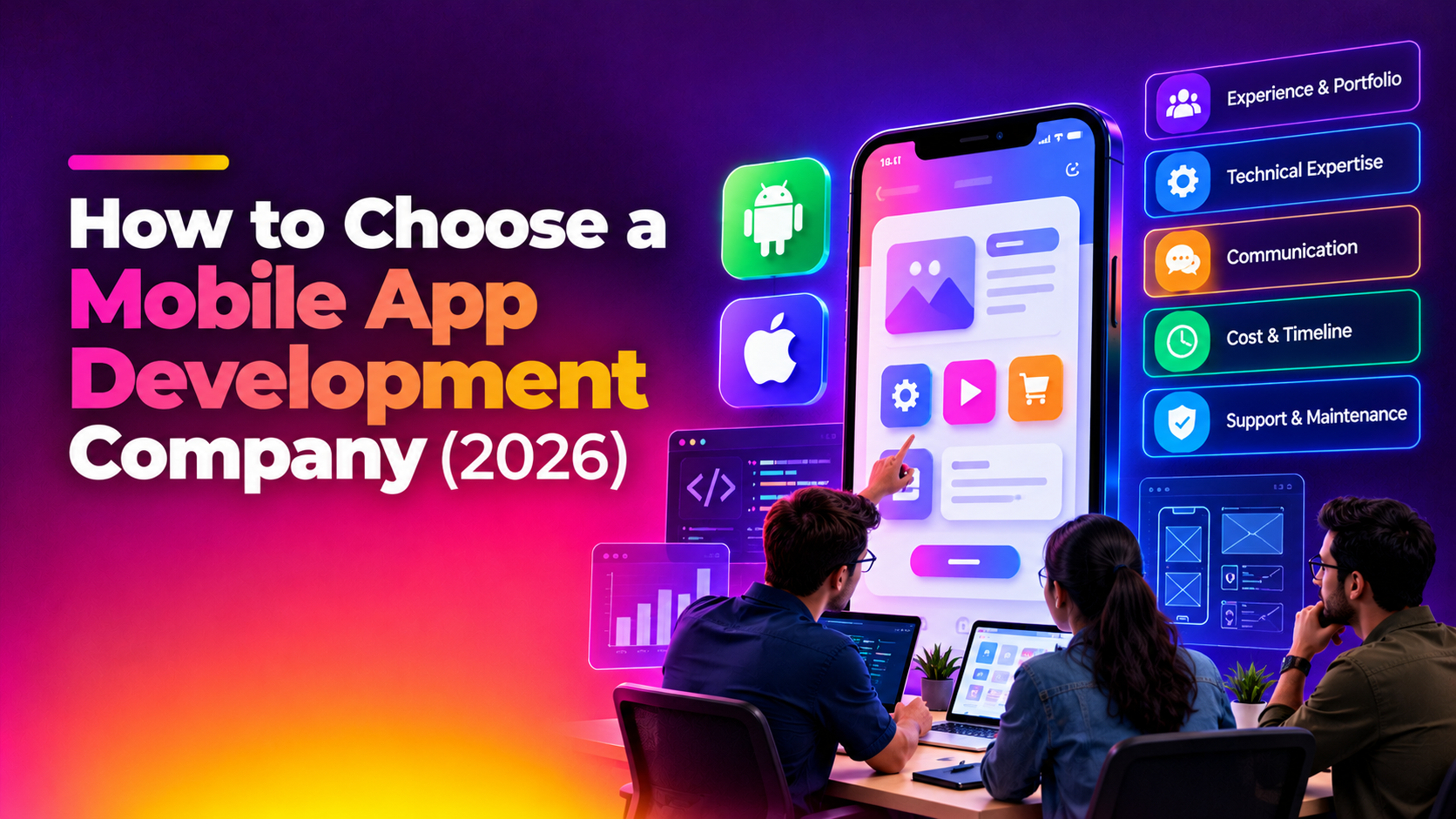
Most "top 10" articles rank companies by directory reviews and self-submitted portfolios, which tells you almost nothing about whether a team can actually execute your specific project. Instead of names, you need criteria. A genuinely capable custom app development company in Kerala should be evaluated on four things: proven technical depth (not just logos on a homepage), a transparent and realistic delivery process, honest communication about trade-offs, and a real post-launch support model — not a vague promise of "we'll be there if you need us."
Founders shortlisting a mobile app development agency in Kerala often make the mistake of choosing based on the lowest quote. Cheap quotes usually mean junior developers learning on your project, vague scope documents that balloon into change-order fees, or a codebase built for speed of delivery rather than long-term maintainability. The criteria below are designed to surface these problems before you sign anything.
Key Evaluation Criteria (Portfolio, Tech Stack, Communication, Post-Launch Support)
Rather than reading marketing copy, ask each shortlisted vendor to walk you through real, verifiable evidence against the criteria in the table below. This is the exact framework we recommend when founders come to us after being burned by a previous vendor.
| Criterion | Why It Matters | What to Ask |
|---|---|---|
| Portfolio relevance | A generic portfolio full of unrelated apps tells you nothing about their ability to solve your specific problem (e.g., real-time features, payments, offline sync). | "Show me two apps you built in a domain closest to mine, and let me speak to that client." |
| Tech stack judgment | Vendors that push one stack regardless of the project (usually because it's all they know) often build the wrong architecture for your scale and budget. | "Why would you recommend native, Flutter, or React Native specifically for my app — not in general?" |
| In-house vs outsourced team | Many agencies quote in-house rates then quietly subcontract development overseas, adding a communication layer and accountability gap. | "Will the developers on the call today be the same people writing my code?" |
| Communication cadence | Weekly status emails with no visibility into actual progress is a red flag for scope creep and missed deadlines later. | "What does a typical sprint demo or check-in look like — can I see a sample?" |
| Post-launch support model | App development doesn't end at launch — OS updates, crash monitoring, and app store compliance require ongoing engineering. | "What's included in your post-launch support, and what's billed separately?" |
| Contract and IP terms | Vague contracts around source code ownership and change-request pricing are the single biggest cause of mid-project disputes. | "Who owns the source code and app store accounts after final payment?" |
A team like CloudHouse's mobile app development service is built specifically around answering these questions transparently before a contract is signed — because founders who ask these questions upfront rarely run into surprises six months in.
Native vs Cross-Platform: What Your Vendor Should Recommend and Why
One of the clearest signals of vendor quality is whether they push a single technology regardless of your project, or whether they actually reason through the trade-off with you. Native development (Swift/Kotlin) typically costs more upfront and takes longer, but gives you the best performance for hardware-heavy features like camera processing, AR, or Bluetooth integrations. Cross-platform frameworks like Flutter or React Native can cut initial build costs significantly and speed up time-to-market by sharing one codebase across iOS and Android.
The long-term cost picture is more nuanced than most agencies let on. Native apps carry a maintenance burden because every feature is built and tested twice — once per platform. Cross-platform apps are generally cheaper to maintain since changes ship from a single codebase, but as an app grows in complexity, cross-platform projects often need increasing amounts of platform-specific tuning, which can erode that early cost advantage over a 2-3 year horizon.
A trustworthy vendor should walk you through your specific feature list — not a generic sales pitch — and tell you honestly where cross-platform will save you money and where it will create technical debt. If a vendor recommends the same stack to every client regardless of project type, that's a signal they're optimizing for their own convenience, not your outcome.
Questions to Ask Before You Sign
Before signing with any top app development company in India or locally in Kerala, run through this checklist in your first call:
- Can you show me the actual GitHub commit history or code review process for a past project?
- What happens if my requirements change mid-sprint — how is that priced?
- Who is my single point of contact, and what is their response time SLA?
- What does your team do if a critical bug is found two weeks post-launch?
- Do you provide fixed milestones with partial payments tied to working demos, not just calendar dates?
Vendors that hesitate or give vague answers to any of these are telling you something important about how the engagement will actually go.
It also helps to ask how a vendor handles scope changes discovered mid-build, since almost every project surfaces new requirements once real users start testing. A mature custom app development company in Kerala will have a documented change-request process with clear pricing, rather than treating every new ask as a negotiation. If a vendor cannot describe this process clearly in the sales call, expect friction once the contract is signed and the invoices start changing shape.
Another underrated question is how the vendor handles app store rejections. Both Apple's App Store and Google Play have strict, frequently updated review guidelines, and a first-time or inexperienced team can lose weeks resubmitting a rejected build. Ask your shortlisted vendor how many apps they have shipped through both stores in the last 12 months, and whether they handle store compliance as part of the base engagement or as a billable extra after the fact.
Common Mistakes Founders Make When Choosing a Vendor
Even founders who do their homework tend to fall into a few predictable traps when evaluating a mobile app development agency in Kerala. The first is anchoring entirely on the lowest quote without normalizing for scope — two proposals that look similar on price can represent very different levels of QA, testing devices, and post-launch coverage. Always ask for a like-for-like breakdown of what's included before comparing numbers side by side.
The second common mistake is skipping reference calls. Reading testimonials on a vendor's own website tells you nothing, since no agency publishes negative feedback. Insist on speaking directly with at least one past client whose project had a similar scope to yours, and ask them specifically about communication quality and how the vendor handled unexpected problems — not just whether the app eventually shipped.
The third mistake is underestimating the importance of a discovery phase. Vendors who skip straight to a fixed quote without a proper discovery workshop — mapping user flows, technical constraints, and third-party integrations — are usually guessing at scope, which means the number you're quoted early on is unlikely to hold once real requirements surface.
Why CloudHouse Is a Trusted Mobile App Development Partner in Kerala
Hosting companies and founders across Kerala choose CloudHouse's mobile app development team because we apply the exact evaluation criteria above to our own process before a client ever has to ask: milestone-based delivery with working demos, a stack recommendation backed by a written rationale for your specific use case, direct access to the engineers actually writing your code, and a defined post-launch support plan with hourly billing and no lock-in contracts. We would rather lose a deal by being upfront about timeline and cost than win one by over-promising and under-delivering six months later.
Frequently Asked Questions
How do I know a vendor won't disappear mid-project?
Ask for milestone-based contracts tied to working demos rather than time-based invoicing, and check whether the company has a registered business address and verifiable past clients you can call directly. A vendor unwilling to structure payments around delivered milestones is a red flag, since it removes their incentive to keep shipping.
Is native or cross-platform cheaper long-term?
Cross-platform frameworks like Flutter typically cost 25-40% less upfront and are cheaper to maintain for simpler apps, but native development is usually more cost-effective long-term for apps with heavy hardware integration, animations, or performance requirements, since cross-platform apps can accumulate platform-specific technical debt as they scale.
How much does custom mobile app development cost in Kerala?
Costs vary widely based on scope, but a well-scoped MVP with core features typically ranges from a few lakhs to significantly more depending on backend complexity, third-party integrations, and whether you need both iOS and Android from day one. Any vendor quoting a fixed number without a discovery call should be treated with caution.
How long does it take to build and launch a mobile app?
A focused MVP typically takes 8-14 weeks from kickoff to app store submission, depending on feature complexity and how quickly you can provide feedback during sprint reviews. Full-featured apps with complex backend logic or multiple integrations can take 4-6 months.
What should be included in post-launch support?
At minimum, post-launch support should cover crash monitoring, OS and dependency updates, app store compliance changes, and a defined SLA for critical bug fixes. Ask exactly which of these are included in the base contract versus billed as separate change requests before you sign.
Choosing the right partner is the single highest-leverage decision you'll make before writing a line of code. If you want a mobile app development team that will walk you through this exact evaluation criteria on a real project, get in touch with CloudHouse Technologies for a free consultation.