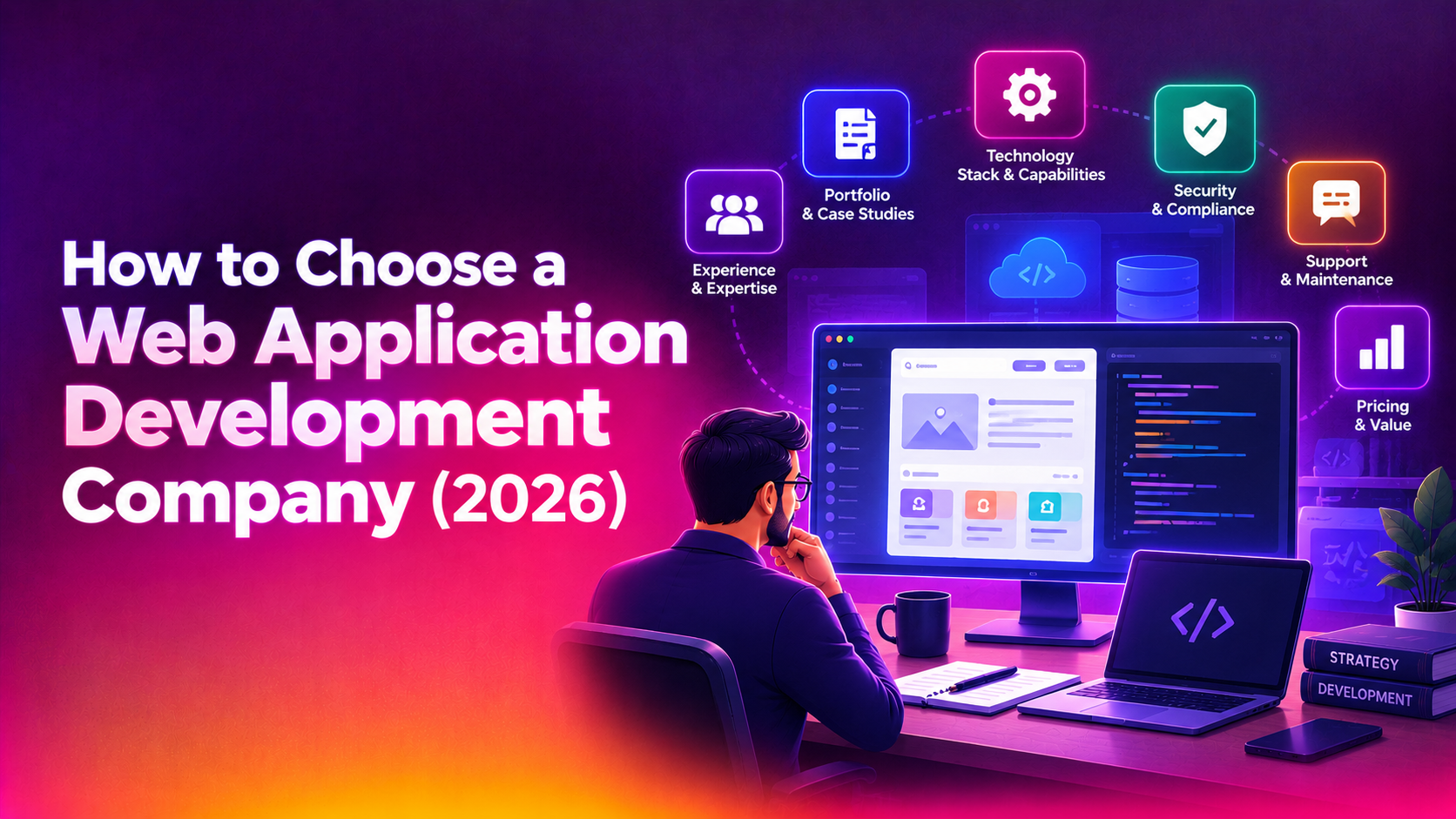
Choosing the wrong website development company is an expensive mistake — not just in money, but in lost time, lost leads, and the frustration of relaunching a site that never should have gone live in the first place. If you're comparing agencies right now, you've probably already noticed the problem: every website looks the same in a portfolio screenshot, every proposal promises "modern, responsive, SEO-friendly" design, and every price quote seems to mean something different depending on who's sending it.
This guide breaks down exactly what separates a website development company that delivers a business asset from one that delivers a pretty brochure. Whether you're a startup building your first site or an established business replacing an outdated one, use this as your working reference before you sign anything.
Why Choosing the Right Web Development Partner Matters More in 2026
Websites in 2026 do more work than they used to. Search engines weigh Core Web Vitals and page experience heavily in rankings. Buyers expect mobile-first, fast-loading pages. And AI-powered search summaries mean your site's structure, content clarity, and technical SEO decide whether you even get found. A website built purely for looks — without performance, SEO, and conversion architecture baked in from day one — is a liability, not an asset.
That's why the selection process matters. You're not just hiring someone to "build a website." You're hiring the team that determines whether your site generates leads or sits ignored on page three of Google.
Step 1: Define What You Actually Need Before You Start Comparing Agencies
Before you request a single quote, get clear internally on:
- Business goal — lead generation, e-commerce sales, brand credibility, or a service portal?
- Scope — a five-page brochure site, a custom web application, or a full e-commerce build?
- Content readiness — do you have copy and images ready, or do you need content support too?
- Timeline — is there a launch deadline tied to a campaign, event, or funding round?
- Budget range — a realistic number, not a wish, so agencies can tell you what's actually achievable
Agencies that ask you these questions before quoting a price are already showing you how they work. Agencies that quote a number after a five-minute call without asking about your goals are guessing — and you'll pay for that guess later in change requests.
Step 2: Evaluate Technical Capability, Not Just Visual Portfolio
A polished portfolio tells you an agency can design. It does not tell you whether they can build a site that loads fast, ranks well, and survives a traffic spike. Ask to see:
- Live sites they've built recently — not just mockups — and test load speed on your phone
- Which CMS or framework they recommend for a build like yours, and why
- How they handle technical SEO: schema markup, sitemap generation, clean URL structures, image optimization
- Whether they test for accessibility and cross-browser compatibility before launch
A team that treats SEO and performance as an afterthought "add-on" rather than a built-in part of development will hand you a site that needs a second, more expensive rebuild within two years.
Step 3: Understand Exactly What's Included in the Price
Website pricing varies wildly because the scope behind the number varies wildly. A quote of ₹25,000 and a quote of ₹2,50,000 can both be "reasonable" — for completely different projects. Before comparing numbers, get a written, itemized breakdown covering:
- Discovery and strategy sessions
- Number of unique page designs and templates
- Custom development vs. theme/template customization
- Content entry and copywriting (is it included or your responsibility?)
- Number of revision rounds included, and cost per additional round
- Hosting, domain, and SSL setup
- Post-launch support window and what it covers
The lowest quote almost always hides something — usually weak SEO setup, minimal revisions, or zero post-launch support. The highest quote isn't automatically better either, unless it's tied to a clear list of deliverables. Compare scope-to-scope, not number-to-number.
Step 4: Ask About Timeline Realistically — and Watch for Red Flags
A standard business website (5–10 pages) typically takes 4–8 weeks from kickoff to launch, depending on content readiness and revision cycles. A custom web application or e-commerce platform can take 8–16 weeks or more. Be suspicious of agencies promising a fully custom site in under two weeks — that timeline usually means a recycled template with minimal customization, not a build tailored to your business.
Ask directly: "What causes delays in your typical project, and how do you handle them?" A confident, specific answer (late content delivery, scope changes, third-party integration delays) tells you they've managed real projects. A vague answer ("we're always on time") tells you they haven't thought it through.
Step 5: Clarify What Happens After Launch
Launch day is the beginning of your website's life, not the end of the project. Before signing, confirm:
- Do you retain full ownership of the code, content, and domain after final payment?
- What's included in post-launch support — bug fixes, security patches, content updates?
- Is there a maintenance retainer option, and what does it cost?
- What's the response time for a critical issue (site down, broken checkout) after launch?
- How many rounds of revisions are included after the first draft goes live?
Agencies that build in proprietary systems or refuse to hand over full access are creating vendor lock-in — a serious problem if you ever need to switch providers or bring development in-house.
Vendor Evaluation Checklist: How to Score a Website Development Company
Use this checklist to score every agency you're considering on the same scale before making a final decision:
- Portfolio proof: Live, working sites (not just images) relevant to your industry or scale
- Technical transparency: Clear answers on CMS/framework choice, hosting, and SEO integration
- Written scope: Itemized proposal listing pages, features, revisions, and exclusions
- Realistic timeline: A specific project plan with milestones, not a vague "a few weeks"
- Ownership terms: Full code, content, and domain ownership on final payment, in writing
- Post-launch support: A named support window and defined response times
- Communication style: A single point of contact and a clear reporting cadence
- Case studies with numbers: Measurable outcomes — traffic, leads, or conversion lift — not just design awards
- References you can actually call: Past clients willing to speak about their experience post-launch
- No pressure tactics: Room to compare quotes without a rushed deposit deadline
Score each prospective vendor against this list. An agency that checks most of these boxes is a safe bet; one that dodges two or three of them — especially ownership and post-launch support — is a risk regardless of how attractive the price looks.
Common Mistakes Businesses Make When Hiring a Web Development Company
- Choosing on price alone: The cheapest quote often excludes SEO, revisions, or support — costs that resurface later as "extras."
- Skipping the technical due diligence: A beautiful design that loads in 8 seconds on mobile will lose visitors before they ever read your content.
- Not asking about ownership upfront: Businesses discover too late that their "own" website is locked to a vendor's proprietary platform.
- Ignoring post-launch needs: A site isn't "done" at launch — assuming it is leads to abandoned, outdated websites within a year.
- Not verifying real client outcomes: A great logo in a portfolio doesn't confirm the site actually performs for that business.
If you're currently evaluating vendors for a rebuild or a first-time website, CloudHouse Technologies' website development services in Thrissur are built around this exact evaluation framework — transparent scoping, SEO-integrated development, and defined post-launch support, so you know precisely what you're getting before you commit.
Why Businesses Choose CloudHouse for Website Development
CloudHouse Technologies was built by people who've seen the other side of this process — businesses coming to us after a previous agency delivered a slow, unranked, unsupported site. That experience shaped how we work:
- SEO built in from day one: Every site we build includes technical SEO foundations — schema, clean URL structures, optimized images, and Core Web Vitals performance — not bolted on after launch.
- Itemized, transparent proposals: You get a detailed scope document before signing — pages, features, revision rounds, and exclusions clearly listed, so there are no surprise invoices.
- Full ownership, always: You own your code, content, and domain outright on final payment. No proprietary lock-in, no dependency on us to make basic edits.
- Realistic, milestone-based timelines: We give you a project plan with clear checkpoints, not a vague promise, and we flag delays honestly instead of letting deadlines slip silently.
- Post-launch support that's actually defined: Every project includes a documented support window with response-time commitments, plus optional maintenance retainers for ongoing updates and security patches.
- A dedicated point of contact: One person manages your project end-to-end, so you're never repeating context to a rotating cast of account managers.
If you'd like to see how your current shortlist stacks up, our team is happy to walk through a scope comparison with you — no pressure, no rushed deposit deadline.
Frequently Asked Questions
How much does it cost to hire a website development company in 2026?
Costs vary widely based on scope. A basic brochure site typically ranges from ₹25,000–₹75,000, while a custom business website with SEO integration, custom design, and CMS functionality can range from ₹1,00,000–₹3,00,000+. E-commerce and custom web applications cost more depending on features and integrations. Always request an itemized quote so you're comparing scope, not just a number.
How long does it take to build a website?
A standard 5–10 page business website typically takes 4–8 weeks from kickoff to launch, assuming content is ready and revisions stay within the agreed rounds. Custom applications or e-commerce builds can take 8–16 weeks or longer. Delays are usually caused by late content delivery or expanding scope mid-project, not the development itself.
How many revision rounds should be included in a website project?
Most reputable agencies include 2–3 rounds of revisions in their standard proposal — one after the initial design concept, one after development, and a final round before launch. Get this in writing, along with the cost of any additional rounds, so you're not surprised by extra charges late in the project.
What support do I get after my website launches?
This varies by agency, so always ask directly. A solid post-launch package should include a defined support window (commonly 30–90 days) covering bug fixes and minor adjustments, a documented response time for critical issues, and the option of an ongoing maintenance retainer for updates, security patches, and content changes.
Do I own my website after it's built?
You should — always confirm this in writing before signing. Reputable agencies transfer full ownership of the code, content, and domain to you upon final payment. Avoid agencies that use proprietary platforms or retain partial control, since this can trap you into using their services indefinitely even after the relationship ends.