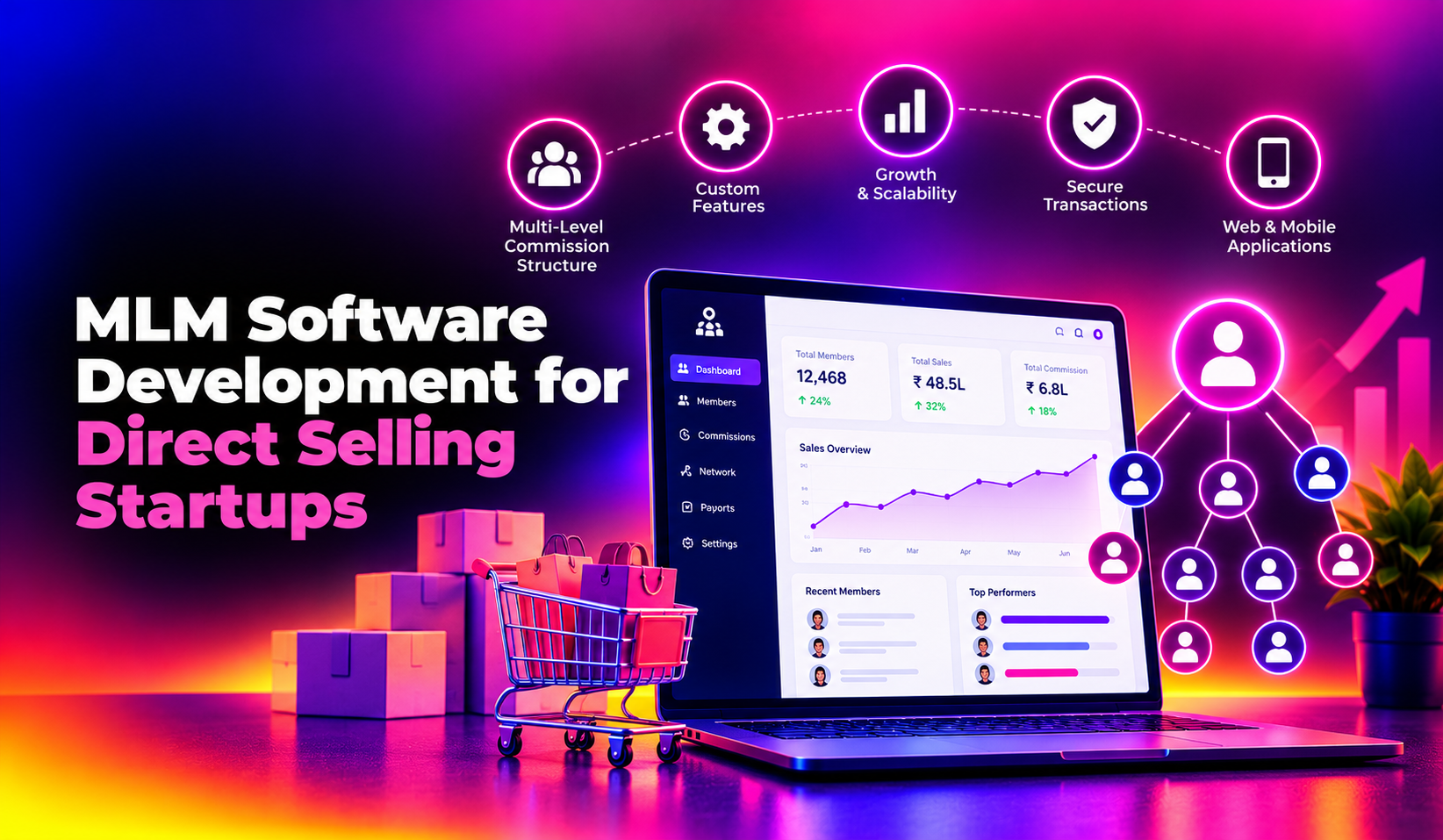
Launching a direct selling company in 2026 means one thing above all else: your compensation plan is your product. Investors, top distributors, and early recruits will scrutinize the payout logic before they scrutinize anything else. Yet most founders default to a rigid, off-the-shelf MLM platform that was built for someone else's binary or unilevel structure — and within weeks of launch they discover it cannot support their specific rules for override bonuses, rank qualifications, or leg balancing. That mismatch is exactly why MLM software development for direct selling startups has become a distinct, high-stakes category of custom software rather than a commodity purchase. This guide walks founders through what genuinely flexible MLM software requires in 2026, what it costs, and how to choose a development partner who can ship before your launch date slips.
Why Direct Selling Startups Need Custom MLM Software
Off-the-shelf MLM platforms are built around a handful of pre-configured compensation templates. That works fine if your business model matches the template exactly. Most ambitious direct selling startups don't — they want a binary plan with a custom flush-out rule, or a hybrid unilevel-matrix structure with a proprietary rank-advancement bonus that no packaged tool supports natively.
When a startup forces its plan into the wrong software, the symptoms show up fast: commission runs that need manual spreadsheet correction every payout cycle, distributors who can't trust their own dashboard numbers, and a support team fielding "why is my commission wrong" tickets in week one. For a startup trying to build trust with its first 500 distributors, that is close to fatal.
Custom mlm compensation plan software solves this by encoding your exact business rules — not a generic approximation of them — directly into the commission engine, genealogy tree, and payout scheduler. The result is a system your founding distributors can audit and trust from day one.

💡 None of these worked? Skip the guesswork.
Get Expert Help →Compensation Plan Types and Software Requirements
Before evaluating any mlm software for startups, founders should be precise about which compensation family — or combination of families — their business model actually requires. Each carries different technical demands.
Distributors build two legs, and commissions are calculated on the weaker leg's business volume. Software must support real-time leg balancing, carry-forward volume, and flush-out cycles. This is the most common starting plan for new direct selling brands because it's simple to explain to recruits, but the "weaker leg" calculation logic must be bulletproof — errors here erode trust instantly.
Distributors sponsor unlimited members on a single first level, with commissions paid down a defined number of levels. This requires flexible level-depth configuration and often a "compression" rule that skips inactive members when calculating who gets paid — a detail that off-the-shelf builds frequently hardcode incorrectly.
A fixed-width, fixed-depth structure (e.g., 3x9 or 5x7) that requires spillover logic when a leg fills up. Startups choosing matrix plans need software with configurable width/depth and clear spillover rules that distributors can visualize in their genealogy tree.
Many 2026 direct selling startups are combining elements — binary for the core downline structure plus a unilevel override bonus, or a matrix plan with a custom leadership pool. This is where packaged software fails hardest, and where a direct selling software development partner who can build a rules-based commission engine (rather than a hardcoded one) becomes essential.
The practical takeaway: the compensation plan you choose today should directly inform the software architecture you commission, not the other way around. Startups that pick software first and force-fit their plan second are the ones that end up rebuilding within a year.
There's also a launch-timeline dimension that founders underestimate. A binary or unilevel plan can usually be scoped, built, and tested within a single sprint cycle because the payout math is well understood and thoroughly documented across the industry. Hybrid and fully custom plans take longer not because the code is harder to write, but because the business rules themselves need to be precisely specified first — what happens when a distributor qualifies for two bonuses in the same cycle, how carry-forward volume behaves across a rank change, whether a leadership pool splits evenly or by weighted tier. Startups that arrive at their first vendor conversation with these edge cases already documented consistently launch weeks faster than those who expect the development team to invent the rules on the fly.
It's worth noting that compensation plan choice also affects distributor recruitment messaging. A binary plan is easy to pitch in a five-minute recruiting conversation because the "two legs, weaker leg pays" concept is intuitive. Unilevel plans appeal to founders who want unlimited direct recruitment without leg-balancing complexity. Whichever you choose, the software must make the plan's mechanics visible and explainable to distributors through a clear genealogy view and transparent commission breakdown — opacity here is one of the fastest ways new direct selling startups lose trust with their earliest and most valuable recruits.
MLM Software Development Cost in 2026
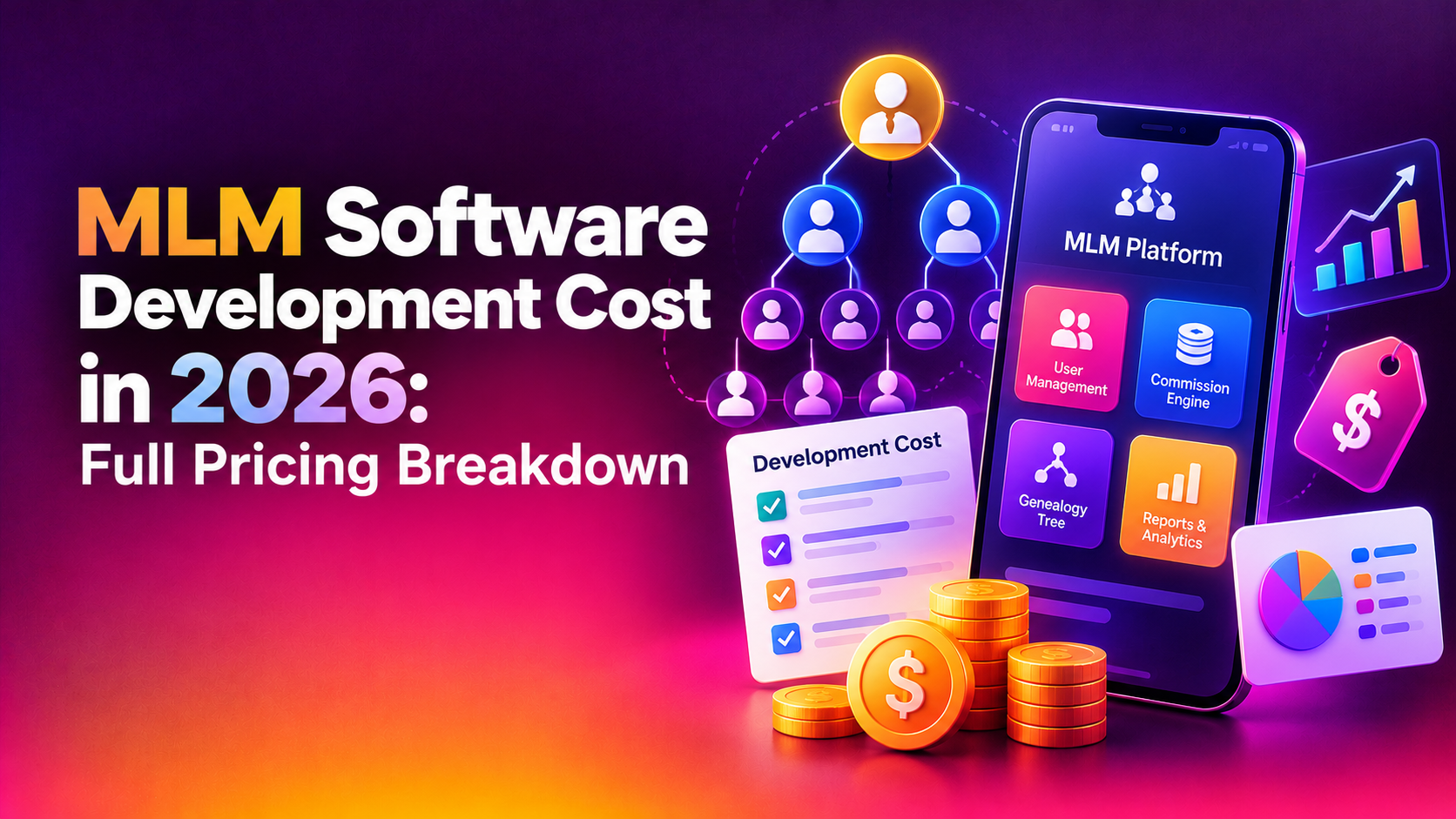
MLM software development cost in 2026 typically ranges from $8,000 for a lean binary MVP to $60,000+ for a full hybrid platform with mobile apps, e-wallet, KYC, and multi-currency payouts. Below is a realistic breakdown for direct selling startups planning a budget.
| Package Tier | What's Included | Typical Cost Range (2026) |
|---|---|---|
| Startup MVP | Single compensation plan (binary or unilevel), genealogy tree, e-wallet, admin panel, basic reporting | $8,000 – $18,000 |
| Growth | Hybrid/custom compensation engine, mobile app (distributor + admin), payment gateway integration, rank/bonus automation | $18,000 – $35,000 |
| Enterprise | Multi-plan support, multi-currency/multi-country payouts, KYC/AML compliance, advanced analytics, dedicated infrastructure | $35,000 – $60,000+ |
Three factors move the price more than anything else: compensation plan complexity, whether you need native mobile apps at launch versus a responsive web app, and compliance requirements if you're paying out across multiple countries or in crypto. Founders should budget for at least one full round of "plan simulation" testing — running thousands of sample transactions through the commission engine before go-live — since this is the single most common source of post-launch cost overruns when it's skipped.
Beyond the headline package price, startups should budget separately for ongoing costs that are easy to miss during initial planning. Hosting and infrastructure for a growing distributor base typically runs $50-$300 per month depending on scale. Payment gateway fees, particularly for cross-border or crypto payouts, can add 1-3% per transaction. And most vendors charge for post-launch change requests once the initial scope is signed off, so it pays to negotiate a bucket of included support hours — commonly 20-40 hours in the first quarter after launch — into the original contract rather than paying hourly rates for every small adjustment to a bonus rule or rank threshold.
One more line item founders frequently skip: a dedicated QA pass specifically for the commission engine, separate from general application testing. Because compensation logic directly affects distributor income, a single miscalculation can trigger a wave of support tickets and erode confidence in the platform. Reputable mlm software development company partners will quote this as its own milestone rather than folding it into general testing, and startups should treat a vendor's refusal to separate it out as a red flag.
What to Look for in an MLM Software Development Partner
Vendor selection is where most direct selling launches go wrong. Founders often choose based on a slick demo rather than the vendor's actual ability to build a custom compensation engine. Use this checklist before signing a contract:
- Can they build a rules-based commission engine, not just configure a template? Ask for a working example of a custom plan they've shipped that isn't binary, unilevel, or matrix out of the box.
- Do they provide a plan simulation/testing phase? You should be able to run sample distributor data through the engine and verify payouts before launch.
- What is their realistic timeline to your launch date? Ask for a week-by-week build plan, not just a total duration estimate.
- Do they offer ongoing support after launch? Compensation plans get amended as the business grows — you need a partner, not a one-time vendor.
- Can they show compliance awareness for KYC, AML, and payout regulations relevant to your target markets?
- Is pricing transparent, with a clear breakdown of what's included in each cost tier and what counts as a change request?
- Do they own the codebase and hand over full source code and documentation, so you're not locked into their platform indefinitely?
A capable mlm software development company should be able to answer every item on this list in a single discovery call. If a vendor can't explain how they'd technically implement your specific compensation rule, that's a signal to keep looking.
It's also worth checking references specifically from other direct selling startups rather than established enterprise MLM companies. An enterprise reference tells you the vendor can maintain a mature system; a startup reference tells you the vendor can actually get a new company from signed contract to live launch under real time pressure, including the inevitable mid-build changes to compensation rules as founders finalize their plan with legal and finance. Ask any prospective vendor for at least one startup client you can speak with directly about how closely the original timeline matched the actual delivery date.
Why Direct Selling Startups Choose CloudHouse for MLM Development
CloudHouse Technologies builds MLM software development around a rules-based commission engine rather than rigid templates, so binary, unilevel, matrix, and fully custom hybrid plans are all supported from the same codebase without a rebuild. Startups get a dedicated plan-simulation phase before launch, transparent tiered pricing with no hidden change-request fees, and full ownership of the source code once the project ships. For founders racing against an investor-committed launch date, that combination of flexibility and speed is the difference between shipping on time and explaining another delay.
Frequently Asked Questions
How much does MLM software development cost for a startup in 2026?
A lean MVP with a single compensation plan typically costs $8,000–$18,000, while a growth-stage build with hybrid compensation logic and mobile apps runs $18,000–$35,000. Enterprise multi-country platforms with compliance features can exceed $60,000. Get a scoped quote based on your specific compensation plan rather than relying on generic price lists.
How long does it take to build custom MLM software before launch?
A startup MVP with a single well-defined compensation plan can typically be built in 6–10 weeks. Hybrid or fully custom compensation engines usually need 10–16 weeks, including a dedicated plan-simulation and testing phase before go-live.
Can existing MLM software be modified for my specific compensation plan, or do I need custom development?
It depends on the software's architecture. Platforms built on a rules-based commission engine can usually be configured for custom rules without a full rebuild. Platforms with hardcoded binary or unilevel logic often can't, which is why founders should ask vendors directly whether their engine is configurable or template-based before signing.
Do MLM software vendors offer a trial or phased payment plan?
Most reputable vendors structure payment in milestones — discovery and plan design, core build, plan simulation/testing, and launch — rather than requiring full payment upfront. This lets founders validate the compensation engine works correctly before committing the full budget.
What compensation plan type is best for a new direct selling startup?
Binary and unilevel plans are the easiest to explain to first-time distributors and the fastest to build, making them common choices for launch. Many startups later evolve toward a hybrid plan as they add leadership bonuses or rank-based incentives, which is why choosing software with a flexible, rules-based engine from the start avoids a costly rebuild later.