Choosing the wrong partner for a web application build is one of the most expensive mistakes a startup founder or product manager can make. A bad vendor relationship doesn't just waste a budget line item -- it burns months of runway, delays your go-to-market window, and often leaves you with a codebase so brittle that a rebuild becomes cheaper than a fix. If you're asking how to choose a web application development company in 2026, this guide gives you the concrete, checklist-driven evaluation process that generic "how to hire a developer" articles skip over.
Unlike a simple marketing site, a web application is a living product: it has users, data, uptime expectations, and a roadmap that needs to evolve for years. That means the stakes of picking the right custom web app development partner are far higher than picking a freelancer to build a landing page. Below is the exact framework we recommend to founders and product managers before they sign anything.
What Does a Web Application Development Company Actually Do?
A web application development company designs, builds, tests, deploys, and often maintains browser-based software that goes well beyond static pages -- think SaaS dashboards, marketplaces, internal tools, booking platforms, or customer portals. Unlike a website agency that mostly handles content and design, a true web app development partner handles:
- Architecture and system design -- deciding how the frontend, backend, database, and third-party integrations fit together so the product can scale.
- Full-stack engineering -- frontend frameworks (React, Next.js, Vue), backend services (Node.js, Django, Laravel, .NET), and databases (PostgreSQL, MongoDB) chosen to match your use case.
- DevOps and infrastructure -- CI/CD pipelines, cloud hosting, monitoring, and security hardening so the app stays online and safe.
- Product thinking -- the good ones push back on scope, ask about your business model, and help you avoid building features nobody needs.
- Long-term support -- bug fixes, performance tuning, and feature additions after launch, not just a one-time delivery.
Because a web application is never really "finished" -- it evolves as your users and business grow -- you're not hiring a contractor for a single deliverable. You're choosing a long-term technical partner, which is exactly why the evaluation process matters so much more here than for a one-off marketing site.
Common Red Flags to Watch For
Before you even get to the formal checklist, a handful of warning signs tend to predict trouble down the line. Watch for vendors who refuse to name the specific engineers who'll be on your project, who quote a fixed price before running any real discovery call, or who can't explain in plain language how they'd approach your particular technical challenge. Agencies that lean heavily on generic buzzwords -- "cutting-edge," "world-class," "AI-powered" -- without being able to back them up with a specific example from a past project are usually selling a sales pitch rather than engineering expertise. Similarly, be cautious of any company that pushes you to sign a long-term contract before you've seen a single line of code or a working prototype; a confident vendor is comfortable starting with a smaller paid discovery phase first.
Vendor Evaluation Checklist: What to Look For
Before you send an RFP or jump on a discovery call, run every candidate vendor through this web app development vendor checklist. Treat it as a scorecard -- if a company can't answer two or more of these confidently, that's a red flag worth taking seriously.
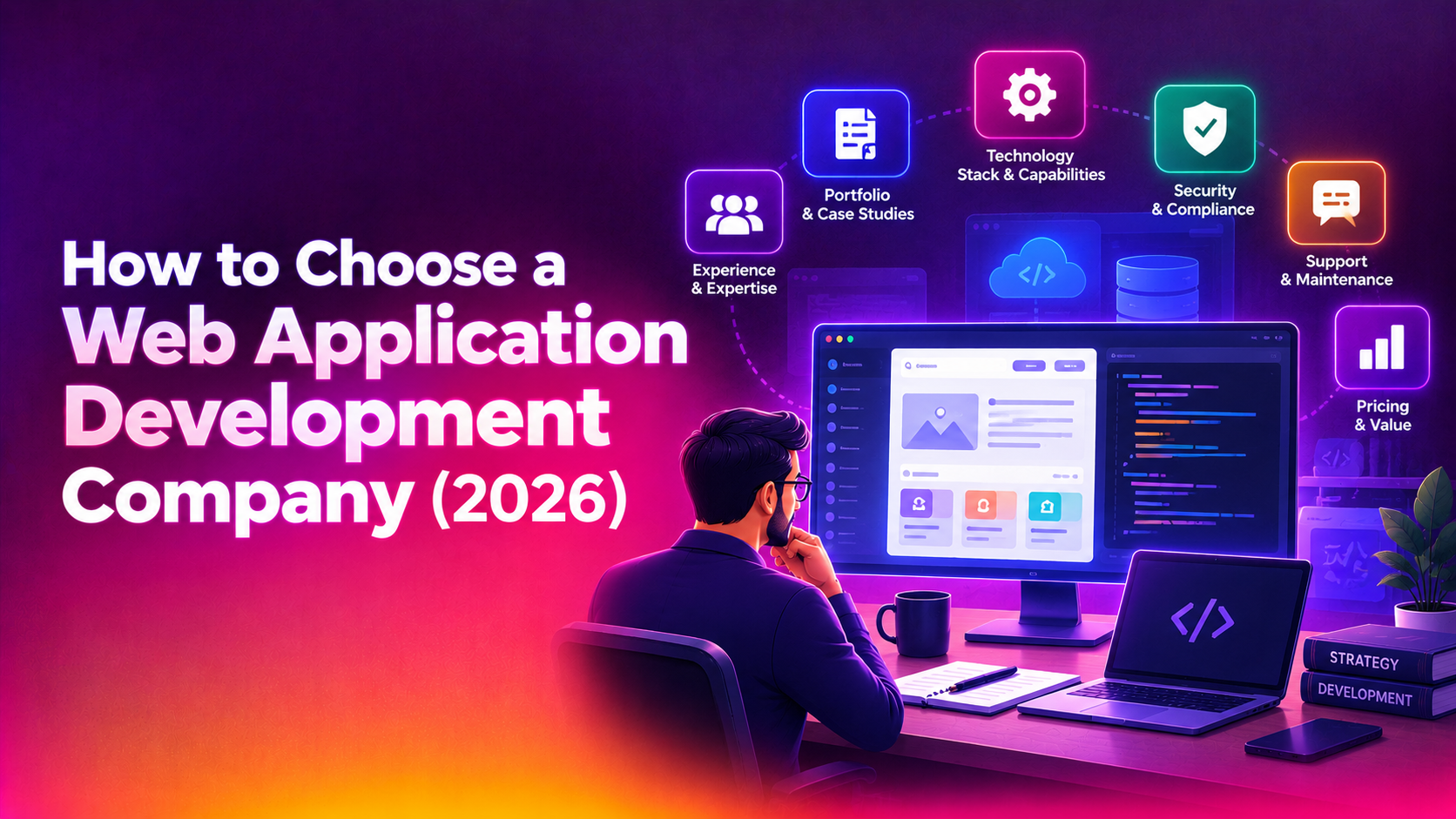
- Relevant portfolio, not just any portfolio. Ask for 2-3 case studies of web applications (not websites) similar in complexity to yours -- same industry, similar user volume, or comparable technical challenges.
- Technical depth in your required stack. If you need real-time features, ask how they've implemented WebSockets or server-sent events before. If you need heavy data processing, ask about their experience with queues and background jobs.
- Transparent, itemized pricing. A vendor that can only quote a single lump sum without a breakdown of discovery, design, development, QA, and deployment hours is a warning sign.
- A documented QA process. Ask specifically: do they write automated tests? Do they have a staging environment separate from production? Who does manual QA before release?
- Clear communication cadence. Weekly standups, a shared project board (Jira, Linear, Trello), and a single point of contact should be non-negotiable, not "nice to have."
- Post-launch support terms in writing. Does the contract include a warranty period for bug fixes? What is the hourly or retainer rate for ongoing feature work after launch?
- Code ownership and IP clauses. Confirm in writing that you own 100% of the source code and any custom components built for you -- not just a license to use them.
- References you can actually call. Not just testimonials on a website -- ask for a live client reference and actually call them.
- Security and compliance awareness. If you handle payments, health data, or PII, ask directly about their experience with PCI-DSS, HIPAA, or GDPR-relevant architecture decisions.
- Scalability track record. Ask what happens to their architecture decisions when user count goes from 1,000 to 100,000 -- a company that's only built small internal tools may not have good answers here.
Run this web application development company evaluation against at least three vendors before deciding. The differences in how confidently (and specifically) each one answers will tell you more than any sales deck.
Web Application Development Pricing in 2026
Pricing for custom web application development varies enormously depending on scope, but as a founder or product manager you need rough bands to sanity-check quotes and avoid both overpaying and underbudgeting for your project. Location of the development team also matters here: agencies based in North America or Western Europe often charge $80-$180 per hour, while experienced offshore teams in regions like South Asia typically charge $25-$60 per hour for comparable senior-level engineering talent, which is why many founders now build hybrid teams that mix an onshore product lead with an offshore development team to balance cost and communication overhead.
| Project Type | Typical Scope | 2026 Price Range (USD) | Typical Timeline |
|---|---|---|---|
| MVP / Proof of Concept | Single core workflow, basic auth, one user role | $8,000 - $25,000 | 4-8 weeks |
| Standard SaaS Web App | Multi-role auth, dashboards, billing integration, admin panel | $25,000 - $80,000 | 2-4 months |
| Complex Platform / Marketplace | Multiple user types, payments, real-time features, third-party integrations | $80,000 - $250,000+ | 4-9 months |
| Ongoing maintenance and feature work | Retainer or hourly support after launch | $1,500 - $8,000/month or $35-$95/hour | Ongoing |
Two factors move these numbers more than anything else: the number of distinct user roles and permission levels your app needs, and how many third-party integrations -- payment gateways, CRMs, shipping APIs, SSO providers -- it must connect to. If a vendor quotes far below these ranges for comparable scope, ask hard questions about what's being cut, because usually it's QA, documentation, or post-launch support that quietly disappears from the plan.
💡 None of these worked? Skip the guesswork.
Get Expert Help →Questions to Ask Before You Sign a Contract
Once you've narrowed your shortlist using the checklist above, bring these questions to the final discovery call. The answers, or the evasions, will tell you as much as the portfolio did about how the engagement will actually run.
Ask for names, roles, and seniority levels of the actual engineers assigned to your build -- not the sales team you've been talking to throughout the pitch process. Confirm whether the work is done fully in-house or subcontracted to a third party, since that changes accountability if something goes wrong.
Every real project has scope changes once users start giving feedback. Ask how change requests are estimated, approved, and billed -- a vendor without a clear, documented process here will cause budget disputes and timeline arguments later in the engagement.
Look for a vendor that's honest about risk rather than one that promises zero slippage on a complex build. Ask what specifically triggers a timeline conversation internally and how early you as the client will be told if a milestone is at risk.
Confirm you'll receive the full source code, environment documentation, admin credentials, and deployment instructions -- not just a live URL you can't maintain independently if the relationship with the vendor ever ends.
A vendor with no clear answer here is quietly signaling that your application will accumulate vulnerable, outdated dependencies within a year of launch, creating security risk you'll only discover during an audit or a breach.
Why Businesses Choose CloudHouse for Web Application Development
CloudHouse Technologies builds custom web applications for startups and growing businesses that need a partner who treats scalability and transparent pricing as table stakes, not upsells. Every engagement starts with itemized, hourly-billed scoping so you always know exactly what you're paying for and why, with no vague lump-sum quotes hiding cut corners. Clients also get direct access to the engineers actually writing their code, full source code ownership from day one, and post-launch support plans with no long-term lock-in contract. If you're currently evaluating vendors for a new build, our web application development team can walk you through architecture options and a real, itemized cost estimate before you commit to anything in writing.
Frequently Asked Questions
How much does it cost to hire a web application development company?
Costs typically range from around $8,000 for a simple MVP to $250,000 or more for a complex multi-role platform with heavy integrations, though most standard SaaS-style web apps fall between $25,000 and $80,000 depending on features, integrations, and timeline requirements.
How long does it take to build a custom web application?
A basic MVP can launch in as little as 4-8 weeks, a standard SaaS application typically takes 2-4 months from discovery to launch, and complex platforms with multiple user roles and integrations often need 4-9 months of dedicated development work.
Do web application development companies offer month-to-month contracts?
Many do, especially for post-launch maintenance and feature work -- look specifically for a vendor who offers hourly or monthly retainer support without requiring a long-term lock-in contract, since this gives you flexibility if your priorities or budget change.
What's the difference between hiring an agency and hiring freelance web application developers?
An agency provides a full team -- project management, QA, design, and multiple engineers -- with continuity if one person leaves the project, while freelance web application developers are often cheaper for very small scopes but carry more risk around availability, code quality consistency, and long-term support after launch.
How do I know if a development company can actually scale my application?
Ask for concrete examples of applications they've built that grew from a few hundred to tens of thousands of users, and probe specifically on how their architecture decisions around database design, caching, and infrastructure choices changed as real usage grew over time.
Vendor selection isn't a one-time decision you make and forget -- revisit this checklist any time you're scoping a major new feature or a second product line, since the right partner for a small MVP may not be the right partner once your application needs to support tens of thousands of concurrent users. Choosing a web application development company is ultimately a bet on a multi-year working relationship, not a single one-off transaction. Run every candidate through the vendor evaluation checklist above, sanity-check their pricing against the 2026 market bands, and ask the five contract questions before signing anything. Do that, and you dramatically reduce the risk of a blown timeline or a product that can't scale past its first hundred users.