Picking the wrong partner for an ERP project doesn't just waste budget — it can derail operations across every department that depends on the system going live on time. This guide gives you a practical, usable checklist for how to choose an ERP development company in 2026, based on the criteria that actually predict implementation success versus the ones vendors like to emphasize in sales pitches.
What Is ERP Development and Who Needs It?
ERP (Enterprise Resource Planning) development means building or heavily customizing a system that unifies finance, inventory, HR, procurement, and operations into a single source of truth. Businesses running on disconnected spreadsheets, multiple point solutions that don't talk to each other, or an off-the-shelf ERP that no longer fits their processes are the primary candidates for a custom or heavily customized ERP build. Manufacturing, distribution, and multi-location service businesses see the fastest ROI, since these industries suffer the most from siloed data.
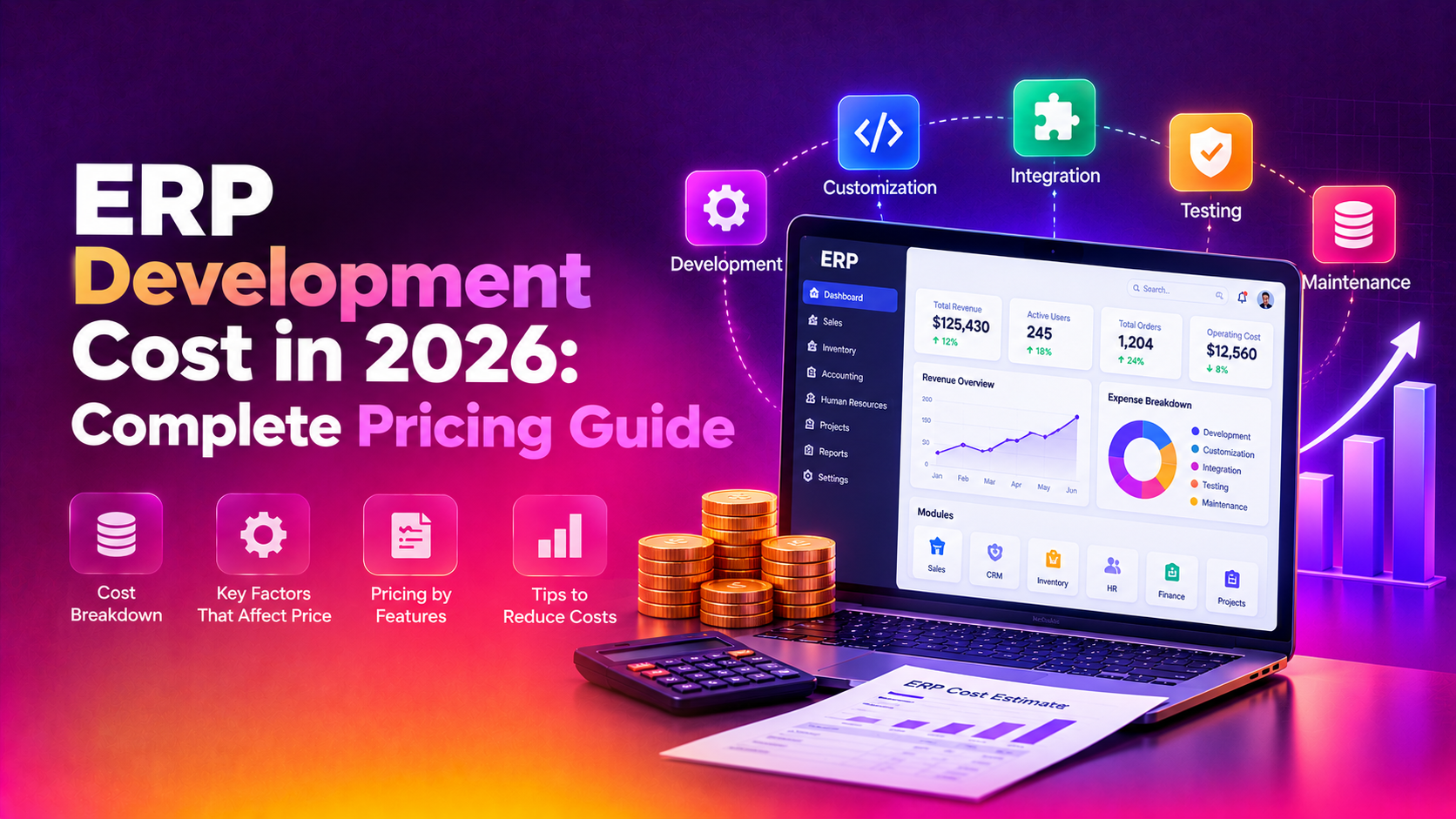
How Much Does ERP Development Cost in 2026?
Custom ERP projects in India typically range from ₹5,00,000 for a lightweight single-department system to ₹40,00,000+ for a multi-module enterprise-wide platform, with most mid-sized businesses landing between ₹10,00,000-₹25,00,000. Most ERP software development projects take six to eighteen months depending on the number of modules and integrations required. Budget separately for ongoing support — a properly maintained ERP needs continuous minor enhancements as your business processes evolve, so treat the initial build as the start of an ongoing relationship, not a one-time expense.
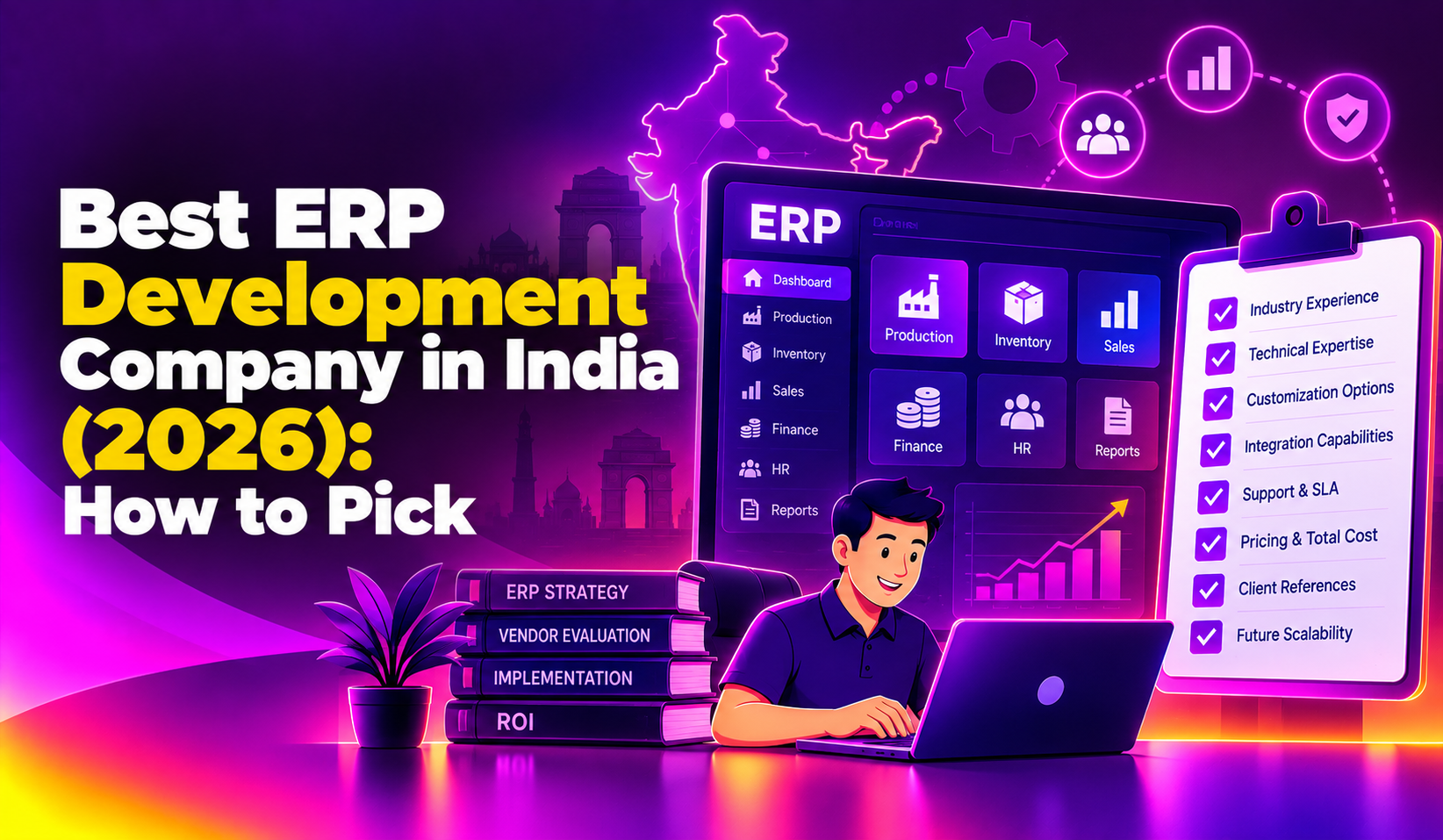
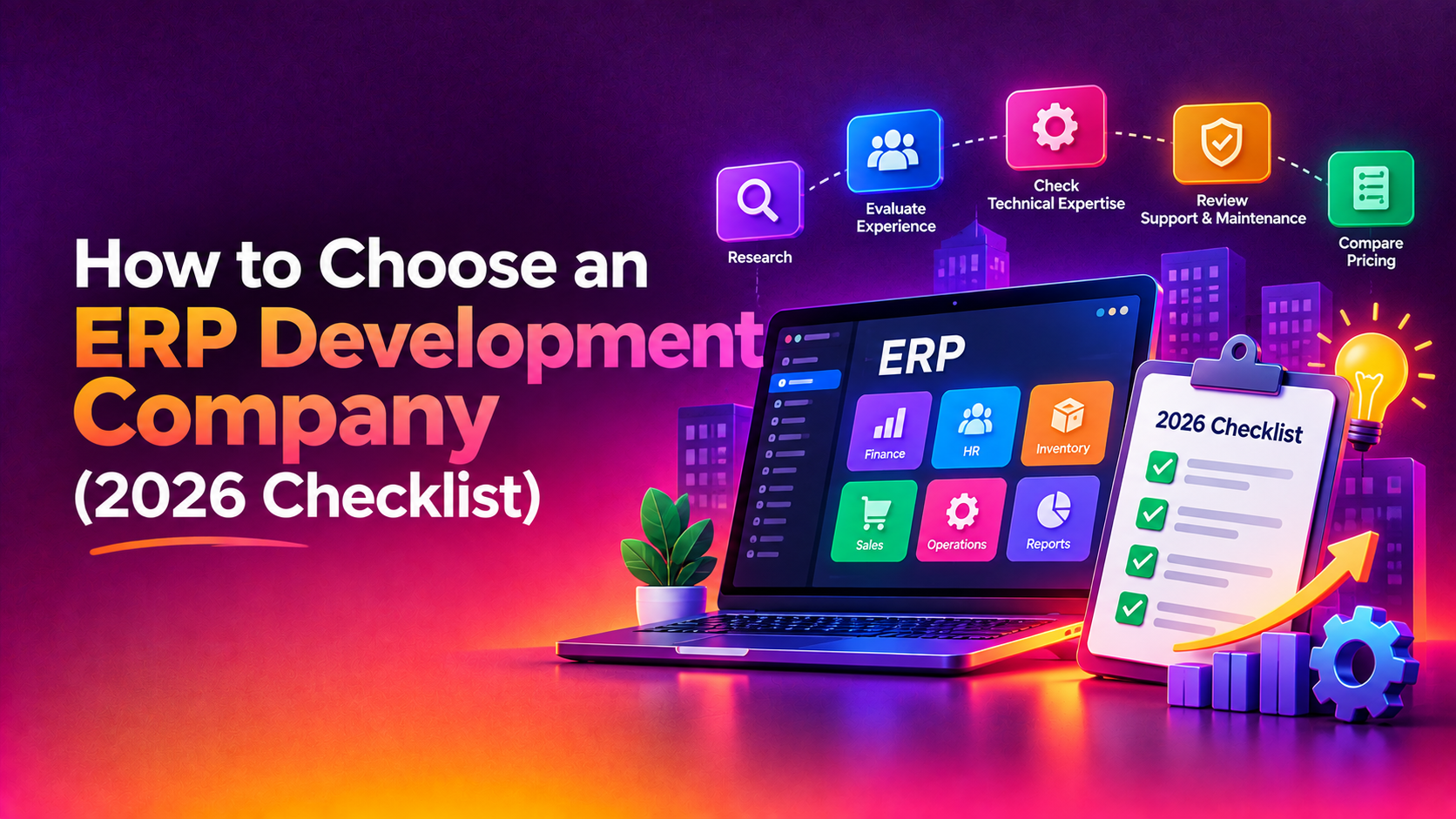
Vendor Evaluation Checklist: What to Look for in an ERP Development Company
Use this checklist when comparing ERP vendors — treat any provider who can't satisfy most of these points as a red flag:
- Requirements discovery first — Do they insist on a structured discovery phase across departments before quoting a price, or do they quote off a single conversation?
- Industry-specific case studies — Can they show a live reference client in your industry, not just a generic portfolio page?
- Technical stack fit — Are the technologies they propose ones with an available developer talent pool, so you're not stranded if the original team leaves?
- Security and compliance — Do they have a documented approach to data security and any industry-specific compliance your business requires?
- Scalability plan — Can the architecture support more users, more locations, or new modules without a full rebuild?
- Support model after go-live — What is the exact SLA for bug fixes vs. new feature requests, and how is each billed?
- Data migration methodology — How will your existing data (from spreadsheets or a legacy system) be migrated and validated before cutover?
- Financial stability — Does the vendor have the track record and stability to support you 3-5 years from now, not just through initial launch?
Before approaching vendors, prioritize your own requirements into "must-haves," "nice-to-haves," and lower-priority features — this single step prevents scope creep and inflated quotes more than any vendor-side criteria.
In-House vs Outsourced: Which Is Right for You?
Building ERP capability in-house requires a multi-disciplinary team (backend, frontend, database, and often a dedicated business analyst) — a realistic in-house ERP team costs ₹3,00,000-₹5,00,000/month in India before accounting for the 6-12 months needed to build genuine ERP architecture experience. An experienced ERP development company brings that expertise from day one, having already solved the module-integration and data-migration problems that in-house teams typically discover the hard way mid-project. In-house ERP teams make sense only for very large enterprises running continuous, multi-year ERP evolution — for most mid-sized businesses, outsourcing is faster and lower-risk.
Why Businesses Choose CloudHouse for ERP Development
CloudHouse Technologies runs a structured, department-by-department discovery process before scoping any ERP project, ensuring the final system reflects how your business actually operates rather than a generic template. We provide milestone-based delivery with clear sign-off points, full source-code ownership, and hourly-billed post-launch support rather than a rigid annual contract. This transparency is precisely what most ERP vendor evaluations reveal is missing from competitors.
Frequently Asked Questions
How much does ERP development cost in 2026?
Custom ERP projects typically range from ₹5,00,000 for a lightweight system to ₹40,00,000+ for a multi-module enterprise platform, with most mid-sized businesses spending ₹10,00,000-₹25,00,000.
How long does an ERP implementation take?
Most ERP software development projects take six to eighteen months, depending on the number of modules, integrations, and the complexity of data migration from legacy systems.
What questions should I ask an ERP vendor before signing?
Ask about their discovery process, industry-specific case studies, data migration methodology, exact post-launch support SLA and billing model, and whether you retain full source-code ownership.
Should I build ERP capability in-house or outsource it?
Outsourcing is faster and lower-risk for most mid-sized businesses, since an experienced vendor has already solved common ERP architecture and integration challenges that in-house teams typically learn through costly trial and error.
What is the biggest mistake businesses make when choosing an ERP vendor?
Skipping a structured internal requirements-gathering phase before approaching vendors. Without a prioritized requirements list, quotes become difficult to compare and scope creep becomes almost inevitable during implementation.