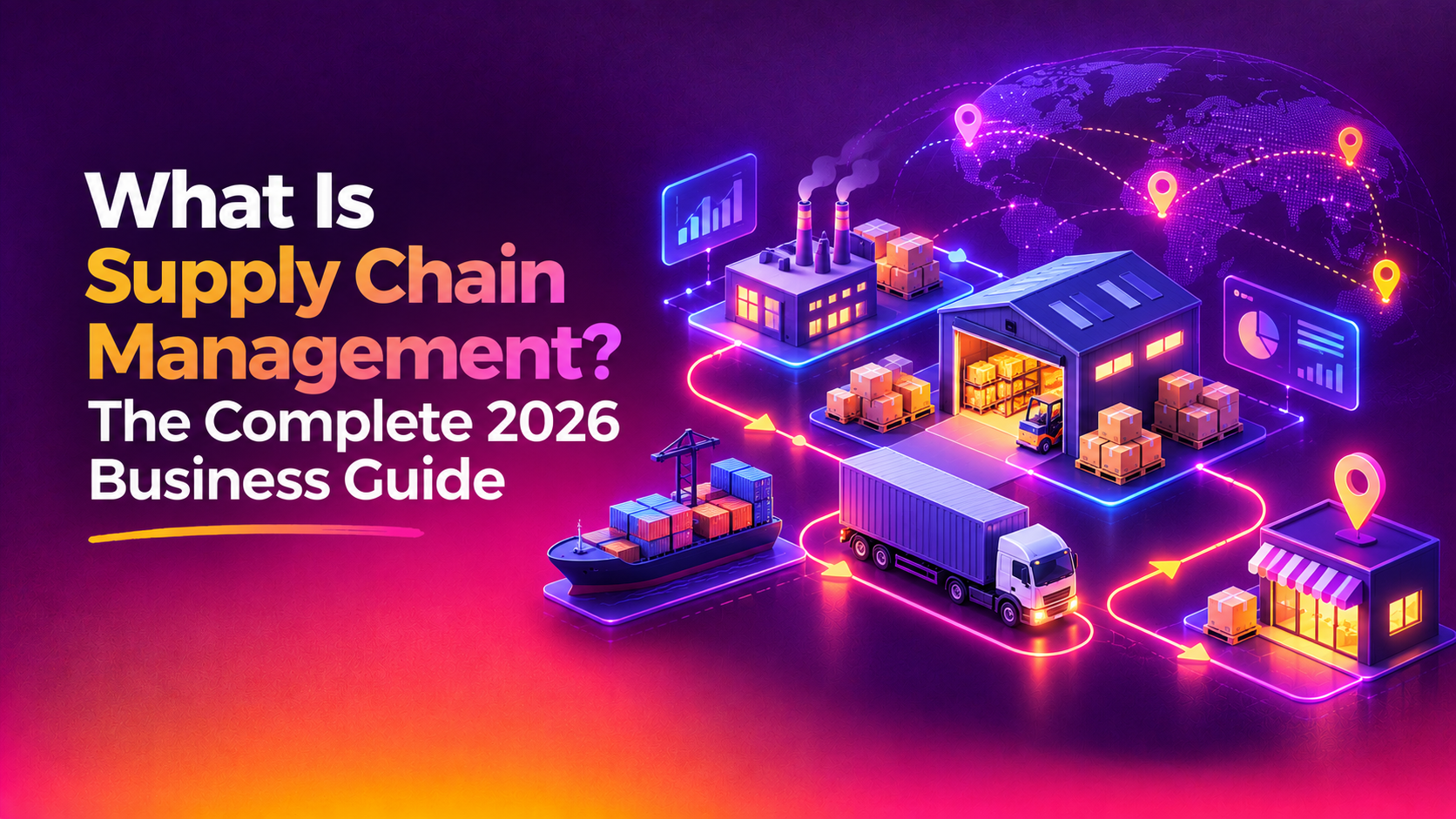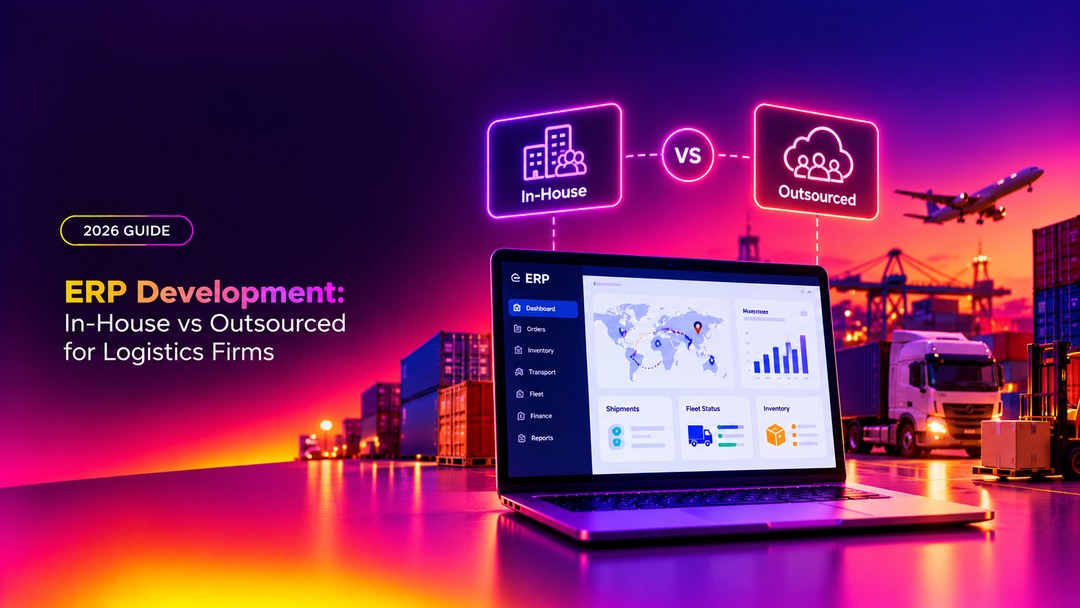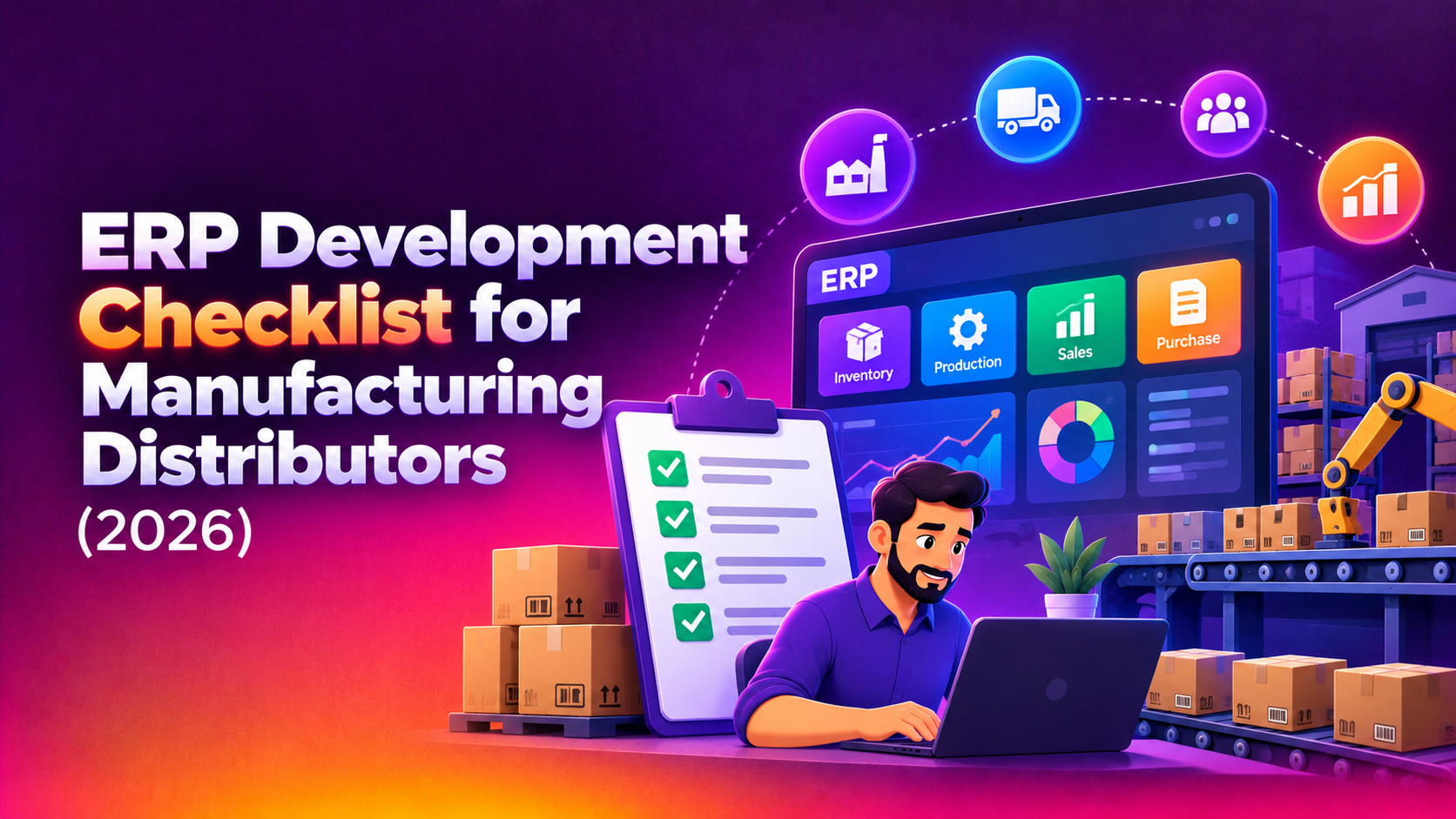
Retail chains hit a wall that single-store businesses never see: the spreadsheet-and-standalone-POS setup that worked for one location starts breaking the moment you open a third or fourth store. Stock counts stop matching reality, regional managers report numbers that don't reconcile at head office, and every new location adds another manual workaround. At that point, the real question isn't "do we need an ERP" — it's erp development in-house vs outsourced for retail chains, and getting that decision wrong costs far more than a bad software choice. It costs months of operational chaos across every store you run.
This guide breaks down both paths honestly — what an in-house ERP team actually costs over three years, what outsourced retail erp development actually delivers, and which one fits a retail chain operations or IT director trying to standardize inventory, POS, and reporting across multiple stores without blowing the budget or losing control of the system.
Why This Decision Is Harder for Retail Chains Than for Single-Location Businesses
A single store can survive on QuickBooks and a POS system with a spreadsheet bolted on. A retail chain can't, because three things break at scale that don't break at one location:
- Inventory visibility — you need real-time stock levels across every store, plus the ability to transfer stock between locations without a phone call and a manual ledger entry.
- Centralized reporting — head office needs consolidated sales, margin, and shrinkage data across all stores in one dashboard, not ten separate exports stitched together at month-end.
- Consistent processes — every store needs to follow the same reordering, pricing, and promotion rules, which is impossible to enforce manually once you pass 4-5 locations.
A multi-store erp system solves all three, but building or buying one is where the in-house vs outsourced decision actually gets made — and it's rarely as simple as "outsourcing is cheaper" or "in-house gives more control." Both are true in different ways, which is exactly why this comparison matters.
💡 None of these worked? Skip the guesswork.
Get Expert Help →What Building an In-House ERP Team Actually Costs a Retail Chain
Retail operations directors often underestimate in-house cost because they price only the developers, not the full team required to ship and maintain a production ERP system.
A functional in-house ERP build needs at minimum a project lead, 2-3 backend developers, a frontend developer, a QA engineer, and a DevOps/infra person for deployment and uptime. In most Indian metros, that's a fully-loaded monthly cost of roughly ₹6-10 lakh, even before equipment, tooling, and management overhead.
An internal team has to learn retail-specific ERP architecture from scratch — multi-location inventory sync, POS integration patterns, tax rules across states, barcode and SKU management at scale. That learning curve typically adds 2-4 months before the team is genuinely productive, time you're paying full salaries for with nothing shipped.
ERP is a specialized skill set. Losing even one senior backend developer mid-build can stall the project for weeks while you rehire and re-onboard — and unlike an outsourced vendor, there's no contractual SLA forcing continuity.
Once the core system is live, a full-time team of 5-7 people is often oversized for ongoing maintenance and incremental feature work. Many retail chains end up paying near-full-team salaries for a fraction of full-team output in year two and beyond.
Every sale, transfer, or stock adjustment at any store should update central inventory within seconds, not overnight batch jobs.
Staff at any store should be able to request stock from a nearby location and have it tracked as an internal transfer, not a manual note passed to head office.
Bulk purchasing should route through head office for supplier pricing leverage, while individual stores retain the ability to flag local demand spikes.
Sales data from every POS terminal needs to feed the same inventory and reporting layer without manual reconciliation — this is the single most common failure point in retail ERP rollouts.
Both in-house and outsourced teams can build these features. The difference is how many times the team has already built them before — and that experience is usually where outsourced vendors have a genuine edge for a first-time retail ERP build.
Why Retail Chains Choose CloudHouse for Multi-Store ERP Development
CloudHouse builds retail ERP systems around the specific operational pain points of multi-store chains — real-time inventory sync, inter-store transfers, and unified POS integration — rather than adapting a generic ERP template after the fact. Engagements start with a scoped pilot module (typically inventory + POS for one store) so you validate delivery quality before committing budget to a full multi-store rollout, and support continues on flexible hourly or retainer terms after go-live rather than locking you into a rigid annual contract.
Making the Call: A Practical Decision Framework
For most retail chains evaluating erp development in-house vs outsourced for retail chains, the decision comes down to three questions:
- Do you have 6+ months and budget for a dedicated hiring and ramp-up cycle before any store benefits? If not, outsourcing gets a working pilot live faster.
- Is your retail operation complex or unusual enough that no vendor has solved it before? If yes, in-house control may justify the higher cost. Most standard multi-store retail operations are not this unusual.
- Can you commit to a full-time team's salary even during slower maintenance periods? If not, an outsourced retainer model avoids paying for idle capacity.
For the majority of retail chains in the 5-30 store range, outsourced development delivers a working multi-store system faster and at a lower total three-year cost, provided the vendor has genuine retail ERP experience and the contract clearly defines code ownership and support terms.
The Hybrid Model: A Middle Path Some Retail Chains Choose
Not every chain has to pick one model permanently. A growing number of retail operations directors use a hybrid approach: outsource the initial build of the multi-store erp system — inventory sync, POS integration, and core reporting — then hire a small internal team of 1-2 people to own day-to-day configuration, new-store rollouts, and minor feature requests once the system is stable.
This works well because the hardest, most specialized part of the build (architecture, integrations, data migration from legacy POS systems) is handled by a team that has already solved it elsewhere, while ongoing store-level configuration — adding a new location, adjusting reorder thresholds, tweaking reports — doesn't require deep ERP engineering skill and can be handled by a smaller in-house resource at a fraction of a full team's cost.
The main condition for this to work is contractual: your outsourced vendor needs to hand over full documentation and, ideally, provide a defined support retainer so your smaller internal team has an escalation path for anything beyond routine configuration. Chains that skip this step often find themselves stuck when the internal hire encounters an issue outside their depth and there's no clear support agreement in place.
Get Your Retail Chain's ERP Built Right the First Time
If you're weighing whether to build an internal ERP team or bring in a partner who has already solved multi-store inventory and POS sync, CloudHouse can scope a pilot module for your chain within weeks, not quarters. Talk to our ERP development team about a fixed-scope pilot for your retail chain — no long-term contract required to get started.
Frequently Asked Questions
How much does outsourced ERP development cost for a retail chain?
For a chain with 5-15 stores, outsourced outsourced erp development cost for the initial build typically runs $40,000-$150,000, depending on how many modules (inventory, POS integration, purchasing, reporting) are included in scope. A scoped pilot for one store is usually a fraction of that, letting you validate the vendor before committing to the full rollout.
How long does it take to get a multi-store ERP system live?
An outsourced team typically gets a pilot module — inventory and POS sync for one store — live in 6-10 weeks. Rolling that out across the full chain, plus adding purchasing and reporting modules, usually takes 4-8 months total. Building the same system in-house typically adds 2-4 months just for hiring and ramp-up before development even starts.
Is it risky to trust an outside vendor with our inventory and sales data?
Any reputable vendor should offer a written data ownership agreement, secure hosting, and the ability to export your data at any time — not only at contract termination. Ask specifically about these terms before signing, and start with a small pilot module so you can evaluate data handling and delivery quality before committing your full ERP build.
Can we switch from outsourced back to an in-house team later if we want more control?
Yes, provided you negotiate code ownership and documentation handover rights upfront. A well-built ERP with clear documentation can be handed to an internal team later; the risk only arises if the contract doesn't guarantee you own the source code and receive full technical documentation.
Do we need a completely custom ERP, or can we use an off-the-shelf retail platform?
Off-the-shelf retail ERP platforms work well if your store operations are fairly standard. A custom or heavily customized multi-store erp system is worth the investment if your chain has non-standard workflows — unusual transfer rules, regional pricing variations, or supplier integrations that off-the-shelf platforms don't support without expensive add-ons.