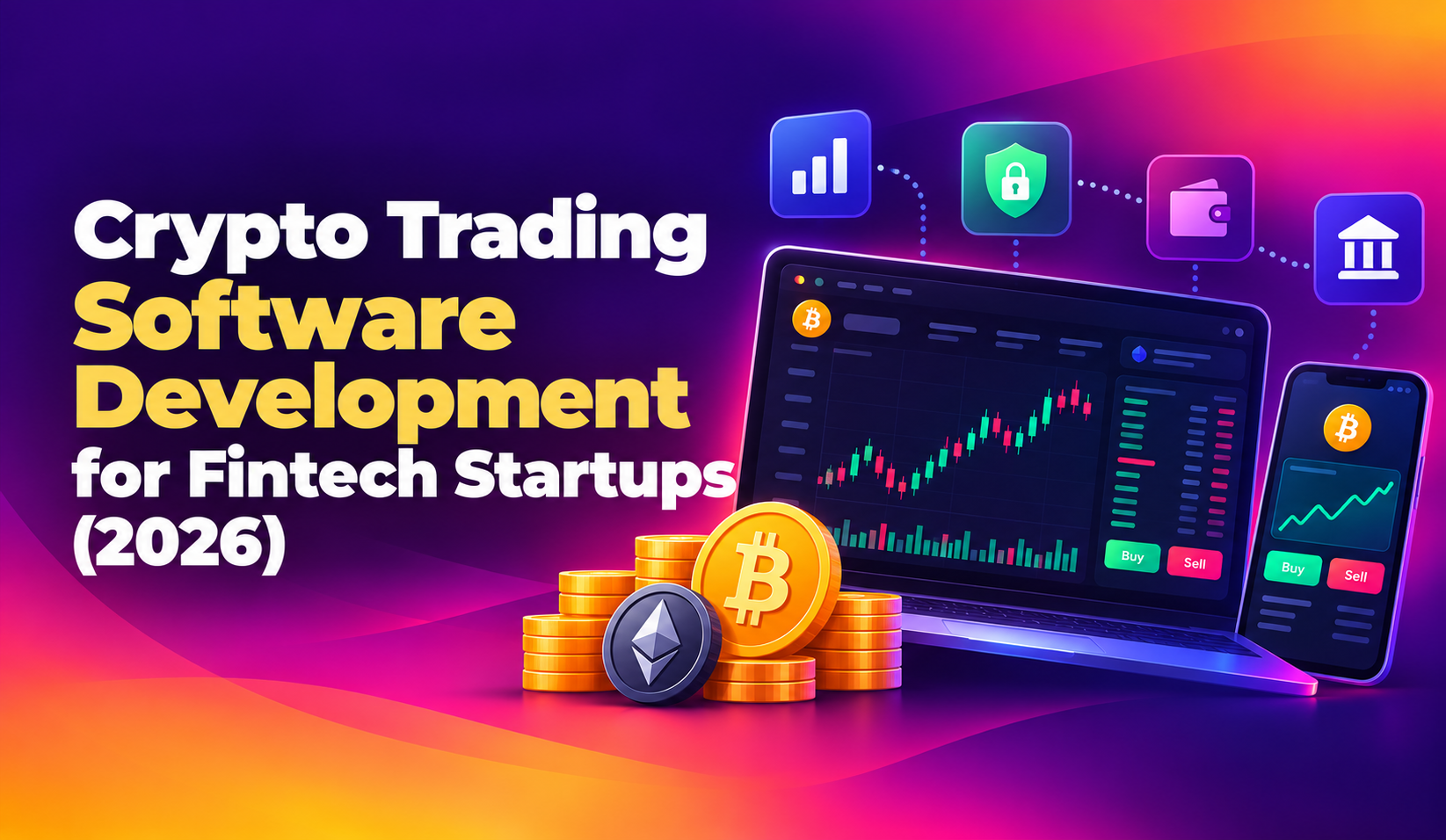
If you're a fintech founder or CTO trying to launch a crypto trading platform in 2026, you already know the hardest part isn't the idea — it's finding a crypto trading software development partner who has actually built a live trading engine before, not just a wallet app or a generic fintech dashboard. Most agencies pitching "crypto exchange development" have never handled order matching under load, custody key management, or a real KYC/AML audit. This guide breaks down exactly what fintech startups need from a crypto trading software development for fintech startups partner: the must-have features, real 2026 cost ranges, the build-vs-white-label decision, and how to vet a vendor who can actually deliver.
We've written this from the perspective of a founder or CTO who has already been burned once — either by a generic app-development shop that underestimated the compliance workload, or by a white-label vendor whose "customization" turned out to be a rebranded template with no real flexibility. If that's you, keep reading: the goal here is real numbers, real trade-offs, and a clear path to picking the right partner the first time.
What Fintech Startups Need From a Crypto Trading Software Partner
Building a crypto trading platform is fundamentally different from building a typical fintech app. You're not just moving data — you're moving real money in real time, across a landscape where a single matching-engine bug or a missed AML flag can end the company. Before you sign with any vendor, confirm they can demonstrate the following:
- Proven trading-system experience — ask for a live or sandboxed demo of an order book, not a portfolio of "fintech-adjacent" apps
- Security-first architecture — cold/hot wallet separation, multi-sig or MPC custody, and penetration-test reports on file
- Regulatory fluency — hands-on experience with KYC/AML integrations (Sumsub, Jumio, ComplyAdvantage) and jurisdiction-specific licensing constraints
- Scalable infrastructure — the ability to handle order bursts and market volatility spikes without downtime
- Post-launch support — a real maintenance and monitoring plan, since a trading platform is never "done" at launch
Generic app-development shops will tell you a crypto exchange is "just a fintech app with an extra wallet screen." It isn't. The engineering discipline required for a matching engine, liquidity routing, and 24/7 uptime under financial risk is closer to building a mini stock exchange than a mobile banking app — and that's exactly the gap that separates a real fintech crypto trading software partner from a generalist.
There's also a due-diligence angle most founders underestimate: your investors and legal counsel will eventually ask to see architecture documentation, security audit results, and a compliance rationale for every jurisdiction you operate in. A partner who can't produce this documentation cleanly — because they never had to build it for a real client before — will slow down your next funding round, not just your launch date.
💡 None of these worked? Skip the guesswork.
Get Expert Help →Core Features Every Crypto Trading Platform Must Have
Whether you're building for retail traders, institutional clients, or both, these are the non-negotiable components of any serious platform:
The core of any exchange. It needs to process limit, market, and stop orders in milliseconds, with a proven track record of handling volume spikes without order-book corruption. This is the single hardest component to get right, and the one most "app shop" vendors have never actually built from scratch.
Cold storage for the bulk of assets, hot wallets for liquidity, and increasingly MPC (multi-party computation) custody to eliminate single points of failure. A single-wallet architecture is a common shortcut that looks fine in a demo and becomes a catastrophic risk the day you have real trading volume.
Automated identity verification, sanctions-list screening, and real-time transaction monitoring that flags suspicious activity before regulators ask why you missed it. This should integrate with a dedicated provider rather than being built in-house from zero — reinventing KYC is rarely a good use of your engineering budget.
Especially for early-stage exchanges, connecting to external liquidity providers or market makers so your order book doesn't look empty on day one. An empty order book is one of the fastest ways to lose new users' trust in the first week of launch.
Real-time visibility into trading volume, exposure, withdrawal patterns, and anomaly detection — this is what your compliance officer will live in daily. Founders often skip investing here until after their first close call, which is the wrong order to learn this lesson.
If you plan to onboard institutional or algorithmic traders, REST/WebSocket APIs and FIX protocol connectivity are expected from day one, not a "phase two" feature. Retrofitting FIX support onto a platform that wasn't designed for it is a significant, avoidable rebuild cost.
Every one of these is part of what should be scoped in your custom crypto trading engine development requirements before a single line of code is written — cutting corners here is the single most common reason crypto startups fail security audits or investor due diligence.
How Much Does Custom Crypto Trading Software Cost in 2026?
One of the biggest frustrations fintech founders report is that most articles on this topic simply avoid giving real numbers. Here's an honest breakdown of what crypto trading platform development cost actually looks like in 2026, based on current market data:
| Platform Tier | Typical Scope | Estimated Cost | Timeline |
|---|---|---|---|
| MVP Exchange | Single blockchain, basic order types, KYC integration, fiat on-ramp via third party | $60,000 – $150,000 | 3–5 months |
| Mid-Tier Trading Platform | Multi-asset, advanced charting, mobile + web, liquidity aggregation | $150,000 – $400,000 | 6–10 months |
| Institutional-Grade Exchange | Custom matching engine, FIX protocol, multi-jurisdiction compliance, dedicated custody | $500,000 – $1,000,000+ | 12–24 months |
On top of development, budget $20,000–$100,000 for compliance and legal consulting — and remember this is an ongoing line item, not a one-time cost, since regulatory requirements evolve constantly. Annual maintenance for a custom-built platform typically runs 15–25% of the original development cost, covering security patches, blockchain integration updates, and bug fixes.
If your budget doesn't stretch to a full custom build yet, an MVP-first approach — scoping to one core trading workflow, using proven third-party KYC/payment APIs instead of building them from scratch, and building cross-platform rather than native — can meaningfully reduce your first-year spend without compromising security.
It's worth stress-testing any quote you receive against this range. A vendor quoting $15,000 for a "full crypto exchange" is either reusing an unlicensed template with hidden security gaps, or planning to bill you heavily in change orders once you realize the missing scope. Conversely, a quote well above $1M for a straightforward MVP usually signals an agency padding for a client that doesn't know better — always ask for a feature-by-feature cost breakdown, not a single lump sum.
Build vs White-Label: Choosing the Right Approach for a Startup
This is the decision that determines your speed to market, your compliance flexibility, and your long-term cost curve — get it wrong and you'll either burn runway rebuilding a white-label platform's limitations, or overspend on custom features you didn't need at launch.
- Speed to market — white-label solutions can launch in 6–12 weeks; a custom build realistically takes 3–12+ months depending on scope
- Compliance flexibility — white-label platforms ship with pre-tested compliance features that work well in common jurisdictions, but a white label crypto exchange for startups operating in a stricter regulatory environment may hit walls that only custom development can solve
- Cost structure — white-label setup typically runs $50,000–$150,000 upfront plus $5,000–$25,000/month in ongoing fees; custom development is a larger upfront investment but gives you full IP ownership and no recurring licensing dependency
- Differentiation — if your trading engine, matching logic, or asset coverage is your actual competitive advantage, a white-label platform will cap what you can build
- Long-term control — custom platforms mean your team (or your dev partner) owns every line of code; white-label means you're dependent on someone else's roadmap and uptime
Most fintech startups land on a hybrid path: launch on a semi-custom or white-label-adjacent MVP to validate demand and get first users trading, then migrate to a fully custom crypto trading software compliance-ready platform once volume and funding justify the investment. A good dev partner should be honest with you about which path fits your stage — not just push whichever is more profitable for them.
One practical test: ask a prospective vendor which approach they'd recommend for your specific stage and jurisdiction before you've told them your budget. A partner who recommends the same "full custom build" answer regardless of your context is optimizing for their invoice, not your outcome. The right answer genuinely depends on your target markets, your funding stage, and how differentiated your trading logic needs to be to compete.
Why Fintech Startups Choose CloudHouse for Crypto Trading Software
CloudHouse Technologies works with fintech founders who need more than a demo — we've built order-matching logic, wallet architecture, and KYC-integrated onboarding flows for real trading products, not just prototype dashboards. What founders consistently tell us matters most: we scope the MVP honestly instead of upselling every feature on day one, we document security and compliance decisions so your legal counsel and investors can actually review them, and we stay on as a maintenance partner post-launch instead of disappearing after the handoff. If you're evaluating vendors for crypto trading software development, ask any partner — including us — to walk you through a past matching-engine architecture in detail. That single conversation usually reveals who's actually done this before.
We also work with founders who are still deciding between white-label and custom, and are happy to give an honest recommendation even if it means a smaller initial engagement — because the startups that succeed with us long-term are the ones we set up correctly from day one, not the ones we oversold in the first sales call.
Frequently Asked Questions
How much does crypto trading software development cost for a startup in 2026?
A basic MVP exchange with single-blockchain support and third-party KYC integration typically costs $60,000–$150,000, while a mid-tier multi-asset platform runs $150,000–$400,000. Institutional-grade platforms with custom matching engines and multi-jurisdiction compliance can exceed $500,000. Add $20,000–$100,000 for ongoing compliance and legal consulting, since this is not a one-time cost.
How long does it take to build a custom crypto trading platform?
An MVP with core trading functionality typically takes 3–5 months. A mid-tier platform with liquidity aggregation and advanced charting takes 6–10 months, and an institutional-grade exchange with FIX protocol support and multi-jurisdiction compliance can take 12–24 months. White-label alternatives can launch in 6–12 weeks but offer less customization.
Is a white-label crypto exchange safe and compliant for a fintech startup?
Established white-label solutions do come with built-in security protocols and pre-tested compliance features, which works well for common jurisdictions. However, if you're operating in a market with stricter or unusual regulatory requirements, you'll likely need custom KYC/AML workflows that most white-label platforms can't fully support — this is where a hybrid or custom approach becomes necessary.
What features should I look for in a crypto trading software development partner?
Look for proven experience with order-matching engines (not just wallet apps), cold/hot wallet or MPC custody architecture, hands-on KYC/AML integration experience, and a documented post-launch maintenance plan. Ask to see a real trading-system demo, not just a portfolio of general fintech projects.
Can I trust a dev partner if I have no in-house blockchain expertise?
Yes, but you should verify their compliance and security track record independently — ask for past penetration-test summaries, references from other fintech clients, and a clear breakdown of how they'll document architecture decisions for your investors and legal counsel. A partner who avoids these questions is a red flag, regardless of how polished their pitch deck looks.
Launching a crypto trading platform in 2026 is a high-stakes engineering and compliance challenge, not a weekend build. The startups that succeed are the ones who pick a development partner with real trading-system experience, budget honestly for both development and ongoing compliance, and choose the build-vs-white-label path that actually matches their stage and jurisdiction. Get those three decisions right, and the rest of the roadmap gets a lot easier.