You built an audience the hard way. Your signals are followed, your community is active, and members keep asking for one thing: "Can the bot just place the trades for me?" This guide covers crypto trading software development for signal providers: what a productised platform needs, where the real risks sit, and how to decide between a custom build and a white-label tool. Our crypto trading software development service page explains how we run these engagements.
We do not promise trading results, and nothing here is legal or financial advice. This is about engineering a reliable product around your signals so you can scope, budget and launch with fewer surprises.
From Telegram Channel to Trading Product
Most signal businesses start the same way: a channel, a spreadsheet of members and a manual payment process. That works until you have hundreds of subscribers, several strategies and a support inbox full of questions about missed entries. Productising means turning your signals into structured data that software can act on, and turning your community into accounts with plans, permissions and billing.
A realistic product has five layers:
- Signal engine: where your calls are created, validated and stored in a machine-readable format.
- Execution engine: connects to exchanges and places orders for each subscriber who opted in.
- Subscriber platform: sign-up, plans, billing, exchange connection and settings.
- Risk and monitoring layer: limits, kill switches, alerts and audit trails.
- Analytics layer: backtesting, performance reporting and admin dashboards.
Skipping any one of these usually shows up later as a support burden or a trust problem with your members.
Exchange API Integration Done Properly
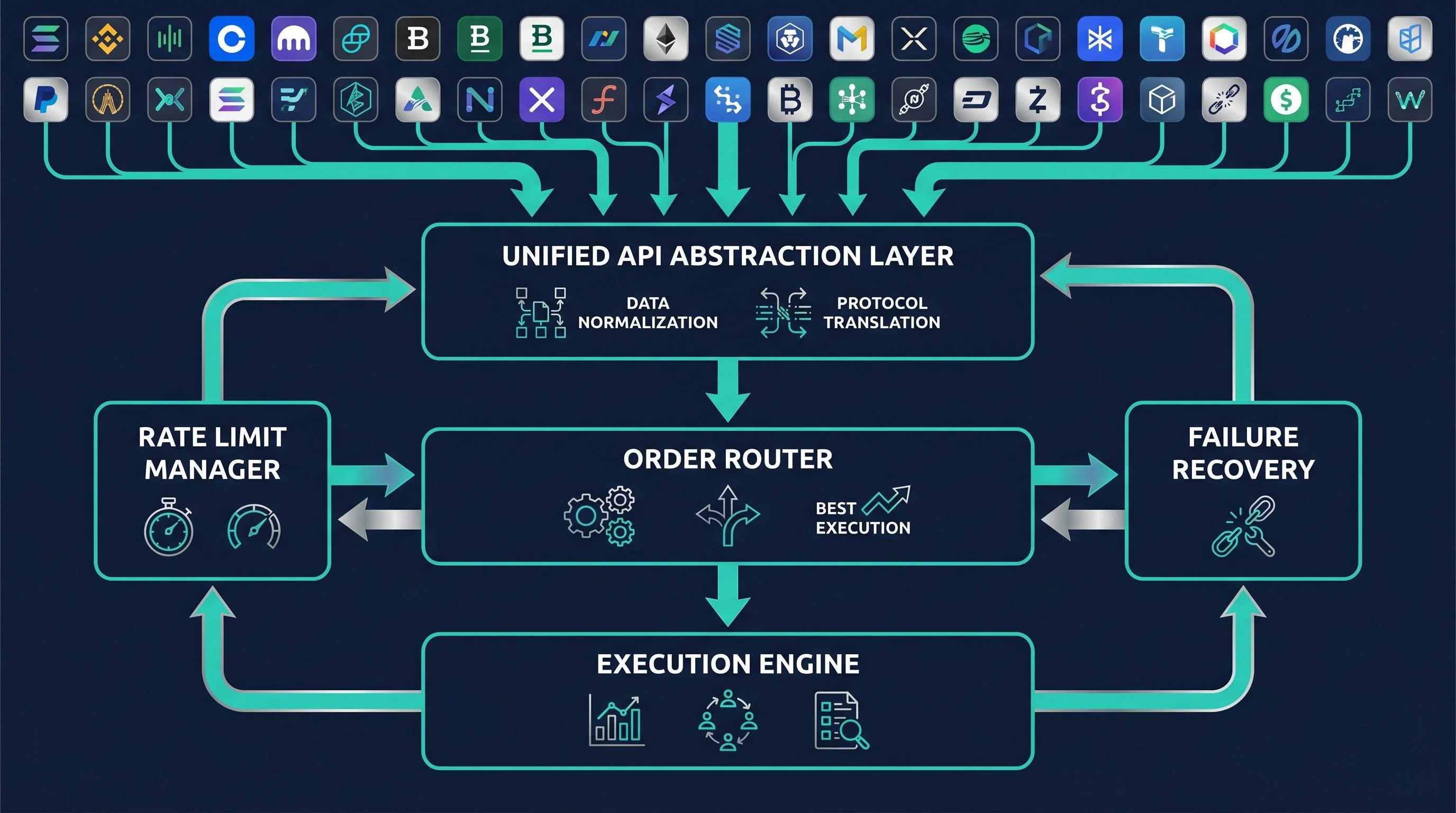
Exchange connectivity is the foundation, and it is rarely as uniform as the documentation suggests. Each exchange has its own order types, rate limits, symbol naming, precision rules and error codes. A serious build wraps these differences behind one internal interface so your strategy logic never touches exchange-specific details.
What to plan for
- Spot, margin and futures: each market type has different order parameters and risk behaviour. Decide which you support at launch.
- Rate limits: when one signal fans out to hundreds of accounts, you can hit limits quickly. Queuing and pacing logic is essential.
- Partial fills and rejections: orders do not always fill as sent. The system must reconcile what actually happened.
- Exchange downtime and maintenance: your platform should degrade safely and tell subscribers what is going on.
- API changes: exchanges update endpoints. Budget for ongoing maintenance, not a one-off build.
Starting with one or two exchanges your community already uses is usually wiser than supporting ten on day one.
Signal-to-Order Automation
The core feature is turning a signal into orders across many accounts without manual steps. The signal needs a defined structure: pair, direction, entry type, stop loss, take-profit levels and any expiry. Free-text messages are the enemy of automation, so most providers move to a simple entry form or a validated parser inside an admin panel.
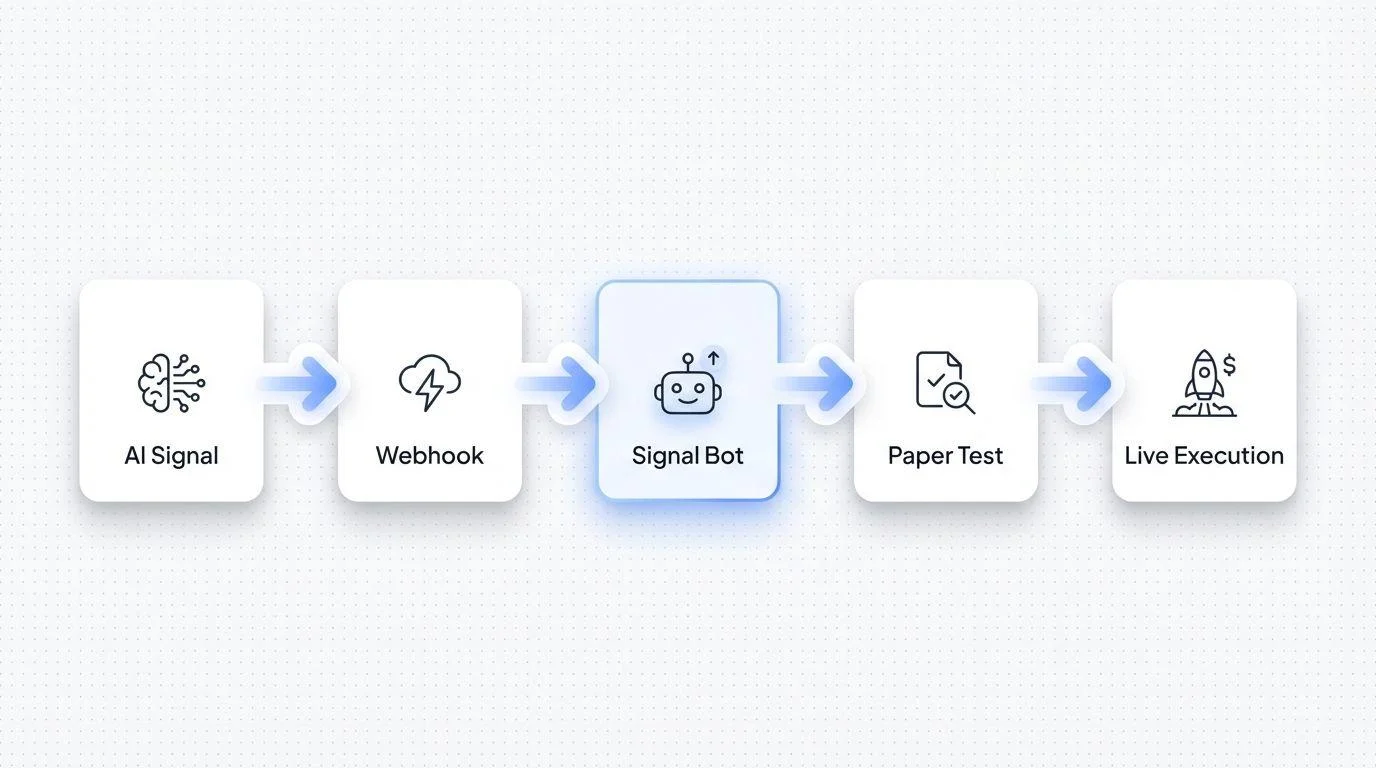
From there, the engine should apply each subscriber's own settings before sending an order:
- Position size as a fixed amount, a percentage of balance or a risk-based size from the stop distance.
- Maximum open trades and maximum exposure per pair.
- Which strategies or channels the subscriber follows.
- Whether stops and targets are placed as exchange-side orders or managed by your software.
Every decision should be logged. When a member asks why a trade was not copied, you want an answer in seconds, not an afternoon of digging through server logs.
Subscriber Management and Billing
This is where a signal community becomes a business. Your platform should handle onboarding, plan tiers, trials, renewals, failed payments and cancellations without your team touching a spreadsheet. Access to automation should switch on and off with subscription status.
- Plans and entitlements: link tiers to the strategies, exchanges or account counts a member can use.
- Payment methods: card, bank or crypto payments each come with different reconciliation and refund questions.
- Lifecycle automation: reminders, grace periods and automatic pausing when billing fails.
- Admin tools: search a member, view their connection status, pause trading, and see their history.
- Referral or affiliate tracking: many communities grow this way, so design for it early.
Risk Controls That Protect Members and You
Automation amplifies mistakes. A wrong signal sent by hand affects people who choose to act on it; a wrong signal sent through automation affects everyone at once. Risk controls are therefore a product feature, not an afterthought.
Controls worth building
- Global and per-user kill switches: stop all new orders instantly.
- Sanity checks on signals: reject entries far from the current price, missing stops or unusual sizes before they fan out.
- Per-account limits: maximum position size, daily loss limits and maximum open trades.
- Duplicate protection: make sure the same signal cannot be executed twice.
- Approval mode: let nervous members confirm trades before execution.
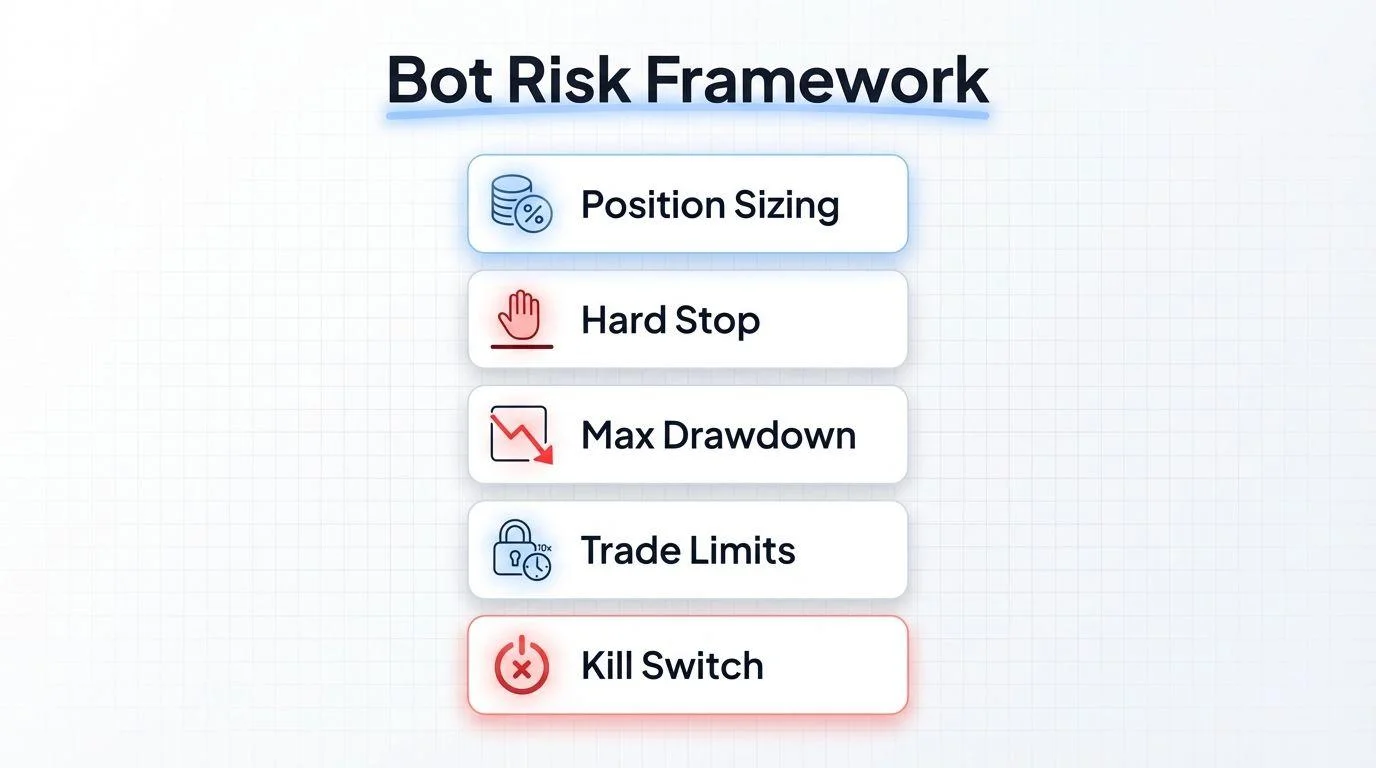
Clear risk disclosures inside the product also help set honest expectations. Trading carries risk, and your software should never imply otherwise.
Backtesting and Strategy Validation
Before you automate a strategy for paying members, you should be able to test how its rules would have behaved on historical data. A backtesting module lets you replay signals or rule-based strategies against price history, including fees, slippage assumptions and position sizing.
Be honest about its limits. Backtests are sensitive to data quality and assumptions, and past behaviour does not predict future results. Used well, they help you catch broken logic and compare variants. Used badly, they produce flattering charts that mislead your community. We recommend building transparent reporting that shows assumptions next to results.
Dashboards for Admins and Subscribers
Two audiences need two views. Subscribers want to see their connection status, open positions, history and settings. You, as the operator, need a command centre.
| Dashboard | Typical contents | Why it matters |
|---|---|---|
| Subscriber view | Exchange status, open trades, trade history, plan and billing, risk settings | Reduces support questions and builds trust |
| Admin view | Active users, signals sent, execution outcomes, failures, revenue and churn | Lets you run the business with facts |
| Operations view | Exchange health, queue depth, error rates, latency | Helps you catch problems before members do |
API Key Security
This is the area where cutting corners can end a business. Your platform will hold exchange API keys for many people, which makes it an attractive target. The golden rule is simple: only accept keys with trading permission enabled and withdrawal permission disabled. Your software never needs to move funds off an exchange, so it should never be able to.
- Encrypt keys at rest using a managed key service or hardware-backed storage, and keep secrets out of logs.
- Validate permissions on connect: reject keys that allow withdrawals and explain why to the member.
- IP allow-listing: where the exchange supports it, restrict keys to your servers' addresses.
- Least-privilege access: limit which staff and services can decrypt or use keys, and audit every access.
- Account security: two-factor authentication for members and mandatory for admins.
- Incident plan: know how you would notify members and revoke keys if something went wrong.
Latency, Reliability and Monitoring
Signal providers are rarely competing with high-frequency firms, but timing still matters. If the first subscriber is filled at one price and the five-hundredth at another, members will notice and complain. Good engineering reduces that gap through parallel order dispatch, efficient queuing, servers placed sensibly relative to exchange endpoints and careful retry logic.
Reliability needs equal attention. We suggest planning for:
- Health checks on every exchange connection with automatic alerts.
- Idempotent order handling so retries never double-execute.
- Reconciliation jobs that compare your records with the exchange.
- Centralised logs, metrics and on-call alerts for failed or delayed orders.
- Regular backups and a tested recovery procedure.
Compliance Awareness
Rules for signal services, copy trading and managing other people's trades differ by country, and some activities may count as regulated advice or asset management. Payment handling, data protection, and know-your-customer expectations can also apply. This is general awareness, not legal advice, and you should speak to a qualified lawyer in your jurisdiction before launch.
From a software angle, the useful step is designing flexibility in from the start: audit logs, consent records, risk disclosures, region restrictions and the ability to export data when required.
Build Custom or White-Label?
Both routes are valid. The right answer depends on how central the platform is to your business.
| Factor | White-label platform | Custom build |
|---|---|---|
| Speed to launch | Usually faster | Longer, depends on scope |
| Branding and UX | Limited customisation | Fully yours |
| Strategy logic | Constrained by the vendor's features | Any logic you can specify |
| Ongoing fees | Often recurring licence or revenue share | Build cost plus hosting and maintenance |
| Key and data control | Held by the vendor | Held by you |
| Vendor dependency | High | Low if you own the source code |
A sensible middle path is to start with a focused minimum product: one or two exchanges, one signal format, basic billing and strong risk controls. Then expand once you see how members actually use it. Whichever route you choose, ask who owns the code, the user data and the exchange connections if you ever leave.
What to Prepare Before Requesting a Quote
You will get a more accurate scope if you can answer these questions up front:
- Which exchanges and market types must be supported at launch?
- How are your signals produced today, and how structured are they?
- How many subscribers do you expect in the first year?
- Which payment methods and plan structures do you need?
- Do you want web only, or mobile apps and Telegram integration too?
- Which countries will your members be in?
Why Businesses Choose CloudHouse for Crypto Trading Software
We offer 24/7 support, because markets do not close and neither should the people watching your platform. Our scoping is transparent, so you see what is included, what is optional and what drives the effort before you commit. You also keep ownership of the source code, so your platform stays an asset you control.
Start Scoping Your Platform
Turning a signals community into a trading product is a serious engineering project, but it is a well-understood one. With careful exchange integration, strict key security, strong risk controls and honest reporting, you can give members a better experience and give your business a stronger foundation. Share your signal format and target exchanges with us, and we will help you map the first release.