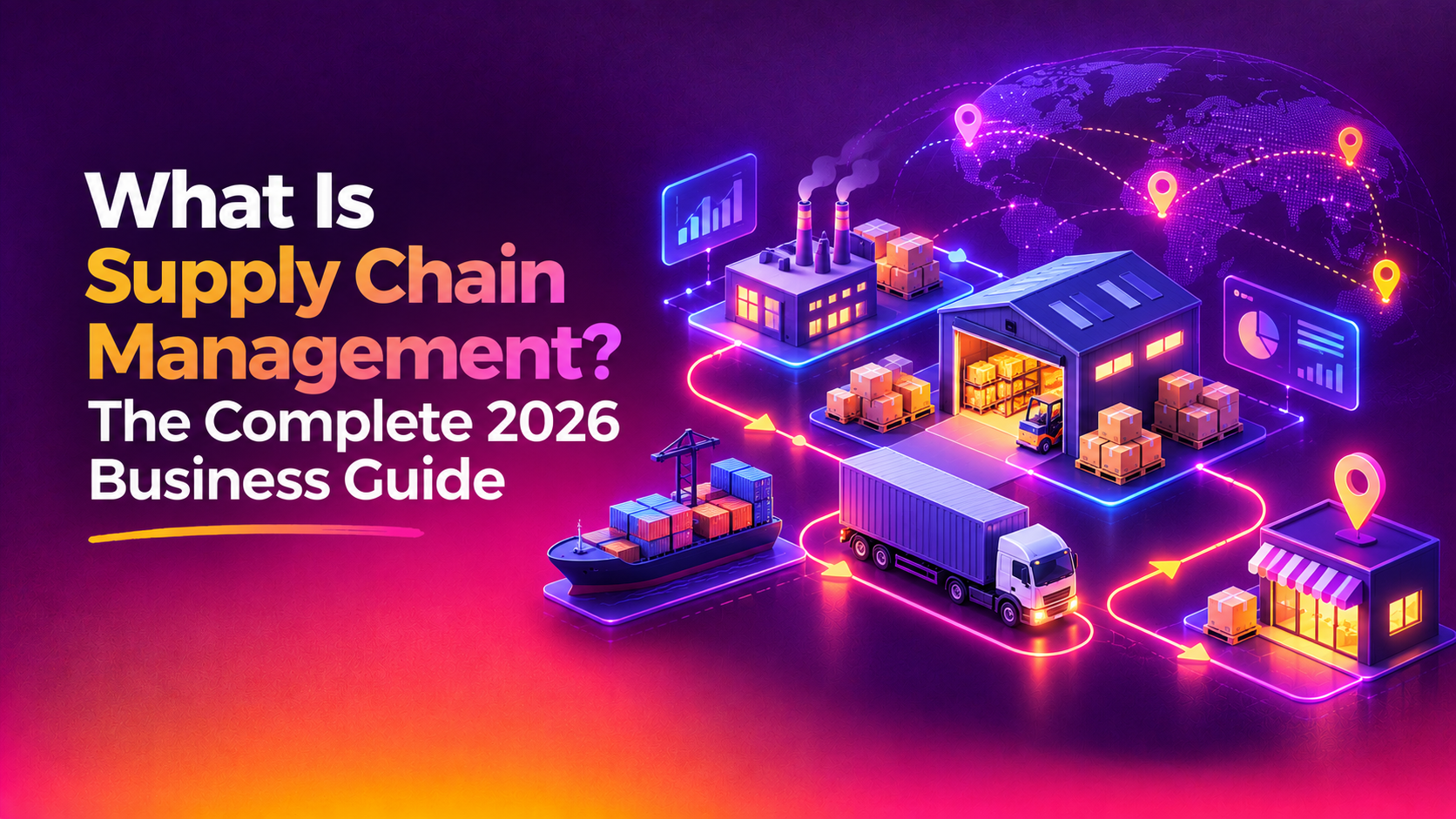
Supply chain management is the backbone of every successful business that moves physical goods—from raw material suppliers all the way to the end customer. When it works well, customers receive the right product at the right time at the right price. When it breaks down, the consequences ripple across your entire organisation: delayed shipments, excess inventory, unhappy customers, and mounting costs. Whether you run a manufacturing company, an e-commerce store, or a distribution business, mastering supply chain management is no longer optional—it is a core competitive advantage.
In this complete 2026 guide, we break down everything you need to know: what supply chain management is, how it works, the five key stages and models, the technology powering modern SCM, common challenges and how to overcome them, and a practical step-by-step implementation guide to help your business get started and stay ahead.
What Is Supply Chain Management?
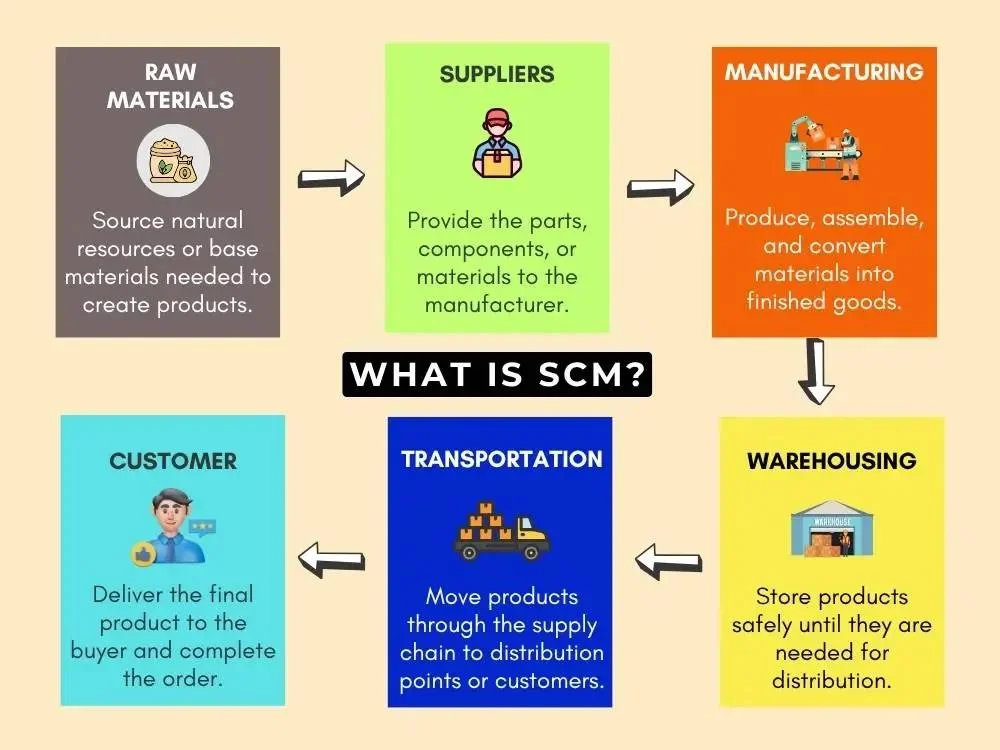
Supply chain management (SCM) is the end-to-end coordination of all activities, people, processes, and technology involved in sourcing raw materials, transforming them into finished products, and delivering those products to customers. It spans planning, procurement, production, warehousing, transportation, and returns—all working together as a single, interconnected system rather than a series of independent hand-offs.
The Council of Supply Chain Management Professionals (CSCMP) defines SCM as the planning and management of all activities involved in sourcing, procurement, conversion, and logistics management activities—and importantly, it also includes coordination and collaboration with channel partners, which can be suppliers, intermediaries, third-party service providers, and customers.
Put simply: supply chain management ensures that the right product is in the right place, in the right quantity, at the right time, and at the lowest possible cost—while maintaining the quality and reliability your customers expect.
Supply Chain vs. Logistics: What Is the Difference?
These two terms are often used interchangeably, but they are not the same thing. Logistics refers specifically to the movement and storage of goods within the supply chain—transportation, warehousing, and distribution activities. Supply chain management is the broader discipline that encompasses logistics plus procurement, supplier relationships, production planning, demand forecasting, customer service coordination, and financial management. Logistics is a critical component of SCM, but SCM is far wider in scope.
Why Supply Chain Management Matters for Your Business
Effective supply chain management delivers measurable benefits across your entire organisation—from the shop floor to the boardroom. Here is why it deserves serious strategic investment:
- Cost reduction: Optimised procurement, inventory levels, and logistics routes cut operational costs significantly. Industry benchmarks consistently show that leading supply chain companies spend far less on SCM as a percentage of revenue than their industry peers.
- Customer satisfaction: Reliable delivery, accurate order fulfilment, and responsive returns processes directly drive customer loyalty and repeat purchases. In 2026, customers expect real-time visibility into their orders—and businesses that provide it win more repeat business.
- Competitive advantage: Companies with agile, data-driven supply chains can respond faster to market changes, launch new products more quickly, and absorb disruptions more easily than competitors relying on manual, reactive processes.
- Risk mitigation: Proactive supplier diversification, demand sensing, and strategic inventory buffers reduce exposure to geopolitical disruptions, natural disasters, and supplier failures before they affect your customers.
- Revenue growth: When your supply chain is efficient, you can fulfil more orders without proportionally increasing costs—directly improving profit margins and enabling business scale.
- Sustainability compliance: Modern supply chain management enables businesses to track and reduce their environmental footprint across the full value chain, which is increasingly demanded by regulators, institutional investors, and end customers in 2026.
💡 None of these worked? Skip the guesswork.
Get Expert Help →The 5 Core Stages of Supply Chain Management
Every supply chain, regardless of industry or company size, operates through five fundamental stages. Understanding each stage in depth helps you identify where inefficiencies exist and where technology or process improvements will deliver the greatest business impact.
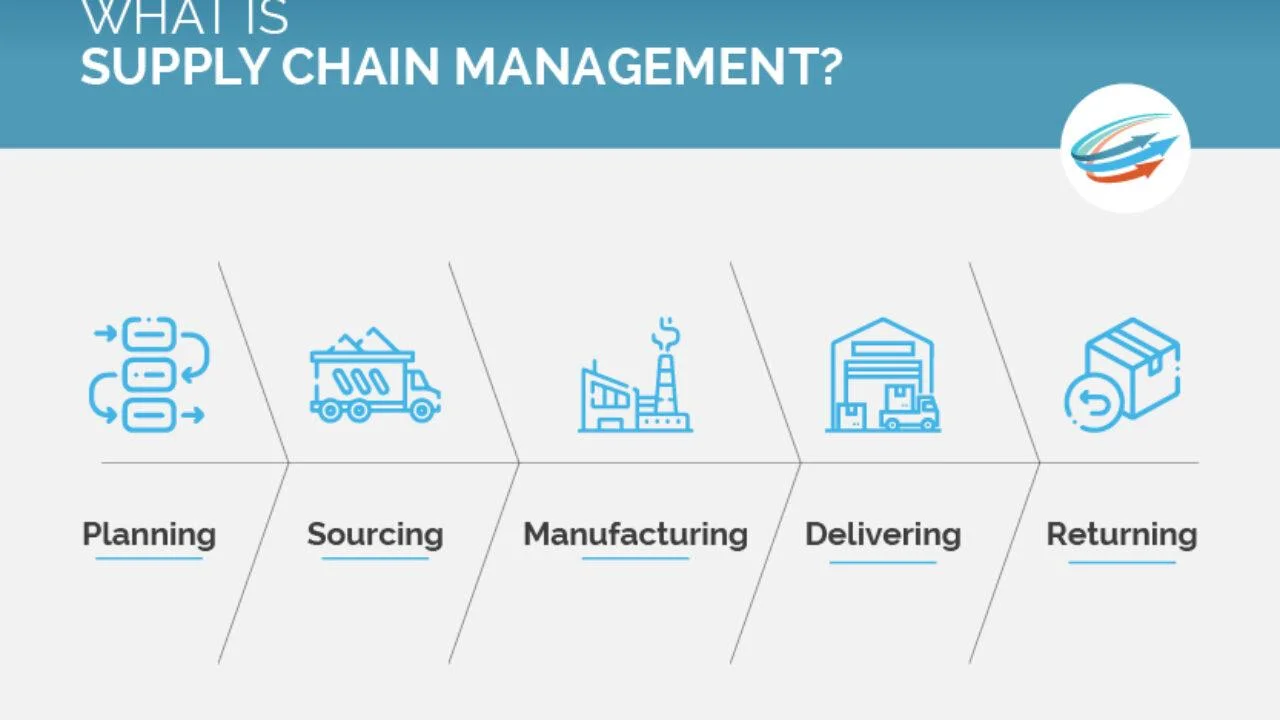
Planning is the foundation upon which every other stage of supply chain management is built. This stage involves forecasting customer demand, setting inventory targets, planning production capacity, and synchronising supply and demand across the entire network. Modern supply chain planning uses AI-driven demand forecasting tools that analyse historical sales data, market trends, seasonal patterns, promotional calendars, and external signals—such as weather events, economic indicators, and social media trends—to predict what customers will need and when. Poor planning invariably produces two costly outcomes: stockouts (too little inventory, frustrated customers, lost sales) or overstock (too much capital tied up in unsold goods, high carrying costs, potential obsolescence). Getting the planning stage right is the single highest-leverage improvement most businesses can make.
Procurement covers identifying and qualifying suppliers, negotiating contracts and pricing, managing ongoing supplier relationships, and ensuring the quality and timely delivery of raw materials or components your business needs. Strategic sourcing goes far beyond finding the cheapest supplier—it evaluates total cost of ownership, supplier reliability, lead time consistency, geopolitical and financial risk, capacity constraints, and sustainability credentials. Supplier diversification—working with multiple approved suppliers for critical inputs—is a key resilience strategy, particularly given the supply disruptions that have characterised global markets in recent years. Performance metrics tracked at this stage include on-time delivery rate, incoming quality defect rate, supplier lead time variability, and purchase price variance.
This stage transforms raw materials and components into finished goods ready for sale. Supply chain management at the production level involves production scheduling, capacity planning, quality control, and waste reduction. Lean manufacturing principles—systematically eliminating non-value-adding waste, improving process flow, and building quality into the process rather than inspecting it in at the end—are widely applied at this stage. Manufacturing SCM also includes managing bills of materials (BOM), production work orders, machine utilisation rates, and yield ratios. For businesses that outsource manufacturing to contract manufacturers, this stage includes contract manufacturer qualification, capacity booking, production oversight, and quality auditing activities.
Delivery encompasses order management, warehousing, inventory pick-and-pack, transportation planning, carrier management, last-mile delivery, and distribution network design. This is the most visible part of supply chain management from the customer's perspective—and where many businesses' service reputations are made or broken. Key strategic decisions include whether to operate a centralised or distributed warehouse network, which carriers or third-party logistics providers (3PLs) to partner with, how to optimise delivery routes and consolidate shipments, and how to manage cross-border shipping compliance and customs clearance. Real-time shipment tracking, delivery exception management, and last-mile optimisation are critical operational capabilities at this stage that customers increasingly take for granted.
Returns management—also called reverse logistics—handles the flow of products back from customers to the business. This includes processing customer return requests, inspecting returned goods for restockability or repair potential, managing warranty claims, refurbishing products for resale, and disposing of or recycling items that cannot be resold. Efficient reverse logistics directly impacts both customer satisfaction (simple, frictionless returns increase purchase confidence and repeat buying) and profitability (recovering maximum value from returned products reduces write-offs). In the e-commerce sector, return rates can reach 20–30% of orders, making reverse logistics a material cost and operational challenge that deserves as much management attention as forward logistics.
Begin by documenting every step of your current supply chain in detail: all suppliers and their geographic locations, production processes and facilities, warehouse and distribution centre locations, transportation lanes and carriers, customer segments and delivery service requirements. Identify all system interfaces, data flows, and organisational handoffs between functions. A complete current-state map makes improvement opportunities visible and provides the baseline against which you will measure progress. This exercise frequently reveals hidden process redundancies, dangerous single points of failure, and costly inefficiencies that are not visible when working within individual functional silos.
Measure your current supply chain performance against the key metrics described earlier in this guide. Where are your costs highest relative to revenue? Where do delays most frequently occur? Which issues generate the most customer complaints or lost sales? Prioritise the pain points that carry the highest impact on cost, customer satisfaction, revenue, or business risk. Resist the temptation to try to improve everything at once—focus your initial efforts on the two or three highest-impact improvement opportunities where early wins will build internal momentum and demonstrate ROI.
Define clear, quantified targets for your supply chain improvement programme with defined timelines. For example: reduce average order cycle time from nine days to five days within twelve months; improve perfect order rate from 83% to 93% within eighteen months; reduce total supply chain cost as a percentage of revenue by three percentage points within two years. Specific, time-bound KPI targets create management accountability and allow you to objectively measure the return on your technology and process improvement investments.
Assess supply chain software solutions rigorously against your specific operational requirements—not just vendor feature marketing checklists. Evaluate total cost of ownership over a five-year horizon, including licensing or subscription costs, implementation and data migration costs, training costs, and ongoing support and maintenance. Assess integration complexity with your existing technology landscape. Consider vendor implementation capability, customer references in your industry, and long-term product roadmap credibility. For many growing businesses, a purpose-built custom ERP with integrated supply chain management modules delivers better operational fit and long-term ROI than adapting business processes to work around the rigidities of a generic off-the-shelf product.
Supply chain performance improvement is fundamentally a team sport—your supply chain can only be as good as the partners within it. Implement formal, regular supplier performance reviews using objective scorecard data. Share rolling demand forecasts with your strategically important suppliers so they can plan their own capacity and procurement more effectively. Build collaborative improvement programmes with key partners that address shared pain points—quality defect rates, lead time variability, packaging specifications—as joint projects rather than one-sided performance demands. Consider supplier development investments—funding training or equipment for critical suppliers—as direct investments in your own supply chain capability.
Technology investments only deliver their full potential value when the people operating the systems have the skills to use them effectively and interpret the data they generate. Invest in structured training programmes for supply chain planners, procurement managers, warehouse operations teams, and logistics coordinators. Develop internal analytical capability—the ability to extract insights from supply chain data and translate those insights into operational decisions and process improvements—as a core organisational competency. Consider professional certifications (APICS CPIM, CSCMP SCMP) for key supply chain staff as markers of professional development and capability investment.
Establish a regular, structured cadence of supply chain performance reviews at multiple organisational levels: weekly operational reviews focused on short-cycle exception management, monthly performance reviews for trend analysis and emerging issue identification, and quarterly strategic reviews for network design optimisation and capability planning. Use your KPI dashboard to identify negative performance trends before they reach crisis point and launch structured improvement projects—using Lean, Six Sigma, or DMAIC methodologies as appropriate—to systematically address root causes rather than repeatedly treating symptoms.
Custom ERP and Software Solutions for Supply Chain Management
For businesses ready to take their supply chain management capability to the next level, the right technology platform is not a competitive luxury—it is an operational necessity. Generic spreadsheets, disconnected departmental systems, and manual data reconciliation are the most common single obstacle to supply chain visibility, speed, and efficiency in growing businesses.
CloudHouse Technologies specialises in building custom ERP systems in Kerala and across India that are designed from the ground up to match your specific supply chain workflows, industry requirements, and competitive priorities. Unlike off-the-shelf ERP products that require expensive and time-consuming customisation—or force you to adapt your business processes to fit the software's assumptions—our custom solutions are architected around how your business actually operates today and where you need it to go tomorrow.
Our custom supply chain ERP and software solutions typically include:
- Procurement and supplier management modules with configurable multi-level approval workflows
- Real-time inventory tracking and management across multiple warehouse locations
- Production planning, scheduling, and manufacturing work order management
- Order management, customer delivery tracking, and returns processing
- Integrated financial management including accounts payable, accounts receivable, and landed cost calculation
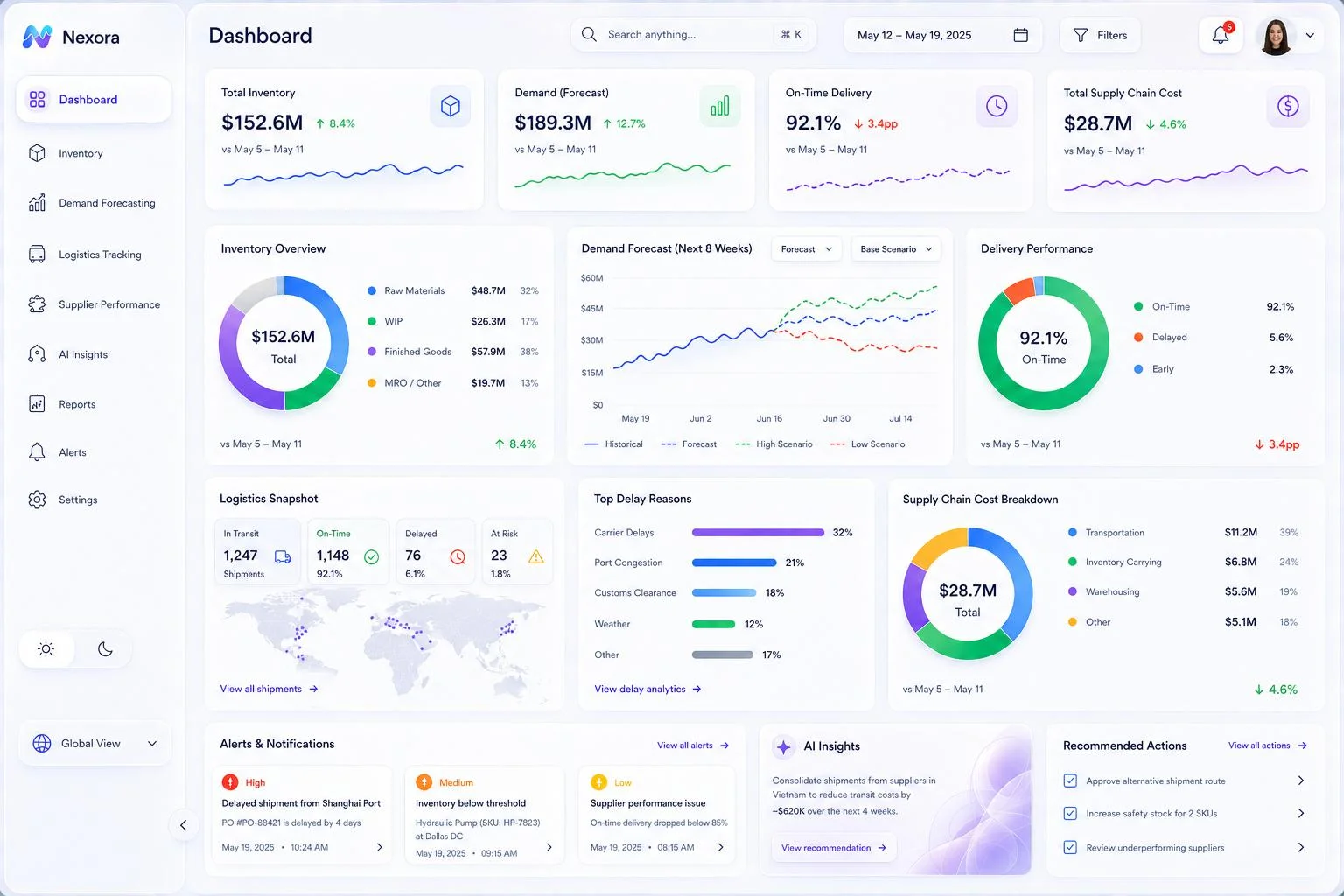
- Custom executive dashboards and operational reports for supply chain KPI monitoring
- API integrations with third-party logistics providers, e-commerce platforms, and carrier tracking systems
Conclusion
Supply chain management is one of the most powerful and highest-leverage operational capabilities a business can develop. In 2026, as AI, IoT, cloud computing, and digital twin technologies mature and become more accessible, the performance gap between businesses with sophisticated, data-driven supply chains and those still managing operations through reactive, manual processes is widening—and accelerating. The businesses that will win in the next five years are those investing now in building connected, intelligent, resilient supply chains.
Whether you are just beginning your supply chain management journey or looking to modernise and fundamentally transform a mature but underperforming supply chain, the core fundamentals remain constant: map your chain comprehensively, measure what genuinely matters, build strong and collaborative supplier relationships, invest in the right technology for your specific needs, develop your team's analytical capabilities, and commit relentlessly to continuous improvement. The businesses that execute these fundamentals consistently will outperform their competitors on cost, service, agility, and resilience for years to come.