Ransomware is one of the most destructive and rapidly evolving cybersecurity threats facing businesses today. In a ransomware attack, cybercriminals infiltrate your systems, encrypt your critical files or lock you out entirely, and then demand a ransom payment—often in cryptocurrency—for the decryption key. The consequences can be catastrophic: days or weeks of operational downtime, severe financial losses, regulatory penalties, reputational damage, and in some industries, even risk to human life. Understanding exactly how ransomware works, how it spreads, and how to defend against it is no longer optional for any business with digital assets.
This complete 2026 guide covers everything you need to know about ransomware: what it is, the major types, how an attack unfolds step-by-step, how to detect it early, what to do if you are hit, and most importantly, how to build a layered defence that keeps your business protected.
What Is Ransomware?
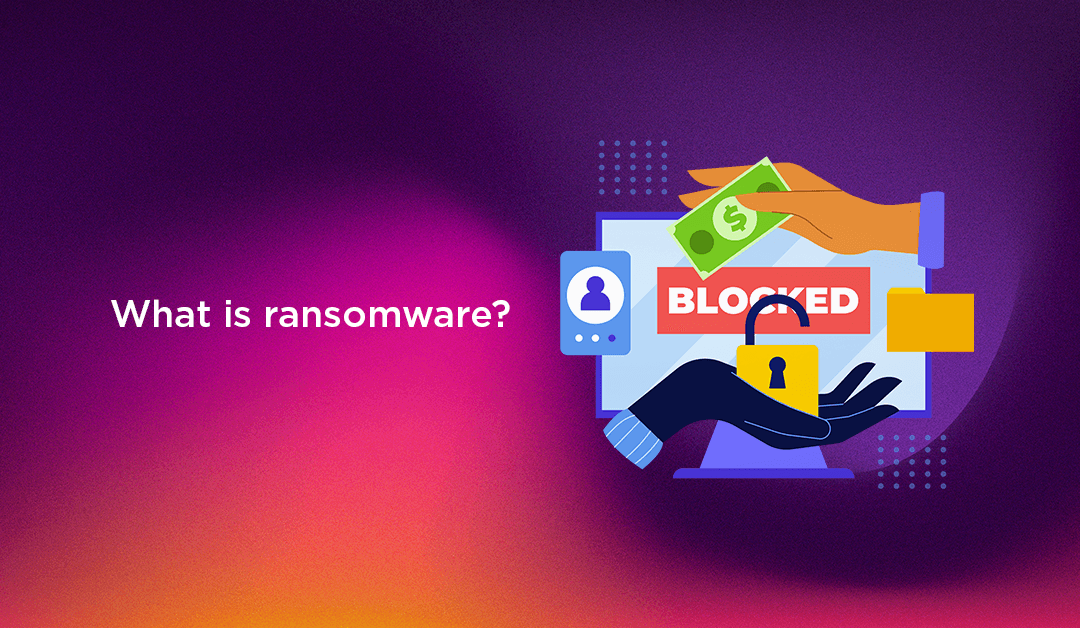
Ransomware is a category of malicious software (malware) that encrypts files on infected systems and demands payment in exchange for the decryption key needed to restore access. The term combines "ransom" and "software"—and that is precisely what it is: digital extortion at scale.
Modern ransomware attacks have evolved far beyond simple file encryption. Today's most dangerous ransomware operators use what is called double extortion: they encrypt your files and exfiltrate a copy of your sensitive data before triggering the encryption. This means that even if you restore from backups, attackers can threaten to publish your stolen customer data, financial records, or intellectual property publicly unless you pay an additional ransom. Some groups have even moved to triple extortion, adding threats to launch distributed denial-of-service (DDoS) attacks against your business or directly contact your customers and partners.
Ransomware attacks are no longer the exclusive territory of sophisticated nation-state hackers. The rise of Ransomware-as-a-Service (RaaS) has lowered the barrier to entry to near zero—allowing criminals with minimal technical knowledge to rent proven ransomware platforms and execute devastating attacks against businesses of all sizes.
💡 None of these worked? Skip the guesswork.
Get Expert Help →How Does Ransomware Work? The Attack Lifecycle
Understanding the anatomy of a ransomware attack helps you identify where your defences are weakest and where prevention measures will be most effective. A typical ransomware attack follows this sequence:
Attackers gain their first foothold in your environment. The most common initial access vectors include phishing emails with malicious attachments or links, exploitation of unpatched software vulnerabilities, compromised Remote Desktop Protocol (RDP) credentials (often purchased on dark web marketplaces), drive-by downloads from compromised websites, and malicious USB drives. This first step is where the majority of successful attacks begin—and where employee security awareness training delivers its highest ROI.
Once inside your network, attackers work quietly to establish persistence (ensuring they can maintain access even if the initial entry point is closed) and escalate their privileges toward administrator-level or domain admin access. This phase can last days, weeks, or even months as attackers move laterally across your network, methodically harvesting credentials and mapping your systems and data repositories.
Before deploying ransomware, sophisticated operators spend significant time mapping your network: identifying the most valuable and critical data, locating and targeting backup systems, and exfiltrating sensitive data to their servers. Exfiltrated data becomes the second extortion lever—giving attackers leverage even against organisations with robust backup capabilities. This is why ransomware defence cannot rely on backups alone.
When attackers are ready, they deploy the ransomware payload simultaneously across your network—often targeting hundreds or thousands of endpoints and servers at once to maximise disruption and minimise response time. Files are encrypted using strong asymmetric cryptographic algorithms (typically AES for file encryption, RSA for key management) that make decryption without the attacker's private key computationally infeasible.
A ransom note appears on encrypted systems—typically as a text file, a desktop wallpaper change, or a splash screen—directing victims to a dark web portal where they can communicate with the attackers and receive payment instructions. Demands range from a few thousand dollars for small businesses to tens of millions for large enterprises and critical infrastructure operators.
Disconnect infected devices from the network—unplug network cables and disable Wi-Fi—to stop ransomware spreading to additional systems. Do not shut down infected machines unless absolutely necessary, as volatile memory may contain valuable forensic evidence (encryption keys, attacker artefacts). Inform your IT team and management immediately.
Determine which systems are affected, which data has been encrypted, whether backup systems have been compromised, and whether exfiltration has occurred. Use your security information and event management (SIEM) system, endpoint detection logs, and network flow data to reconstruct the attack timeline. Document everything—this information is essential for forensics, insurance claims, and regulatory notifications.
Paying the ransom does not guarantee data recovery—attackers frequently fail to provide working decryption keys even after payment. Payment also encourages further attacks against your organisation and funds criminal operations. Before making any payment decision, consult a specialist incident response firm, your cyber insurance provider, and legal counsel. Check the free decryption tool databases at No More Ransom (nomoreransom.org)—a free decryption tool may exist for the ransomware variant you have been hit with.
Ransomware attacks frequently trigger legal notification obligations. Under GDPR, if personal data has been accessed or exfiltrated, you must notify your supervisory authority within 72 hours of becoming aware of the breach. Notify your cyber insurance provider immediately—delayed notification can void coverage. Notify law enforcement (in India, file a complaint with the Indian Computer Emergency Response Team — CERT-In). Brief affected customers and partners if their data may be at risk.
If clean, verified, offline backups exist, begin the restoration process after thoroughly cleaning compromised systems. Do not restore to systems that have not been forensically cleared and rebuilt—restoring data to a system that still contains attacker tools or backdoors will result in immediate reinfection. Validate restored data integrity before returning systems to production.
After recovery, conduct a thorough post-incident review to identify the initial access vector, the full attack timeline, which controls failed, and what must be changed to prevent recurrence. Implement the lessons learned with urgency—organisations that have suffered one ransomware attack and failed to remediate root causes are at very high risk of being attacked again.
MFA is the single most effective control for preventing credential-based initial access—the attack vector responsible for the majority of ransomware infections. Enforce MFA on all remote access solutions (VPN, RDP, cloud services), email, and privileged account access. Prefer authenticator app or hardware token MFA over SMS-based MFA, which is vulnerable to SIM-swapping attacks.
Maintain a rigorous patch management programme that applies critical security patches within 48–72 hours of release. Prioritise internet-facing systems, VPN appliances, RDP infrastructure, and high-risk applications. Attackers routinely begin exploiting newly published vulnerabilities within hours of patch release—delayed patching is one of the most common and preventable root causes of successful ransomware attacks.
Disable direct internet-facing RDP unless absolutely necessary. Place RDP and remote access tools behind a VPN with MFA. Change all default credentials. Implement account lockout policies after failed login attempts. Consider professional server hardening services to ensure your infrastructure is configured securely—misconfigurations in server and network device settings are a significant and often overlooked attack surface.
Move beyond traditional signature-based antivirus to a modern Endpoint Detection and Response (EDR) solution that uses behavioural analysis to detect and block ransomware activity—including novel variants that have never been seen before. EDR tools can detect characteristic ransomware behaviours (rapid file modification, shadow copy deletion, encryption activity) and automatically isolate infected endpoints before the attack spreads.
Since phishing is the leading ransomware delivery mechanism, security awareness training is a foundational control. Run regular phishing simulations, teach employees to recognise social engineering tactics, and establish a clear and friction-free process for employees to report suspicious emails without fear of blame. Training effectiveness degrades rapidly without reinforcement—monthly micro-learning and quarterly simulations are more effective than annual compliance-box-ticking sessions.
Divide your network into isolated segments using VLANs, firewalls, and access control lists so that an infection in one segment cannot freely spread to the entire network. Implement the principle of least privilege for all user accounts—users should only have access to the systems and data they need for their specific role, nothing more. Micro-segmentation is the gold standard, limiting lateral movement even when an attacker has compromised an internal account.
Implement advanced email security filtering that blocks malicious attachments and links before they reach employee inboxes. Configure DMARC, DKIM, and SPF email authentication records to prevent domain spoofing. Disable macro execution in Office documents by default—the majority of malicious Office document attacks rely on macros for initial payload execution.
Ransomware Recovery: The 3-2-1 Backup Rule
A robust backup strategy is your last line of defence against ransomware. Without clean, verified, and accessible backups, your recovery options are severely limited. The industry-standard 3-2-1 backup rule provides a proven framework:
- 3 copies of your data (1 production + 2 backups)
- 2 different storage media types (e.g., local disk and cloud storage)
- 1 copy stored offline or air-gapped, completely disconnected from your network
The offline or air-gapped backup copy is critical specifically for ransomware defence. Attackers routinely target and encrypt or delete network-accessible backup repositories before deploying the main ransomware payload. A backup that is not reachable from the network cannot be encrypted by ransomware. Equally important: test your backups regularly. Untested backups have a disturbingly high failure rate when recovery is actually attempted. Run documented recovery tests at least quarterly.
For organisations running Linux-based infrastructure, ensuring your backup jobs are properly isolated and your backup tools are up to date is especially important. If you need professional support managing your backup and recovery infrastructure, CloudHouse Technologies' malware removal and recovery services can help assess your backup posture and ensure you have a clean, recoverable baseline after an incident.
Legal and Compliance Obligations After a Ransomware Attack
Ransomware attacks carry significant legal and regulatory consequences that many businesses underestimate until they are in the middle of an incident. Key obligations to be aware of:
- GDPR (if you process EU citizens' data): Personal data breaches must be reported to your supervisory authority within 72 hours. Affected individuals must be notified if there is a high risk to their rights and freedoms.
- CERT-In Reporting (India): The Indian Computer Emergency Response Team requires organisations to report ransomware incidents within 6 hours of detection under the 2022 CERT-In Directions.
- Cyber insurance notification: Most cyber insurance policies require immediate notification of a potential claim—delayed notification is a common ground for insurers to dispute or deny coverage. Contact your insurer before paying any ransom.
- Ransom payment restrictions: Paying ransom to entities on government sanctions lists (OFAC in the US, for example) may be illegal regardless of the business context. Get legal advice before authorising any ransom payment.
- Sector-specific regulations: Healthcare, financial services, and critical infrastructure sectors face additional regulatory reporting requirements under sector-specific frameworks.
Notable Ransomware Attack Examples
Real-world ransomware attacks illustrate the scale of impact these incidents can have on businesses and critical services:
- Colonial Pipeline (2021): The DarkSide ransomware group attacked the largest fuel pipeline operator in the United States, causing a six-day shutdown that triggered fuel shortages across the US East Coast. Colonial Pipeline paid approximately $4.4 million in ransom, much of which was later recovered by the FBI. The attack began through a compromised VPN account that lacked multi-factor authentication.
- Kaseya VSA (2021): The REvil RaaS group exploited a zero-day vulnerability in Kaseya's IT management software, deploying ransomware to approximately 1,500 businesses through a single compromised managed service provider. The attack demonstrated how software supply chain attacks can achieve massive scale through trusted platforms.
- WannaCry (2017): The North Korean–attributed WannaCry worm infected over 200,000 systems across 150 countries within days, exploiting an unpatched Windows SMB vulnerability. The UK's National Health Service was among the hardest-hit organisations—thousands of medical appointments were cancelled as a result. WannaCry was effectively stopped by a security researcher discovering and registering a hardcoded "kill switch" domain.
Professional Server Hardening and Ransomware Protection Services
For many businesses, building and maintaining a comprehensive ransomware defence posture in-house is beyond the available internal expertise or resources. Misconfigurations in server operating systems, network devices, and remote access infrastructure are among the most commonly exploited ransomware entry points—and are frequently invisible to internal teams who have not been trained in security hardening disciplines.
CloudHouse Technologies provides professional server hardening services that systematically eliminate the configuration weaknesses attackers exploit to gain initial access and move laterally through your infrastructure. Our hardening process covers operating system configuration, remote access security, user privilege management, firewall rules, audit logging, and patch management—reducing your attack surface and making your infrastructure significantly more resilient against ransomware and other cyber threats.
Conclusion
Ransomware is one of the most financially devastating cybersecurity threats any business can face—and in 2026, the threat is more sophisticated, more organised, and more pervasive than ever. But ransomware is also largely preventable. Organisations that implement the layered defence controls outlined in this guide—MFA, prompt patching, robust backups, employee training, network segmentation, and professional infrastructure hardening—dramatically reduce their risk of a successful ransomware attack. Do not wait for an incident to build your ransomware resilience. The cost of prevention is a fraction of the cost of recovery.