In the foundational days of the internet, phishing was a numbers game—a "clumsy" cast of the net where attackers sent millions of generic, poorly written emails hoping to catch a few distracted users. Today, as we move through 2026, that "net" has been replaced by autonomous, AI-driven harpoons. Phishing has evolved from a nuisance into a sophisticated form of cyber-enabled fraud that utilizes high-speed automation and psychological manipulation to bypass even the most robust technical defenses.
This evolution is defined by a shift from volume-based attacks to intent-based engineering. In the early 2000s, the "success" of a phishing campaign was measured by a fraction of a percent; today, attackers leverage Large Language Models (LLMs) to conduct automated reconnaissance, scraping vast amounts of open-source intelligence (OSINT) from social media and professional directories. This allows for the creation of Polymorphic Lures—messages that constantly rewrite their own code and phrasing to evade traditional Secure Email Gateways (SEGs). According to the 2026 Hoxhunt Phishing Trends Report, the introduction of generative AI has led to a 1,265% increase in phishing volume since 2023, but more importantly, it has boosted the "success" rate of spear-phishing from roughly 12% to over 54%.
At its core, modern phishing is no longer just about a "fake link." It is the entry point for complex Ransomware-as-a-Service (RaaS) chains and Business Email Compromise (BEC). The technical barrier to entry has vanished; malicious actors can now purchase Phishing-as-a-Service (PhaaS) kits on the dark web for as little as $50, which include pre-configured Adversary-in-the-Middle (AitM) proxies. These tools are specifically designed to intercept Session Tokens in real-time, effectively rendering legacy Multi-Factor Authentication (MFA)—like SMS codes and push notifications—obsolete. In 2026, the "phish" is merely the delivery mechanism for a persistent identity hijack that can remain undetected within a corporate LAN for months.
The Fundamental Mechanics: How Phishing Works
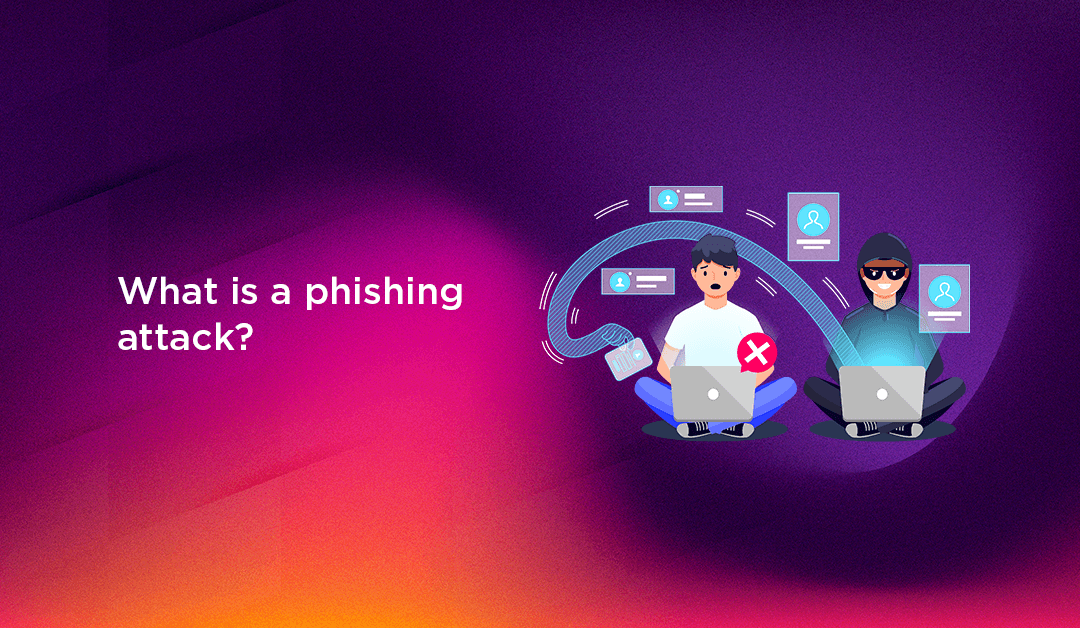
To understand the 2026 threat, one must first master the classic anatomy of a phishing attack. At its core, phishing is not a "hack" of software, but a "hack" of the human mind. It operates on a three-stage cycle: The Hook, The Bait, and The Catch. The Hook begins with a fabricated sense of urgency or emotional manipulation. This is the psychological lever—an email from your "bank" claiming an unauthorized transfer, or a "manager" requesting an urgent file review. The Bait is the technical delivery mechanism, usually a link or an attachment that appears legitimate. In the classic era, these were easy to spot due to misspelled URLs (e.g., paypa1.com) or low-quality graphics. Finally, The Catch occurs when the victim enters their credentials into a forged login portal or downloads an infected file, providing the attacker with an open door to their personal or professional infrastructure
The Rise of Identity Theft and Social Engineering
What makes phishing particularly dangerous in 2026 is that it serves as the primary "initial access" vector for nearly every major cybercrime, from Ransomware to Identity Theft. By masquerading as a reputable source—a process known as Brand Impersonation—attackers exploit the default trust we place in institutions like Google, Microsoft, or the IRS. According to the 2025 Verizon Data Breach Investigations Report, social engineering (of which phishing is the leading sub-type) is now involved in over 35% of all global data breaches. This highlights a critical truth in modern security: it is far easier for a criminal to "log in" using a stolen password than it is to "break in" through a firewall.
From Mass Casting to "Spear Phishing"
While "Bulk Phishing" (sending millions of generic emails) still exists, the 2026 landscape is dominated by Spear Phishing. This is a highly targeted form of the attack where the "bait" is customized using information gathered from public social media profiles, LinkedIn, and previous data leaks. In a spear phishing scenario, the attacker knows your name, your job title, and even the names of your colleagues. This level of detail creates a "Trust Loop"; when the email mentions a real project you worked on last Tuesday, the human brain is naturally wired to lower its defenses, making these targeted attacks significantly more successful than mass-market spam.
The Multi-Channel Threat: Beyond the Inbox
By 2026, the definition of phishing has expanded into a multi-vector assault that spans every digital touchpoint. While email remains the primary delivery vehicle—responsible for 3.4 billion malicious messages daily—the landscape is now dominated by "Triple-Play" attacks that combine email, mobile, and voice channels. This multi-channel approach is reflected in the staggering 442% surge in vishing (voice phishing) incidents reported by late 2024 and continuing into 2026. Attackers now leverage high-fidelity AI voice cloning to impersonate high-level executives, creating a "vocal proof" that overcomes the natural skepticism of employees. This is often paired with smishing (SMS phishing), which accounts for roughly 70% of all mobile-based phishing, frequently targeting users with high-urgency alerts about missed deliveries or account compromises to catch them while they are away from their secure workstations. Perhaps the most visible shift in the 2026 threat landscape is the explosion of Quishing (QR code phishing). Because QR codes embed malicious URLs within a graphic image, they effectively bypass traditional Secure Email Gateways (SEGs) that rely on scanning text-based links. Recent data indicates that quishing attacks increased by 400% between 2023 and 2025, and now represent one of the fastest-growing vectors for credential theft, particularly in the healthcare and manufacturing sectors. Furthermore, the commoditization of the industry through Phishing-as-a-Service (PhaaS) has halved the cost of running these campaigns while doubling the output. These kits now power over 60% of all security incidents, providing even low-skill actors with the tools to launch "polymorphic" attacks—campaigns where the code and phrasing change for every single recipient to prevent detection by pattern-matching security software. This industrialization of deception has resulted in a global financial crisis, with phishing-related losses projected to exceed $25 billion annually in 2026. The impact is felt most acutely in Business Email Compromise (BEC), where the average cost of a single successful breach has climbed to $4.88 million. The success of these attacks is increasingly driven by Adversary-in-the-Middle (AitM) tactics, which do not just steal passwords but harvest real-time session tokens. By sitting between the user and a legitimate service like Microsoft 365, attackers can bypass Multi-Factor Authentication (MFA) entirely. According to the Hoxhunt 2026 Phishing Trends Report, this transition to high-frequency, automated social engineering means that the median time from an email hitting an inbox to a user clicking a malicious link is now a mere 21 seconds, leaving almost zero window for traditional manual intervention.
Defense and Resilience: The Zero Trust Mandate
In 2026, the strategy for defending against phishing has moved from "user education" to a Zero Trust architecture. Because AI-driven attacks have achieved a near-perfect success rate in tricking the human eye, the security industry has pivoted toward technical controls that make a "click" irrelevant. The most significant shift is the adoption of phishing-resistant MFA, specifically FIDO2 passkeys. Unlike traditional 6-digit SMS codes or push notifications—which attackers can intercept via SIM swapping or MFA fatigue—passkeys use device-bound cryptography. This ensures that even if a user is tricked into visiting a fake login page, the hardware itself will refuse to provide the "handshake" because the site’s digital signature does not match the legitimate domain. According to** FIDO Alliance 2026 data**, organizations that have transitioned to 100% passkey adoption have reported a 0% success rate for automated credential-stuffing and bulk phishing attacks.
Beyond hardware, the role of AI-Native Detection has become the primary filter for corporate environments. Traditional Secure Email Gateways (SEGs) relied on blacklists of "bad" URLs; however, in a world where 92% of phishing links are hosted on legitimate, short-lived cloud services like Google Drive or Dropbox, blacklists are obsolete. Modern defenses now utilize Behavioral AI that analyzes the "DNA" of an email—looking for anomalies in writing style, metadata, and communication patterns. For example, if an "urgent" invoice arrives from a regular vendor but originates from a new IP range or uses a slightly different linguistic tone, the AI flags it for Agentic Triage. These AI defenders can automatically "sandbox" suspicious links and rewrite them in real-time, allowing users to interact with the content in a safe, isolated environment where data exfiltration is physically impossible.
For the individual user, the 2026 defense toolkit has also been simplified through deep OS-level integration. Tools like Microsoft Defender SmartScreen and Google Enhanced Safe Browsing now perform real-time, AI-enhanced reputation checks on every site visited and every file downloaded. These systems no longer just warn you about "known threats"; they use predictive modeling to identify "Previously Unknown" (Zero-Day) phishing sites based on how the page is constructed and how it requests data. The goal of modern resilience is to create a "fail-safe" environment where even a successful social engineering attempt does not result in a breach. By combining biometric authentication, encrypted password managers, and automated DNS filtering, the industry is finally moving toward a future where the "hook" of a phishing attack has nothing left to catch.
The Future of Phishing: 2026 and Beyond
As we navigate through 2026, we are witnessing a definitive shift from opportunistic fraud to the industrialized exploitation of human trust. The "net" of the past has not just been replaced by harpoons; it has been replaced by Agentic AI—autonomous hacking entities that can conduct end-to-end phishing campaigns with minimal human oversight. According to the World Economic Forum’s 2026 Cybersecurity Outlook, roughly 94% of security leaders now identify AI as the primary driver of change in the threat landscape. These "Hacking Agents" can scan an organization's public-facing APIs, identify vulnerable employees, and launch multi-touch campaigns that adapt their messaging in real-time based on how the victim responds. The financial and operational stakes have reached a breaking point. The average cost of a phishing-initiated breach has climbed to $4.88 million, while the global volume of malicious emails has stabilized at a staggering 3.4 billion daily. However, the most alarming metric for 2026 is the "Detection Gap." On average, a phishing-related breach now goes undetected for 254 days. During this window, attackers aren't just stealing passwords; they are performing lateral movement, exfiltrating sensitive data, and deploying "sleeper" ransomware. This is particularly prevalent in high-stress sectors like Hospitality (52.9% click rate) and Education (50.2% click rate), where high staff turnover and operational pressures create a "Vulnerability Matrix" that attackers exploit with machine-like precision. Looking ahead, the industry is moving away from the "Weakest Link" mentality toward a model of Human-Centric Resilience. The goal for 2027 and beyond is to transform employees into "Human Sensors." Modern organizations are now measuring their safety not by how many people avoid clicking a link, but by the Reporting Rate—how quickly a user flags a suspicious message to the Security Operations Center (SOC). Organizations that prioritize frictionless, "one-click" reporting can reduce their vulnerability from over 30% to as low as 1.5% within a single year. In this new era, the battle against phishing is no longer won by teaching people to spot typos, but by building a culture where verifying identity is as natural as breathing
The 2026 Verdict: Shifting from Detection to Protocol
In an era where AI can perfectly mirror the voice of a CEO or the visual branding of a global bank, our traditional reliance on "spotting the scam" has become a liability. The most dangerous mistake a user can make in 2026 is believing they are too smart to be fooled. When an attack is Polymorphic and hyper-personalized, it isn't a test of intelligence; it is a test of emotional regulation. Attackers succeed by creating "frictionless fraud"—they want you to click before your logical brain can intervene. To counter this, we must adopt a mindset of Structural Skepticism, where we no longer trust the medium of the message, but only the verified source.
The 2026 Golden Rule
"If a digital message makes your heart race—whether through fear, urgency, or excitement—treat it as a phishing attempt until proven otherwise. Step away from the screen, ignore the provided links, and go directly to the official website or app yourself. Never follow the breadcrumbs left by a stranger."
By moving from a "Trust but Verify" model to a "Verify to Trust" protocol, you effectively neutralize the AI's greatest advantage: its ability to mimic authenticity. Whether it is an urgent text about a delivery or a voice call from "IT Support," the solution remains the same: Break the link. Close the email, hang up the phone, and start a fresh session through a known, trusted channel. In the high-speed world of 2026 cybercrime, the most powerful security tool you own isn't a piece of software—it is the five-second pause.
About the Author
I’m a Junior DevOps Engineer focused on the intersection of infrastructure automation and digital security. In my daily work, I focus on building resilient systems and implementing "Zero Trust" protocols to protect against the evolving landscape of automated threats. As an intern starting my career in the era of AI-driven cybercrime, I am dedicated to breaking down complex security concepts into clear, actionable strategies for both developers and everyday users.