If you're a business owner, startup founder, or entrepreneur planning to build a mobile app, one of the first questions on your mind is: how much will it cost? Mobile app development cost in Kerala varies significantly depending on complexity, platform, features, and the development partner you choose — but Kerala's tech ecosystem offers a compelling cost-quality advantage that global businesses are increasingly tapping into.
In this complete 2026 pricing guide, we break down every factor that affects mobile app development cost, share real cost ranges for different app types, uncover the hidden costs most businesses miss, and show you how to plan your budget wisely from day one.
What Does Mobile App Development Cost in Kerala in 2026?
Mobile app development costs in Kerala typically range from ₹2,50,000 to ₹50,00,000+ (approximately $3,000 to $60,000 USD), depending on scope, complexity, and technology stack. Compared to US or European rates — where similar projects routinely start at $80,000–$150,000 — Kerala-based development teams deliver 40–60% cost savings without compromising on quality, making Kerala one of the most strategically attractive technology hubs in India.
Here's a quick snapshot of cost ranges by app complexity:
- Simple App (MVP / basic features): ₹2,50,000 – ₹8,00,000 ($3,000 – $10,000)
- Mid-Complexity App (custom features, API integrations): ₹8,00,000 – ₹25,00,000 ($10,000 – $30,000)
- Complex App (AI/ML, real-time features, multiple user roles): ₹25,00,000 – ₹75,00,000 ($30,000 – $90,000)
- Enterprise / Large-Scale App: ₹75,00,000+ ($90,000+)
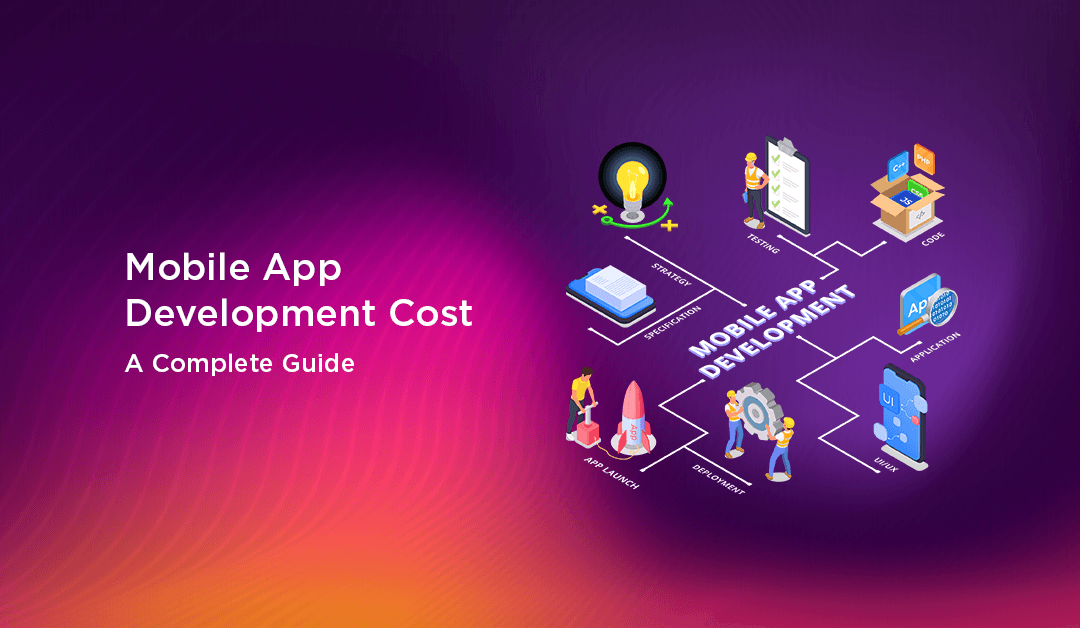
These ranges reflect end-to-end development — from requirements analysis and UI/UX design through to development, quality assurance, and deployment. The final figure for your project depends on the specific factors we cover below.
Key Factors That Determine Your Mobile App Development Cost
No two apps cost the same. Understanding what drives cost is the first step to planning a realistic budget and avoiding expensive surprises mid-project.
App Complexity and Feature Scope
This is the single biggest cost driver. A simple app with a handful of screens and basic functionality — such as a restaurant menu or a company brochure app — is worlds apart from a multi-role platform with real-time chat, payment gateways, push notifications, and AI-powered recommendations. Every additional feature adds development and testing time, and time equals money.
A Minimum Viable Product (MVP) approach is strongly recommended for first-time app launches. By building only the core features needed to prove the concept, businesses routinely cut initial costs by 50–70% while validating the market before committing to the full build.
Platform Strategy: iOS, Android, or Cross-Platform?
Your platform choice has a direct impact on development cost:
- Native iOS or Android only: Lower upfront cost, maximum platform performance and integration — ideal if your target audience is exclusively on one platform
- Cross-platform (Flutter or React Native): A single codebase runs on both iOS and Android — reducing cost by 30–40% versus building two separate native apps. The best value for most startups and SMEs
- Native iOS + Android: Maximum performance and platform-specific capabilities, but roughly double the development effort and cost
For most Kerala-based businesses and Indian startups, a Flutter cross-platform app offers the optimal balance of quality, speed to market, and budget efficiency.
UI/UX Design Requirements
Design is consistently underestimated in budget planning. A polished, intuitive user interface requires skilled UI/UX designers who research user behaviour, build wireframes, create interactive prototypes, and iterate through feedback rounds — all before development begins. Poor UX is the number one reason users uninstall apps within 30 days of download. Design investment is not optional; it's ROI-critical.
- Template-based basic design: ₹50,000 – ₹1,50,000
- Custom UI/UX design: ₹1,50,000 – ₹5,00,000
- Premium design with animations and micro-interactions: ₹5,00,000+
Backend Infrastructure and API Development
The user-facing app is only half the picture. A robust backend — encompassing server logic, databases, and APIs — is what makes your app fast, reliable, and capable of scaling. Backend cost varies considerably by architecture:
- Simple REST API with cloud database: ₹1,00,000 – ₹3,00,000
- Microservices or modular architecture: ₹3,00,000 – ₹10,00,000+
- Real-time backend (WebSockets, live data streaming): ₹2,50,000 – ₹8,00,000
Third-Party Integrations
Modern apps rely heavily on external services. Each integration — while accelerating development compared to building from scratch — still requires implementation time, testing, and maintenance. Common integrations and their approximate Kerala development costs include:
- Payment gateway (Razorpay, Stripe, PhonePe): ₹30,000 – ₹1,00,000
- Maps and location services (Google Maps, Mapbox): ₹20,000 – ₹60,000
- Social login / OAuth (Google, Facebook, Apple): ₹15,000 – ₹40,000
- Push notification system (Firebase, OneSignal): ₹20,000 – ₹50,000
- ERP or CRM integration: ₹1,00,000 – ₹5,00,000+
- AI/ML features (chatbots, recommendations, image recognition): ₹2,00,000 – ₹15,00,000+
Development Team Composition and Expertise
A typical mobile app project involves a project manager, UI/UX designer, one or more mobile developers (Flutter/iOS/Android), a backend developer, and a QA engineer. Senior developers and specialists — such as AI/ML engineers, DevOps engineers, or security architects — command higher rates. Kerala developer hourly rates range from ₹1,500 – ₹5,000/hour ($18–$60/hour), a fraction of the $100–$200/hour typical in the US or UK for equivalent expertise.
Mobile App Development Cost by App Category
Different app categories carry different baseline costs. Here are realistic cost ranges for the most common app types businesses in Kerala and across India request:
E-Commerce Apps
Product catalogue, shopping cart, checkout, payment integration, order tracking, push notifications, and admin panel. Estimated cost: ₹8,00,000 – ₹30,00,000. Complexity increases significantly with features such as AI-powered recommendations, multi-vendor marketplaces, and real-time inventory synchronisation.
On-Demand Service Apps (Uber / Zomato-Style)
Dual-sided apps for customers and service providers, real-time GPS tracking, live status updates, in-app payments, ratings and reviews, and a management dashboard. Estimated cost: ₹15,00,000 – ₹50,00,000+. These are among the most architecturally complex apps to build correctly and scale reliably.
Healthcare and Telemedicine Apps
Doctor-patient video consultations, appointment booking, prescription management, medical records, and compliance with data privacy regulations. Estimated cost: ₹12,00,000 – ₹40,00,000. Security architecture and data encryption add meaningful cost — they cannot be skipped in regulated healthcare environments.
FinTech and Digital Wallet Apps
Account management, fund transfers, transaction history, KYC verification, biometric authentication, and RBI regulatory compliance. Estimated cost: ₹15,00,000 – ₹60,00,000+. Security audits and compliance certification are mandatory and represent a significant budget line in their own right.
Social Media and Community Apps
User profiles, personalised feeds, real-time messaging, media uploads (photos, video, audio), notifications, and content moderation tools. Estimated cost: ₹10,00,000 – ₹40,00,000. Scalability architecture is critical — the backend must be designed to handle viral growth from launch.
Enterprise and Business Process Apps
Role-based access control, workflow automation, ERP and CRM integrations, dashboards and reporting, and offline functionality for field teams. Estimated cost: ₹20,00,000 – ₹1,00,00,000+. Highly variable based on the complexity of internal business processes being digitised.
💡 None of these worked? Skip the guesswork.
Get Expert Help →Hidden Costs Most Businesses Miss
The development fee is just the beginning. Many businesses are caught off-guard by costs that emerge after launch. Planning for these from the outset prevents nasty budget surprises.
Apple's App Store requires a $99/year (approximately ₹8,200) developer account. Google Play Store charges a one-time $25 (approximately ₹2,100) registration. These are non-negotiable for distribution on either platform.
Operating systems update regularly — iOS 18, Android 15 — and your app must stay compatible with every major release. New device form factors, API deprecations, and security patches require ongoing developer attention. Budget 15–20% of your initial development cost annually for maintenance. A ₹10,00,000 app costs roughly ₹1,50,000–₹2,00,000 per year to keep running smoothly.
Cloud hosting on AWS, Google Cloud, or Azure is an ongoing operational cost that scales with your user base. Small apps with limited traffic: ₹2,000–₹8,000/month. High-traffic production apps: ₹20,000–₹1,00,000+/month. Design your infrastructure for auto-scaling from the start to avoid expensive emergency re-architecture later.
Security penetration testing, SSL/TLS certificates, GDPR compliance (if serving European users), and data encryption frameworks are essential — not optional extras. Budget ₹1,00,000–₹5,00,000 upfront for security architecture, plus periodic audits as your user base grows.
The most commonly overlooked budget line item. App Store Optimisation (ASO), paid user acquisition via Google Ads or Meta, content marketing, influencer campaigns, and PR can easily equal or exceed the development cost for consumer-facing apps. A realistic digital marketing launch budget for a Kerala business: ₹1,00,000–₹5,00,000 for the first six months.
Tools like Firebase Analytics, Mixpanel, Sentry, and Crashlytics are essential for understanding user behaviour, measuring retention, and catching production bugs before users churn. Most tools offer free tiers suitable for early-stage apps, scaling to ₹5,000–₹50,000/month at significant user volumes.
List every feature you want, then ruthlessly prioritise. Separate "must-have for launch" from "nice-to-have later." An MVP that solves the core user problem is always more valuable than a feature-bloated app that launches six months late and over-budget.
Decide: iOS only, Android only, or cross-platform. For businesses targeting Indian users, Android-first or cross-platform Flutter makes the strongest economic case given Android's dominant market share in India.
List every third-party service your app will rely on — payments, maps, authentication, notifications, analytics. Request individual cost estimates for each. Integration costs aggregate quickly and are frequently underestimated in early budget discussions.
Share your feature list with two or three development companies and ask for itemised proposals broken down by module or phase. A reputable agency provides granular estimates — not just a lump-sum figure — so you can understand exactly what you're paying for.
Scope adjustments, unexpected integration challenges, and additional testing cycles happen on almost every project. Build a 20% contingency into your total budget from day one — this is standard practice in professional software development.
Add server costs, annual maintenance, App Store fees, analytics tools, and first-year marketing to your development cost. Your true first-year investment is the number that matters for business case planning — not just the initial development invoice.
Cost-Saving Strategies That Actually Work
- Start with an MVP: Launch with core features only. Validate product-market fit with real users, then invest in additional functionality based on actual usage data rather than assumptions
- Choose cross-platform development: Flutter gives you iOS and Android at 60–70% of the cost of two native apps — without meaningful quality compromise for the vast majority of use cases
- Use proven third-party services: For payments, authentication, push notifications, and maps, use established third-party APIs instead of building proprietary solutions. This is faster, cheaper, and more reliable
- Involve QA from day one: Catching a bug during development costs a fraction of fixing it post-launch. Integrated QA from sprint one is a cost-saving strategy, not a cost addition
- Opt for transparent billing models: Fixed-price contracts work well for clearly scoped projects. Time-and-material billing suits evolving requirements. Understand which model applies before signing
- Partner with a local Kerala team: Timezone alignment and direct communication cut iteration cycles, reduce miscommunication costs, and accelerate decision-making throughout the project
Conclusion
Mobile app development is a significant investment — but it doesn't have to be an unpredictable one. By understanding what drives cost, planning comprehensively for hidden expenses, choosing the right platform strategy, and partnering with the right development team, you can build a high-quality app within a budget that makes clear business sense.
Kerala offers a unique intersection of technical talent, cost efficiency, and communication quality that makes it one of the smartest regions to source your mobile app development project — whether you're a local Kerala business, an Indian startup, or an international company reducing development costs without sacrificing quality.
Ready to get a transparent, itemised estimate for your mobile app? Talk to CloudHouse Technologies' mobile app development team in Kerala — we'll scope your project honestly and provide a detailed quote at no cost and no obligation.