Moving a production server — whether it's a Linux box running your application stack or a Windows Server running Active Directory and line-of-business apps — is one of those projects where picking the wrong partner turns a planned weekend maintenance window into a multi-day outage. If you're evaluating server migration companies for a 2026 move, here's what actually separates a safe migration from a risky one, along with real cost ranges so you can sanity-check any quote you receive.
What Does a Server Migration Company Actually Do?
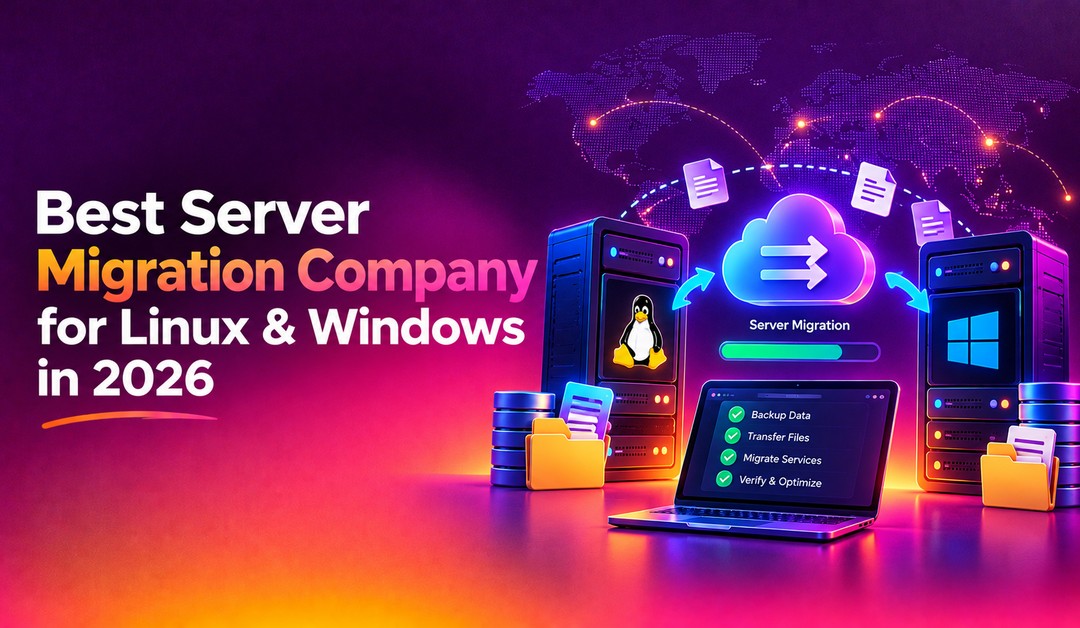
A proper server migration engagement covers far more than copying files from an old box to a new one. It includes a pre-migration audit of installed services, dependencies, and configurations; a data and database migration plan with integrity checks; DNS and networking cutover planning; a rollback plan in case something breaks mid-cutover; and post-migration verification that every service, cron job, and cert is working exactly as it did before. For Windows Server moves specifically, this also means handling Active Directory replication, Group Policy, and licensing correctly — mistakes here cause the most support tickets.
Whether you're moving from an old physical box to the cloud, from one cloud provider to another, or consolidating multiple servers into one, the process is fundamentally the same: audit, plan, migrate, verify, cut over.
How Much Does Server Migration Cost in 2026?
Pricing varies enormously by scope. Based on current market data, small workload migrations (a handful of servers, straightforward stack) typically run $20,000-$100,000, while multi-server enterprise migrations with complex integrations and near-zero-downtime requirements can run $40,000 to well over $600,000. For a single production server — the scale most small and mid-size businesses actually need — a realistic range with a specialist migration company is $1,500-$8,000 depending on data volume, downtime tolerance, and whether Active Directory or a database cluster is involved.
The single biggest lever on price is downtime tolerance: a migration that must run with zero downtime (continuous replication, staged cutover, rollback window) costs meaningfully more than one where a scheduled maintenance window is acceptable.
What to Look for in a Server Migration Provider
| Criteria | Why It Matters |
|---|---|
| Handles both Linux and Windows | Most real environments are mixed — a specialist in only one OS will outsource or fumble the other half |
| Written rollback plan before cutover | If cutover fails, you need a tested path back to the old server within minutes, not a scramble |
| Fixed-scope quote after an audit | Vendors who quote without auditing your stack first are guessing — and guesses become change orders |
| Post-migration support window included | Issues often surface 3-7 days after cutover under real traffic, not during the migration itself |
| Maintenance window flexibility | A provider who can only migrate during business hours forces unnecessary downtime for customer-facing services |
Buyer Objection: "Can't We Just Do This Ourselves with a Migration Tool?"
Tools like cloud-native replication utilities handle the mechanical file copy well, but they don't handle the judgment calls: which services need to restart in what order, how to validate that a database migrated with full integrity, or what to do when a legacy app breaks on the new OS version. Self-service tools are fine for a low-stakes dev server; for anything customer-facing, the tooling is 20% of the job and the migration expertise is the other 80%.
Buyer Objection: "What if Something Breaks During Cutover?"
This is exactly why a written rollback plan is non-negotiable before you sign off on any migration. A reliable server migration company keeps the old server live and untouched until the new one is verified under real traffic, so cutover can be reversed in minutes if anything looks wrong — not hours.
Checklist Before You Choose a Server Migration Company
- Do they audit your current server before quoting a price, or quote blind?
- Do they support both Linux and Windows Server migrations in-house, without subcontracting one?
- Is there a written, tested rollback plan for the cutover window?
- Does the quote include post-migration support for at least a week after cutover?
- Can they migrate outside business hours to minimize customer-facing downtime?
- Do they migrate SSL certificates, cron jobs, and scheduled tasks, or just "the files"?
Why Businesses Choose CloudHouse for Server Migration
CloudHouse Technologies audits every server before quoting, handles both Linux and Windows Server migrations in-house, and keeps your old server live as a safety net until the new one is verified under real traffic. If you're comparing server migration companies for a 2026 move, we'll give you a fixed-scope quote after a free audit — no guessing, no surprise change orders.
Whichever provider you choose, don't sign anything until you've seen a written rollback plan and confirmed post-migration support is included, not billed separately. Talk to CloudHouse Technologies for a free server audit and migration quote this week.