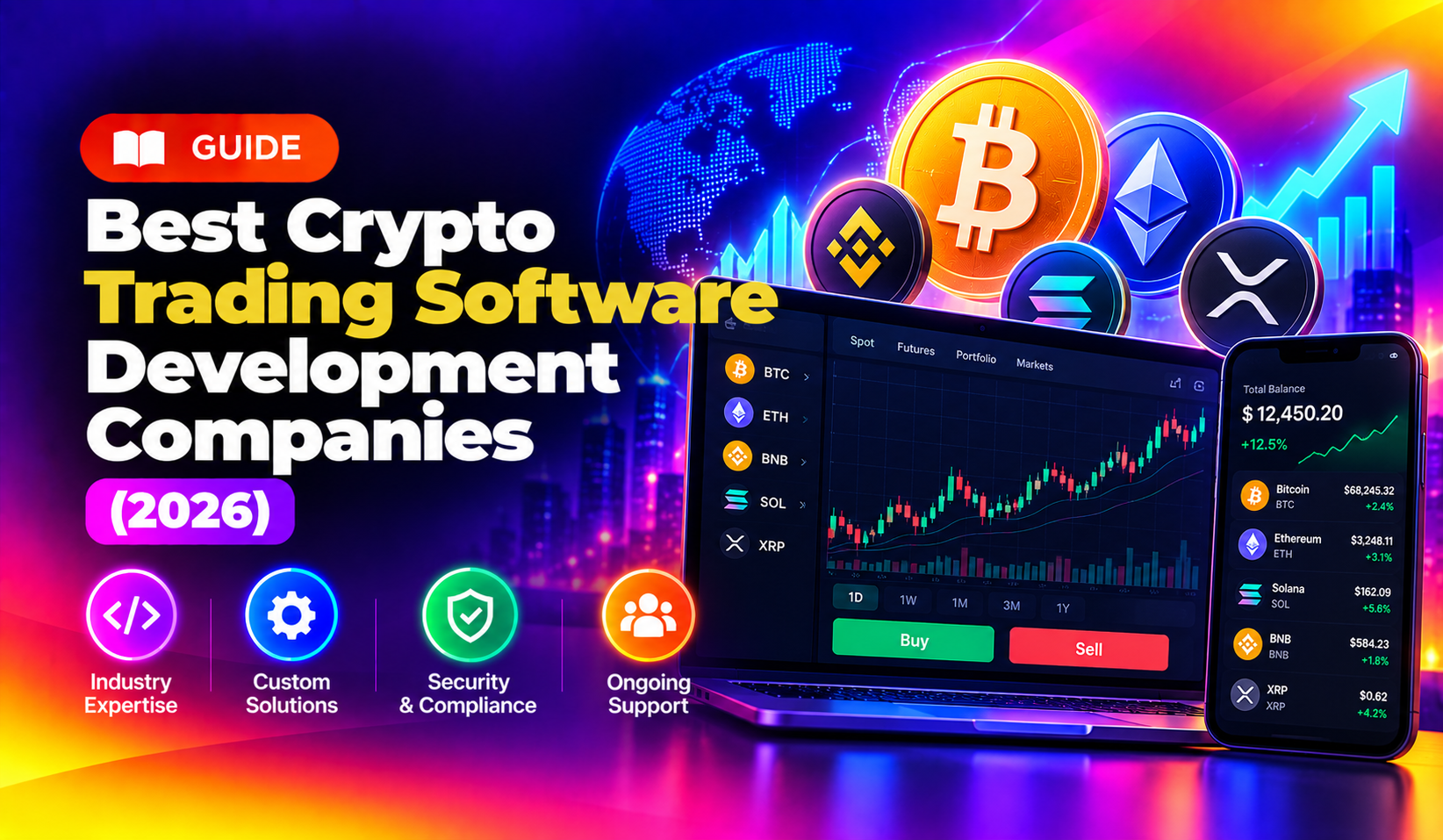
If you are evaluating vendors to build a crypto exchange, a custom trading platform, or a trading bot, the stakes are higher than in almost any other software category. A single architectural mistake in wallet custody or matching-engine logic can cost you user funds, regulatory standing, and your reputation overnight. Choosing the best crypto trading software development company is not about finding the flashiest portfolio — it is about finding a partner who treats security, compliance, and liquidity performance as non-negotiable engineering constraints, not afterthoughts.
This guide gives you a concrete, criteria-based framework for vetting a crypto exchange development company before you sign a contract, so you can separate genuinely capable vendors from agencies that learned blockchain last quarter.
What Makes Crypto Trading Software Development High-Stakes?
Unlike a typical SaaS product, a crypto trading platform holds real, irreversible financial value from day one. There is no "rollback the database" option when a hot wallet is drained. The three risk categories that separate a professional build from an amateur one are:
- Custody risk — how private keys are generated, stored, and authorized for movement. Weak key management is the single largest cause of exchange hacks industry-wide.
- Regulatory exposure — KYC/AML obligations, licensing requirements, and jurisdiction-specific reporting that differ by country and change frequently.
- Liquidity and matching-engine performance — an order book that cannot handle volume spikes leads to failed trades, slippage complaints, and user churn during exactly the moments you need reliability most.
Every horror story about an exchange being hacked traces back to a vendor who under-invested in one of these three areas, usually because the buyer never asked the right questions during vendor selection.
Key Evaluation Criteria: Security Audits, Matching Engine, Compliance
Rather than relying on a generic "top 10" list, evaluate any crypto exchange development company against a fixed set of criteria. The table below is the framework we recommend fintech founders use in vendor calls.
| Criterion | Why It Matters | What to Ask |
|---|---|---|
| Independent security audits | Public audit evidence (SOC 2 Type 2, ISO 27001, or a named third-party smart-contract/code audit) is the clearest signal a vendor's code has actually been stress-tested by someone other than themselves. | "Can you share your most recent audit report or summary, and who performed it?" |
| Key management architecture | Multi-signature wallets, MPC (multi-party computation), and hardware security modules (HSMs) ensure no single compromised key can move user funds. | "Walk me through exactly how a withdrawal is authorized, from click to on-chain broadcast." |
| Matching engine performance | A poorly optimized order-matching engine buckles under volume, causing failed trades and slippage during high-volatility periods — exactly when reliability matters most. | "What is your engine's benchmarked throughput, and can you show a load test under simulated volatility?" |
| Regulatory and compliance tooling | Built-in KYC/AML workflows and jurisdiction-aware reporting reduce the risk of regulatory action shutting down your platform post-launch. | "Which KYC/AML providers do you integrate with, and have you shipped a platform that passed a regulator review?" |
| Liquidity integration | Connecting to external liquidity providers or building a liquidity aggregation layer determines whether your order book has real depth from day one. | "How do you source liquidity for a new exchange with no existing trading volume?" |
| Post-launch support and incident response | Exchanges get attacked continuously after launch, not just before. A vendor without a documented incident-response process leaves you exposed long-term. | "What is your SLA for a critical security incident, and do you offer ongoing monitoring after launch?" |
Score each vendor against this table with real evidence, not marketing claims. A vendor who cannot answer the key-management question in specific technical detail should be treated as a red flag, regardless of how polished their pitch deck is.
Custom Build vs White-Label Exchange: Which Fits Your Timeline and Budget?
Most buyers face a fork early on: build fully custom, or start from a white label crypto exchange company's existing codebase.
- White-label exchanges get you to market faster (often 6-10 weeks) and cost less upfront, because the matching engine, wallet infrastructure, and admin panel are already built and battle-tested across other deployments. The trade-off is less flexibility on custom features and you inherit the vendor's security track record — good or bad.
- Custom builds give you full control over architecture, unique trading features (algorithmic order types, proprietary matching logic, bespoke compliance workflows), and no shared-codebase risk from other clients' incidents. The trade-off is a longer timeline (typically 4-9 months) and a materially higher upfront investment.
Neither option is inherently "safer" — a white-label platform with a strong audit history can be more secure than a rushed custom build from an inexperienced team. The deciding factor should be your timeline, your need for proprietary features, and whether the white-label vendor can show you a clean multi-year security record.
Questions to Ask Before You Hire a Crypto Development Vendor
Before signing with any custom crypto trading platform developer or crypto trading bot development company, get direct answers to these questions in writing:
- How many live, currently-operating exchanges or trading platforms have you built and shipped?
- Can you provide references from clients who have been live for 12+ months?
- What is your team's split between blockchain engineers and general web developers?
- Do you offer a fixed-scope security audit as part of the engagement, or is it a paid add-on?
- What happens contractually if a vulnerability is discovered post-launch — who owns the fix and the cost?
- How do you handle liquidity provider integrations and market-maker relationships?
A vendor that answers these questions with specifics — names, numbers, timelines — is far more credible than one that responds only with generalities about "years of blockchain expertise."
Red Flags That Signal a Vendor Is Not Ready for Production Crypto Systems
Beyond the core evaluation criteria, watch for these warning signs during vendor conversations. A vendor who cannot name specific compliance frameworks they have implemented, who treats "we use blockchain" as a substitute for a real security answer, or who has never had their code independently reviewed by an outside firm is a much higher-risk choice than one who can point to concrete audit trails and named clients. Similarly, be cautious of vendors who quote a single all-in price without breaking out security testing, liquidity integration, and post-launch support as separate line items — bundled pricing often hides the fact that security work was never scoped in the first place.
It also helps to ask how the vendor's team is structured. A crypto exchange development company with a dedicated security engineer or a relationship with an external audit firm is fundamentally different from a general web development shop that recently added "blockchain" to its service list. The former builds custody and compliance into the architecture from day one; the latter often treats it as a feature to bolt on before launch, which is exactly the pattern behind most publicized exchange hacks.
Why CloudHouse Is a Trusted Crypto Trading Software Development Partner
CloudHouse Technologies builds crypto trading platforms, exchanges, and trading bots with security treated as a foundational architectural constraint, not a bolt-on feature. Our engineering process includes multi-signature and HSM-backed custody design, dedicated matching-engine performance testing under simulated volatility, and compliance-ready KYC/AML integration from day one — the same criteria outlined in the evaluation table above. If you are comparing a crypto trading software development kochi team against international vendors, our advantage is direct engineering access: you work with the developers building your platform, not an account manager relaying requirements through time zones.
Explore our full crypto trading software development services to see how we approach custody architecture, liquidity integration, and regulatory-ready platform design for founders building exchanges, trading bots, and custom trading platforms.
Frequently Asked Questions
How do I know a vendor's code has actually been security-audited?
Ask for the actual audit report or a summary you can review, not just a claim of "we follow best security practices." Reputable vendors can name the auditing firm and share redacted findings under NDA. If a vendor cannot produce any audit evidence at all, treat that as a significant red flag before committing budget.
Is a white-label crypto exchange safer than a fully custom build?
Not inherently — safety depends on the specific vendor's security track record, not the build model. A white-label platform from a white label crypto exchange company with years of clean audits can be safer than a rushed custom build from an inexperienced team. Evaluate the vendor's custody architecture and audit history regardless of which build path you choose.
How much does custom crypto trading software development typically cost?
Costs vary widely based on scope, but a fully custom exchange or trading platform with a dedicated matching engine, custody infrastructure, and compliance tooling is a significantly larger investment than a white-label deployment. Get itemized quotes covering security audits, liquidity integration, and post-launch support separately, so you can compare vendors on equal terms rather than a single bundled number.
How long does it take to build a crypto trading bot or exchange platform?
A white-label exchange can often launch in 6-10 weeks, while a fully custom build with proprietary matching logic and compliance workflows typically takes 4-9 months. Trading bot development timelines depend heavily on strategy complexity and exchange API integrations, but a functional MVP is usually achievable in 8-12 weeks with an experienced crypto trading bot development company.
What ongoing support should I expect after launch?
A serious vendor should offer documented incident-response SLAs, continuous security monitoring, and a clear process for patching vulnerabilities discovered after go-live. Exchanges remain attack targets indefinitely after launch, so ask any prospective vendor exactly what post-launch support is included versus billed separately before you sign.
Choosing the right crypto trading software development partner comes down to verifiable evidence, not promises: audit reports you can read, key-management processes you can walk through, and matching-engine benchmarks you can test. Use the evaluation framework above in every vendor conversation, and you will filter out the agencies that talk about security from the ones that actually engineer it.